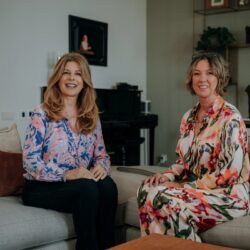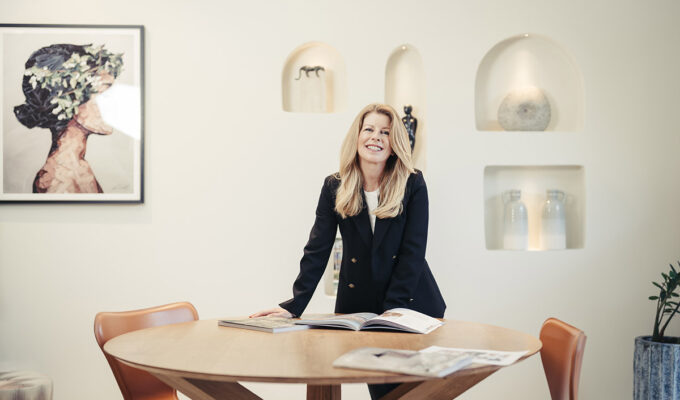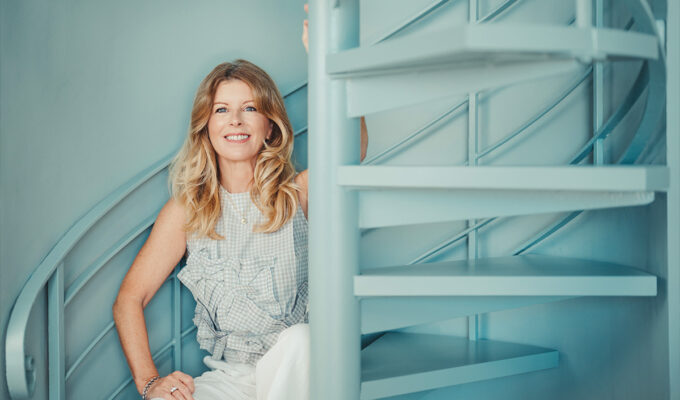
This week, Helen sits down with long-time friend and renowned interior designer Justine Knox to explore her extraordinary journey from moving to Mallorca as a child over 40 years ago to building one of the island’s best-known interior design businesses.
Justine shares the highs and lows behind creating a life and business in Mallorca – from her parents losing everything after buying a hotel on the island, to leaving school at 15, working on construction sites, and eventually building Knox Design into a trusted name for luxury homes and renovations.
The conversation dives into the realities of renovating property in Mallorca today, including planning permission delays, legal pitfalls buyers need to watch for, the shortage of skilled tradespeople, and why patience is essential when building or reforming a home on the island.
Helen and Justine also discuss entrepreneurship, family business, sustainable interiors, designing homes that truly reflect how people live, and the changing reality of Mallorca as a place to relocate.
Whether you’re dreaming of moving to Mallorca, renovating a property, or simply fascinated by stories of resilience and reinvention, this episode offers honest insights and valuable advice from someone who has spent decades helping people create homes on the island.
When & Where Can I Listen?
The Mallorca Living Podcast launched on April 9, and new episodes will be published bi-weekly.
You can listen and watch on:
▶️ YouTube
▶️ Spotify
🎧 Apple Podcasts
🎧 Amazon Music
Join the Conversation
This podcast is for you—and we’d love for you to be part of it.
📬 Got feedback?
💬 Want to suggest someone for us to interview?
💡 Have a topic you’d love us to explore?
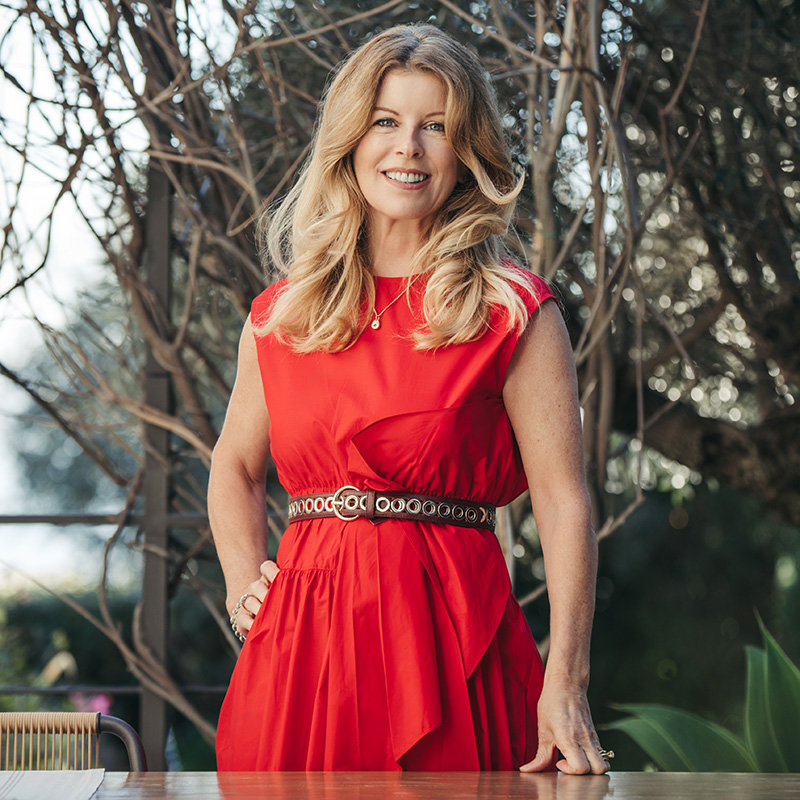
Transcript
Chapter 1: Introduction to Justine Knox
Hello and welcome. I’m Helen Cumins and this is Mallorca Living, a space dedicated to those who are dreaming of making Mallorca their home. Today I’m delighted to welcome my good friend Justine Knox, who’s going to tell us about creating a business here in Mallorca and her life since moving here at a young age. I’m delighted to welcome Justine. Let’s dive in.
Justine, very welcome. I’m delighted to have you here. I think we can tear up the questions, right? Because I actually know you so well, I don’t think we need the questions today. So, welcome.
Thank you very much. Thanks for inviting me.
Yes. So, I was thinking during the week, how long do we know each other? And I remember very well sitting in our first office in Bendinat and you coming to see me with your new logo, new design to start your business — Knox Design store in Santa Ponça. I think at the time was it First Impressions?
Yeah, maybe it was. And then you did the — but I do remember you had your cars with Knox Design on the side. So I do have a vivid memory. It’s maybe 20 years ago now. It must be. Yeah. Over 20 years I think. Wow.
Yeah. So it’s a long journey we’ve been on.
So do you want to tell me how did it all start here in Mallorca for you?
Chapter 2: Early life in Mallorca
Where do you want me to start? Right from the beginning. Yeah, why not?
Okay. Well then, over 40 years ago, my parents decided to buy a hotel here in Mallorca. A hotel. So they’d been in the hospitality industry in the UK and decided they want to take that next step, which would be a hotel. So they were looking in the UK and we almost ended up in Wales. Okay. You’re very happy.
I’m very happy that they found that ad — that little ad in the back of one of the local papers, actually, just saying “hotel for sale in Mallorca” — and they decided to come out and have a look. Came back and asked for a little family meeting with my sister and I and said, “Hey, what do you think about moving to Mallorca?” Because it was a big move. And very courageous, I think, at that time, right, to move to Spain. Like now it’s very common, but this was over 40 years ago.
Yeah. Which it wasn’t common for people to leave their home country and go to — Yeah. I think my parents have always been slight risktakers and entrepreneurs. So like you, you’ve definitely followed in that.
Yeah. Yeah. Yeah. Definitely. So the short story is that we said yes, go for it. They bought the hotel, came over here, and that’s how I found myself here with them. Okay.
So you went to school here.
I did a short stint at school. But there is a long story which I won’t bore you with, where my parents ended up actually going bankrupt on the island. Oh wow. So I had to come out of school and basically start working at a very young age of 15.
Oh wow.
But we’d already fallen in love with the island, so we stayed. And we picked ourselves up — my parents too — and started new businesses and got back on their feet. And here we are today.
Chapter 3: Career journey and evolution
So tell me your journey into design, because you’re one of the best known interior designers on the island. You’ve won awards over the years. So it’s a huge achievement, what you’ve — Yeah, I have to say that I’m starting to feel quite proud of myself for what we have achieved and the business you’ve built.
Exactly. And what we’ve achieved. It’s been a struggle. As I said, I left school at a young age. I didn’t have the benefit of going to university or college, but I’ve just learned what I needed to learn along the way at the right moments. Whether that was the right way or the wrong way, that’s the way I did it.
Yeah. But I think you’re a very clever person. You’re very astute. I’ve watched you over the years and I think as a business person you use your intuition. You’re like a natural-born — Well, I guess I’ve got that to fall back on rather than education, so that’s what I have to go with. And there are amazing courses and training out there, so when you get to a stage where you need to know about finances or marketing or whatever it is in the business at that stage, then you can go out and learn it at that time and obviously then adapt it to how you need it in your business. So, for me that’s actually worked out really well. But yeah, the journey has been long. It’s had its ups and downs, but it’s been fun overall.
And you’re very much a family business, which I love. Your husband Bruce is involved in the business. Your daughter Marica is involved in the business, and Jack from time to time. And even I think your employees are kind of extended family, right?
Yeah, absolutely. I mean, my husband and I, we’ve been working together more or less since we met, to be honest. Which is over 30 years now as well. Gosh, I feel old today. So we’ve kind of always worked together — well, it started off in his business. He had a scuba diving center, which he then trained me to be a scuba diving instructor and I helped him with the business. So we worked together with that. And then when we decided we wanted to start a family, we realized that that business, which was very seasonal, wasn’t going to translate into a good all-year-round income for bringing up a family. So we actually put that business on the market — and I think that was probably the first time I staged anything.
Okay. To sell it.
To sell it. Yes. So I made sure that that business looked amazing, you know. I even rented an extra room from the landlord to create a little store with a little drinks area for the clients and just basically things that we should have done anyway to make the business better. I just did it to stage it so that it would help it to sell.
It also showed what an astute business lady you are. I guess it was like a sign of things to come. But anyway, it sold very quickly and we suddenly found ourselves asking the question, what do we do now? Because we hadn’t actually thought that far, because we didn’t think that the business would sell that quickly. And so my husband, who had been in the building trade in the UK, said, “Well, I’m just going to spread the word out and let our friends know that I can do some building jobs for them or some renovation work, whatever they need.” And I for a time was his laborer.
So I’ve actually worked on the job site myself, learning from the bottom up.
Yes. Mixing the cement, carrying the tiles and pulling wires through — all of that good stuff. Which has helped me then later on, obviously.
Did you like it?
I did like it, actually, you know. And it was one of those stages of my life. So I guess I could say my career has kind of gone from wet hair and swimsuits on a dive boat to then a laborer on a work site, you know, no makeup, hard hat and boots, and then all the way through all the different phases so that now I can get dressed up smartly and go to work and stay clean for the day, which is rather nice. But I think all those things that I’ve done over the years — and even before I met my husband, the work that I helped my parents with in their businesses and the jobs that I did to just put a roof over my head — all of that adds up to helping you at the end goal. And you learn from everything you do in life, don’t you? So, no regrets. And just always had fun along the way.
Chapter 4: Home staging and business pivots
So the construction business led to the furniture store. So I want to know how did the furniture store get created, because it’s one of the largest furniture stores in Mallorca now. So I want to know how did this begin?
Well, there’s a step in between that. So we started with the building business, which grew once the word got around. My husband was in demand and so we decided to grow that, hire some guys in to help him and made a proper construction company. I was doing the hiring and the firing, the administration, finding the materials, ordering, etc. And then slowly what happened — kind of just organically, really — was I couldn’t keep my mouth shut. So I’d go into a property, meet the clients, they’d be asking me, “Well, we just want to retile the bathroom.” And instead of saying, “Yes, fine. We can just do that for you,” I would be looking around going, “Well, we could actually just knock this wall down as well and open plan your kitchen.”
Really? Yeah.
So just things like ideas just naturally came out at the time and people started to say, “Yeah, okay. Let’s do that.” And then it led to “What color do you think we should paint the walls?” and “What tiles do you think we should use?” And so it just kind of developed into this organically. And then I suddenly found myself the builder’s wife. It was, you know, “Oh, get the builder’s wife in. She’ll tell you what you need to do. She’ll go and choose all this for you and make it easy.” And I realized I was really enjoying that side of the job rather than the admin and being in the office.
But it did dawn on me quite quickly as a business person that I was actually doing this for free and I wasn’t charging for it, and I didn’t feel able to charge for it because I wasn’t trained and I was just kind of going with what I felt was right. So a little bit of impostor syndrome.
Yes. Definitely. Definitely. So I kind of took a step back and decided to have a chat with my husband and tell him that I was going to fire myself from his business, hire somebody to replace me to do all the boring bits, and take some courses so that I could actually continue with that and charge people for it. So that’s what I did.
I hired someone to replace me, which was a rather strange thing to do. And I remember the people that I was interviewing and I was saying, you know, “Well, you’ll be replacing me.” And they were like, “Well, what, how’s that going to work out?” And I actually hired a lovely, lovely lady. She was with us for many, many years. And then I started doing some courses. And initially I decided to do home staging courses because I remember that it was a big thing on television at the time. There was this doctor lady — there was a house do the TV program, something like that.
Yeah. And the lady had basically bought the concept from the States — it was very well known there — and brought it to Europe and then it turned into a TV — because at that time it was quite new.
Right.
Well here it was non-existent, and in the UK it was quite new. And in fact the TV program got the concept out there and made people realize — which was basically you could stage your home to sell it faster and for a higher price.
Exactly. Yeah.
Okay. Which is kind of common sense, but we don’t always do it.
No, believe me, some of the houses that I have visited with our clients have been shocking. Justine, if you saw them, you would say, “Oh my god.” I mean, kind of dirty bathrooms. Unbelievable that you think how could you present your home like this to sell to another person. But anyway, it’s like going on a first date — forget to wash your hair and don’t bother ironing your clothes and no makeup, whatever, you know, just “here I am, just take me as I am or don’t.”
But so yeah, I decided in my wisdom, I thought this is going to be great. I’m going to learn this concept and I’m going to bring it to Mallorca because it’s not here, and everybody’s going to want it and it’s going to be an amazing success. Wrong.
I went over there. I learned the concept. It was amazing. And I actually worked with Ann Maurice, who was the lady that brought the concept to Europe. So I was really lucky because at that time she was training a handful of people to do this. Later on she then passed it over and those courses are still going now. Actually, I met a lady last week who’d just done one of the courses — the introductory courses — but they’re now digital online, you know, no person-to-person. It’s a shame, but that’s the way the world’s going. But I actually trained with her and then she trained a handful of us to become what she called her senior consultants, which meant we could then train other people in the concept. So we actually went to the UK and did several houses together for her. And that was a great experience. I learned lots. And then I also learned a little bit more about the business of design — you know, how to charge people and how to work out how much you need of things. And so that was really useful.
So I came back all excited. Here we go. And nobody wanted it. In fact, nobody needed it at the time, because even though they weren’t putting their makeup on and washing their hair, the houses were selling just because they were here.
Yeah. Because it was booming and everything was selling. And I remember it was very complicated. I remember talking to you about it at the time and we both felt there was a need for it, but there was a lack of business push for it.
So I did try hard. I wrote a column in the local newspaper — weekly column — to again educate people about the concept. I went and did some presentations to the college of architects even, to get the word out amongst the locals. And everybody loved the idea, and in fact a few people asked me, could I train them how to do it — they wanted to jump on and also embrace it. But the clients were just not there. And so I quickly had to pivot, and that’s where the birth of your home store.
Yeah. So I realized that — well, actually, can I tell you a quick little story?
Chapter 5: Establishing Knox Design
So I was on an airplane coming back from the UK on my own. So the lady next to me said, “Oh, you going on your holidays?” And I said, “No, I’m going home, actually.” “Really? Where do you live?” And so, asking me all these questions and we got chatting. She was asking me what I do and I just told her, “I’m married, I’ve got children, I’m doing home staging.” And “Oh, what’s home staging?” So we had a two-and-a-half-hour flight of just non-stop chat. And when I got to the other end, I got off the airplane and someone tapped me on the shoulder and I turned around. There’s this very tall gentleman with a long overcoat and like a trilby hat on almost. And he said — I thought, am I going to be arrested, or you know, what’s going on? And he said to me, “I’m sorry, I’m a bit embarrassed because I was listening to your conversation for the whole flight. But here’s my card and get in touch because I’d really love to talk to you.”
So I thought, okay, maybe this is the start. So I gave him a call and he was actually a property search agent. And so he said to me, “I’ve got clients buying properties that need somebody who can then either make that property theirs — because maybe it’s furnished, but it doesn’t actually have their personality in there — or it’s an empty property and it needs to be furnished, or they don’t like the kitchen, or so could you help with that?” And that’s basically where it started. So I quickly pivoted and worked for the buyers rather than the sellers.
And then I became very frustrated because the more projects that I worked on, the more I wanted to do something — I won’t say adventurous — but I wanted to do something not just the norm. And that’s where it became very difficult, because back then, over 20 years ago, there were a lot less furniture stores on the island. A lot less. My gosh.
Yeah. And I mean there weren’t really design studios to speak of. It was just totally different, and you had to order everything. I remember doing this house the first time around and everything was a four-month wait — other than IKEA. And everybody kind of ended up going to IKEA because we just didn’t have — you know, if you wanted something quickly there wasn’t an alternative. And then even I couldn’t find the styles of things I liked.
I started going to all the trade fairs around the world just to see what’s out there, because it’s a huge world out there and lots of different styles. And I thought, well, let’s go and see. And of course then I was asking suppliers, “Well, could I buy from you?” Because I have projects. And they were like, “Have you got a showroom? No. Have you got a store? No. Sorry, can’t buy.”
So I became very frustrated and started to realize that if I wanted to be able to have access to items that were not available on the island — and we weren’t in that buy-online era back then, whereas now you can go online and you can find things, but back then you couldn’t — so in the end, another word with my husband to say, “Okay, next chapter.” I had another idea.
And I just started to keep my eyes open. And I just by chance, looking around for some furniture for a client, came upon a store that was closing down. And I asked the assistant there, “Oh, when is it closing?” And she said, “Well, they’re actually trying to sell it, but it’s going to be quite soon.” And so I asked, “Well, could I have a phone number? I’d like to have a chat with the owners.” So I called the owners, and actually it was two ladies and they were bringing in furniture from Indonesia. And this had been kind of their hobby business, but they were both in politics and their party had just got in, which meant they couldn’t be in business. So that was the reason for selling.
It wasn’t the style of furniture that I was looking for, but I did think, well, it could be an easy step into retail, which I hadn’t done before. And I just had a chat with them. So I bought the business off them, lock, stock, and barrel, with all the stock, had a clearance sale, and then slowly started bringing in things I wanted to. And that was in Santa Ponça. It was down just down from where we are now. The first one, which was still big. I remember. Yeah.
But what I liked about it was — and I think at the time there were maybe two other furniture stores, which is now, how many are there now?
Gosh, there’s probably, I don’t know, 20, 50. So but what I liked about it was it was a big space. We had some storage attached to it as well, and you could park. Because having done it the hard way — i.e., driving around the island, finding the sofa here, the curtains there, the rug there, sometimes with my clients, but often before they arrived, I would do it on my own. Trying to park places closing at lunchtime for siesta time, which everybody with different opening hours. Nobody has — Exactly. And it was just a nightmare.
And so I decided, well, if I am going to have my own place, I’m going to be open all day because who wants a two-hour break in the middle of it? And I need people to be able to park and I need some storage. So that’s where the first one — and I thought at the time I was opening a kind of showroom for my clients and my projects. But then I hired a lady to be on the shop floor simply because I needed to do site visits and go meet my clients and I didn’t want to close the doors on it. And then we quickly realized that actually there were more people out there that just wanted to come in and buy the things I was putting in there, which were very different to everywhere else.
So I wanted to make one point, because I do think you have one advantage over a lot of stores, and that is that you tend to carry a lot of stock, which is fantastic, because you’ve always reinvested — whatever profit you reinvest and you keep growing your business. But it does mean from a consumer perspective, if they go into the store and they love a sofa, chances are they can have it delivered the next day or anything else. And this I think has proved to be a key point of your success.
Chapter 6: Design philosophy and service
I think so. I mean, I guess I’m always looking to see — I’m a problem solver. And I think anybody that’s in the interior design industry is a problem solver. And so I’m always thinking, what problem could I solve? What problems do my clients have? And because we’re on an island and because my clients are mainly second homeowners — they’re not here for long periods of time, they don’t want — holiday home owners. Yeah. And so when they do come out — this is talking about the retail now, not the project side — but if they just want to come out and go and buy some new cushions or a sofa, or they need to replace their sunbeds, if they’re told they’ve got to wait for then like three months or something, the chances are that they’re back where they live all year round and they won’t get a chance to enjoy those until the next season.
So I decided, okay, certain amount, certain items we will try and hold a stock of. Certainly accessories and the day-to-day items like bedding and tableware we do have a large stock of and we constantly keep that topped up. And just the fact that we’re on an island makes deliveries a little longer and sometimes there can even be delays on those deliveries to the island. So in that case that’s another reason why we try to keep stock of as much as we can.
Now when we move into like a full project or somebody wants a complete dining room or a lounge or bedroom, because of the interior design background and the experience that we have, we don’t aim to sell somebody that package that’s there. We would prefer it to be more personalized to what they want. So it’s not a copy and paste.
Exactly. Which we do see from a lot of your competitors, to be fair. You know, if all their projects kind of look the same, it’s use the accessories. I have to say, I have same cushions. I’ve had this situation where, you know, things I’ve bought locally and then I go to somebody else’s house, it’s like, “Oh, you have the same chair as I have. You have the same lamp.” So it is different if you want something unique. So we do encourage our clients — even just the retail clients — to be a little bit more adventurous and have things personalized. So if they’ve got the time to wait, then we encourage them to — let’s change the fabric on this chair, or let’s change the arm or the back height, whatever. So we carry a lot of products that you can just buy, but we also work a lot with customized and personalized items.
Which the other thing I think that’s very unique about you — I don’t know from other interior designers, but I think it’s great that clients hand you the keys of their house, and I know you’ve had many clients like this, and come back six months later, and the house has been transformed. How does that work?
This is a dream. But I mean, it’s my ideal client. I know. But in a way, it’s also the ideal solution for somebody who’s not physically on the island and they can entrust you with their vision and then you go off and do the work. This is incredible.
To be honest, if you’re hiring some — I mean, if you hire a mechanic to fix your car, you don’t stand over him passing him the tools while he’s putting oil in. So if you’re hiring an interior designer, first of all you should either have had great recommendations, seen their work, love their work and trust them. And trust is a big thing in our business. Huge. So if you don’t — and it’s when there isn’t that trust that problems can arise and people don’t quite like to give — just second guessing and sort of — yeah.
So I’m fortunate that now I have a large word of mouth. A lot of my clients come to me because they’ve been recommended, or maybe they’re returning for second projects now, and next generation projects, which is wonderful. So in that respect, the trust issue is often not a problem for me with my clients. And so they’re happy to just give me the keys and off they go.
And as I mentioned before, my job is to be a problem solver. So don’t kid yourself that even after years of experience, there are no issues that crop up and there are no problems that happen. Of course there are. But the issue is that they have to be solved. And my job is that my clients don’t need to be involved in that. So if something’s delayed or something arrives damaged, I solve that. And quite often my clients never need to know about it, because when they come out and the job is finished, they don’t know that maybe we had to reorganize the work schedule to wait for something that was delayed, or we had to get express shipping, or all these kind of little things that can happen. They don’t need to know about it because that’s me doing my job.
I would love to ask you to do a favor for me.
Chapter 7: Renovation and team management
Mallorca Living is a video podcast dedicated to those who are dreaming of making a life for themselves here on Mallorca. This is a very personal project for me where I get to share with you wonderful stories about people who have actually made the transition to Mallorca. I would love to ask you to subscribe to this channel because it helps the channel grow and it makes sure that we continue to grow and prosper and reach as many people as possible who are interested in making Mallorca their home. Thank you so much for subscribing and liking and sharing your comments. We love to hear your thoughts and your feedback. Thank you so much.
But just so our listeners are clear, one of the things you do with your projects is that you do from bathrooms, kitchen reforms to complete house reforms, right? And you actually have your own team of subcontractors — everything from electricians, plumbers, construction workers. Can you tell us a little bit about that?
I’ll tell you a little bit about it, but I am actually doing less and less of that at the moment. Because of obviously the building background that I had with my husband, then if people asked me to — “Oh, can you just come in and look at — we want to refurnish and maybe we want to decorate again” — not being able to keep the mouth shut and be like, “Well, the kitchen’s looking a bit tired.” And so I would then get asked to do other parts of the project. And sometimes I’d completely gut a property right back to the bare bones and start again with putting in heating, air conditioning, new windows, doors, floors, lighting plan — everything, absolutely everything.
And luckily I have a team that I’ve put together over 15 years now that are used to working together on my projects. Which is great, because if you’ve got to start pulling in a new builder and a new electrician and a new plumber to work together, first of all, they’ve got to know you and how you work. And secondly, they’ve got to work with each other. And so over the last 15 years, being able to rely on the same team of trades that are used to working together, that will help each other — I don’t get any of that “Well, I couldn’t finish my bit because the electrician hadn’t done his bit.” And there’s none of that that happens on my project. So I’m very fortunate and it has made my job a little easier.
But I have to say that some of them now are reaching retirement age. And a big problem that we’re seeing not only here on the island, but I think worldwide, is the younger generation or the next generation are not actually moving into those hands-on trade jobs. Not at the moment. But I think it’s going to come around full circle. It’s going to have AI and all of this kind of — but we’ve got this whole generation of youngsters that have not been encouraged to do that. They’ve been encouraged to maybe go to university rather than the trades.
Yeah. And so we are lacking a lot in trades. And my trades that I work with are constantly complaining that they can’t find people that want to do apprenticeships. They can’t find people that can come up the ranks and work with them or even for them to hand over to. Even their own children, sons and daughters, are not wanting to go into those professions. And so I’m finding right now that it’s getting more and more difficult for me to put the team together, the same team together. And so I’m kind of at a stage in my business where I’m not sure I want to start again pulling that team together.
There was one other issue I know we’ve talked about over the last year or two — you’ve had issues around getting planning licenses.
Chapter 8: Planning permissions and legality
So depending on where the house is on the island, each town hall — some of them are more efficient than others — but it’s actually led to some of your really important projects being cancelled, right? As a result. And this is a lot of work and revenue and employment that’s lost on the island because unfortunately they cannot get the renovation licenses. I mean it’s crazy, but I understand that licenses are important and standards and health and safety and all of that is — it’s really important that it is taken seriously. But what I’ve found in the last sort of 12 months is, as you say, two very important projects were basically put on hold because of the planning permission that we needed. One of them, we were told it’s going to be a minimum of 18 months to get the permission to do this renovation. Part of it actually had some structural problems. So we then applied for an emergency structural permit to just put that part of it right to kind of start the ball rolling and get something done for the client. And that was not forthcoming either. So it does depend a little bit on the town hall, which town hall.
And it’s good for buyers to be aware of this — that if you’re buying in, I don’t know, just for example, Pollença, find out what is the normal timeline you’re talking about to get a license, particularly if you need an obra mayor, right? Because it can — somebody thinks, “Oh, in six months I’m going to have everything done,” but actually in six months they may not even have got the license to start.
I mean, if it’s just small works, then — mayor — then actually they’ve got another name for it as well now. And it’s basically a “priiso,” so you’re just advising the town hall that you’re going to be doing this work. And it has to be non-structural. So in that instance you can get a permission very quickly to do that, as long as the person that’s doing the work is registered and you give their details in and you give photographs of what you intend, a little plan of what you’re going to be changing, where the actual property is — like a street plan, which is easy, you can get it off Google. So things like if you want to reform your kitchen, your bathroom, this would qualify under providing you’re not moving any walls. Then it would be fine. If you’re changing the tiles outside around the pool or these kind of things, so that’s no problem.
No problem. But can I just jump in? As long as your property is 100% legal.
Yes. And if it’s not 100% legal, what’s the situation?
Then you could be opening a can of worms, because if you go to apply for a license and they maybe come and inspect — they don’t always, but if they do decide to just send an inspector to just check on what you’re doing, or even if they just look through the town hall paperwork and come across something that’s listed there on your property that’s not 100% legal, they won’t give — first of all, they won’t give you the permission to do any work until that is either legalized or put right. If it can be legalized, it’s often just a question of doing the same paperwork as if you were doing that job now and paying the taxes and a small fine. Because we have at the moment a moratorium on that, and people are allowed — for rustic properties — but that is going to end also in the next year.
Right.
It is. Yeah. But even like urban properties that maybe somebody has closed in a porch or put extra windows in or something and maybe they didn’t — or maybe they converted the garage into a bedroom. They could get a license for it now if it fits within what’s allowed.
Yeah. Then you can legalize that and then ask for your permission to do what you intend to do.
But let’s say you’ve done something that doesn’t fall into what’s allowed. For argument, let’s say you built a swimming pool and it’s not allowed, then you’d have to actually remove the pool.
Well, there’s different — Okay. Yeah. So if that pool hasn’t been there for very long — if you can’t prove that it’s been there for over eight years, then they can tell you to fill it in and get rid of it. If you can prove that it’s been there for over eight years, then you’ve got two choices. You either keep your pool and don’t do any other work to your property because you won’t get permissions to do it, or you get rid of the pool and apply for the permissions and then do the work to your property that you are allowed to do.
So I had an instance several years ago, a property in Pollença actually, a finca, lovely finca. My clients had bought it. It was all more or less finished. And they wanted me to do — what did I do there? I did a new bathroom, changed one of their bathrooms for them, new kitchen, and decorated and furnished. So I went to check with them as I always do. “Is everything 100% legal?” “Yes, we’ve just bought it. Our lawyer looked at the paperwork. It’s all fine.” Okay, great.
So I applied for the permissions and they did come to do an inspection with their paperwork, and the house itself was fine, but there was a garage and there shouldn’t have been a garage. And nobody had pointed this out to them. Oh my god. No. So the garage — the only way we could get — and the problem was at this stage we had pulled out the bathrooms and the kitchen, because when you go to apply for the permissions they tell you when you can start from and when you need to be finished for. So we started and during that period is when they came to have a look at what was going on. So this was discovered. And basically we then had a house that wasn’t habitable because I had no bathrooms and no kitchen in there. So my poor clients were just pulling their hair out. And they had to destroy the garage to then get the permissions for me to continue the works in the house.
And you really wonder how does this happen in this day and age? But I have to say, we come across stories like this every day of the week. And so you have to be so thorough when you’re buying a property.
Yeah. No, I mean, it’s always our big point. You know, if you buy something and say your garage isn’t legal, it’s so important you know in advance and then you can make an informed decision about what risks and what are the potential downsides, you know, as you say, if you’re then renovating.
But a lot of people, unfortunately, they don’t have this opportunity of being advised and therefore they get themselves into all sorts of situations like this. And I mean it’s crazy, but sometimes, you know, when I ask my clients, “Okay, is everything 100%?” “Yes. Yes.” And I say, “Are you sure?” “Yes.” And they actually get a little bit offended sometimes that I’m suggesting that they’ve bought somewhere that isn’t legal. But also the owners of these properties can get a little bit defensive when you say, “But are you sure? Have you made any changes?” And they’re saying, “Of course we didn’t. It’s all legal.” And then you dig deeper and then you find, well, actually this isn’t right.
Yeah, I mean, buying a property here you do need to be so thorough to check it all, because things can slip through. I mean, but if you’re a foreigner, you don’t speak the language, you don’t know the laws, you have to rely on good, trustworthy, recommended professionals in order to carry out the necessary due diligence in order for you to make a good decision.
Right. Yeah, absolutely. And I would say that to go even one step further, that those people that you’re hiring to do that have not only local knowledge but have been here over a certain period of time, because there’s so many people that just come to the island and say, “Okay, I’m going to now be an estate agent” or “I’m going to open a restaurant” or “I’m going to be an interior designer.” And if they don’t have that local knowledge behind that and the longevity of the experience and the knowledge come across everything.
Yeah. Absolutely. Yeah. It is a bit of a roller coaster. It’s a minefield, isn’t it?
So you have said to me though recently that it has become so much more complicated with your projects because of the planning issues, because of the shortage of trade people. And you’re not the only one saying it, to be fair.
Chapter 9: Future business vision
Many of our clients are saying the same, that it’s becoming more and more difficult. And the thing is that the good people, the good companies, the good tradesmen, they have so much work. You can’t — like a carpenter is like gold. If you find a tradesperson who can start on Monday, there’s something wrong. Ask yourself why. Yeah. Yeah. Yeah. There is something wrong because they’re all so busy. I mean, all my trades are — they’re busy on my projects. And they have their own jobs as well to do. But you know what we’re doing now is we’re talking about — okay, there’ll only be certain types of projects that we will take on in the future.
Which could you give me an example of what you’re thinking of?
So I could take on a full renovation, but there’ll be probably a maximum of one per year now, whereas before I would have anything up to six on the go at the same time. Alongside that, I could take on small jobs like maybe just a bathroom reform or a kitchen redesign. And I have a good cabinetry team, so I can still do bespoke furnishing, furniture, dressing rooms, wardrobes, interior doors, that kind of thing. But when you’re talking about actually ripping something out, re-plumbing, rewiring, you know, the whole shebang, that I’m going to limit to one per year, because I know that my trusted team can cope with that. And I can cope with it and we can give it the attention that it needs. Because when we’re trying to do multiple jobs and we’re having these long time frames of permissions, by the time you get to do the job, the client wants it done really quickly.
And that’s the other thing — we are under time constraints here on the island for two reasons. One, the client wants to be in the property obviously as soon as they can. That’s why they bought it. They want to be here experiencing Mallorca. And two, depending on where it is, we’re limited as well by either a community that doesn’t allow work during the summer season or weekends or certain times of day — you can’t make a noise — or municipalities that stop you from making noise in certain areas during tourist time, which makes sense. But all of that does make bigations.
Yeah. So, what is your plan for the future then? As you’re going to do less projects, where do you see your future path going?
I’m glad you’ve asked me that.
Yeah, I have no doubt you have ideas, Justine, because it’s something you’re never short of. It’s a new idea. So —
So although I’ve done a lot of the renovation work and redesigning of properties for people, because I do enjoy that and I have a lot of experience of that and find it hard to say no sometimes, but what I really, really enjoy the most is the furnishing and design and customizing and personalizing somebody’s home. You know, really getting to grips with how that person lives and what will suit their style and really giving them a home that’s theirs but better than they could have expected.
So I’m wanting to work a lot more with that side of the project.
So after the building work, but you do a lot of that anyway.
I do that anyway. But what I’m going to be doing now is there’s a new service that we’re starting called “Day with a Designer.” I’m really excited about it, because it’s going to be for people that are not necessarily doing a full home. Maybe they’ve bought a home that’s furnished, but it doesn’t quite feel like theirs. So we need to go in and work with what’s — it needs to be updated. Yeah. Maybe working with what’s there, but adding in some extras, making some tweaks.
I’m super happy you say this, because one of the things that always as a client annoyed me a little bit — that every designer seems to come in and want to, even if this stuff is good and it works, they want to throw everything out and put their stamp on it. And it is a little bit like, well, actually, it’s good stuff. I’ve paid a lot of money. Can we recover it? Can we put it in another place in the house? Can we give it a new life? Right. We’re doing a lot of that at the moment.
No, but I’m delighted to hear that, because I think it’s different than what you typically get offered from an interior design service. Would you agree?
Well, I can’t answer that actually, because I’ve not asked other designers to do things for me. But from a personal aspect, there’s a lot of things ending up in landfill these days. I know. And I know that places like IKEA and the cheaper stores have their place, because everybody has a budget. But I have always said to people, if you can, save up and buy something of quality. If you need a new sofa but you have a sofa and you need to wait maybe another year, six months to save up for a really good sofa, then do that rather than rushing out and buying something cheap because you want it now. Because if that sofa is the right sofa for you — i.e., the right size, the right comfort, good quality — it can travel with you through the seasons. And you can update it quite easily. We’re doing a lot of reupholstery at the moment. And you can even pass it down to heirlooms. Exactly. And I think there’s something very special about keeping pieces in your home that have been part of another story.
So yes, working with what people have got, but adding in what’s missing and personalizing it. Exactly. Or maybe it might just be one room that they need working on, because this is a day with a designer. It’s not a week with a designer. So we’re going to do it in a day. So we’re going to come to your home. We’re going to see what you’ve got, have a chat to you, take some photos and measurements. We’re going to go back to the studio. We’re going to have some light tapas together and discuss what we want — what the aim is. And then we’re going to work with samples, materials, catalogues, and then at the end of the day, you will have a simple mood board and costing put together for what we’ve discussed with some recommendations. So it’s going to be like in 24 hours, you can get everything, you know, which sounds so exciting.
We can’t do a full house in the 24 hours, but if somebody did want to do that for a full house, then they can book several sessions, you know, and do it room by room. Exactly. Or set a theme for the house. And or maybe they’ve got a budget issue. So therefore, we want to start with the living room and then maybe in a few months time or even next year, we want to look at the bedrooms. So they can do it. So maybe it’s already at quite a good level, the house, and it just needs new curtains, new cushions, new carpets, and this you can probably pull together in a day. Or it might be a color scheme — somebody might just need help with a color scheme, or they’ve bought some items and it’s just not working and they don’t know why, and I can go in. So I’m excited about that.
That’s amazing. So when are you launching this new service?
Well, we’ve got the space that is where we were holding the outlet sales, and we’ve now finished with those. So we’re going to be converting that into — So you’ve created a lot more space.
Chapter 10: Living in rural Mallorca
Yes, we’ve got more space. So we want to make a little studio in there. So, a bit like a show home. And also that space is also going to be used for some mentoring and coaching, which I’ve just started. And that is basically some designers that are just getting started in the industry or maybe just need some help to go to the next level, and they just want some business advice more than — you know, I’m not going to teach anyone to be a designer.
This I’m curious to know why though, because are you not creating your own competition?
There’s work out there for everybody, Helen. There is so much work out there for everybody. I’m constantly turning work away. And if I could — if I know enough designers that I trust to do a good job, but maybe they have a totally different aesthetic to me or maybe they’re just a different nationality. For example, I limit myself to only working with people that speak fluent English or Spanish. So I have worked for other nationalities that have a good level of English, but sometimes they don’t have a good enough level of English and I’ll turn that job down because I really need to get to know my clients to do the best job that I can. So, but maybe I know a Danish designer or a German designer that I could recommend to those clients. So, there is plenty of work on this island for many, many designers. And I’m ready to give back. And I’ve got over 20 years experience. I have my systems that I know work, and I’m just looking forward to helping other designers.
Yeah. Well, we’ve been doing that for many, many years with the business club and with everything. And it’s always been my philosophy to collaborate as a business, and everybody gains and there’s enough for everybody. Of course not everybody has that mentality, but I think for those who believe in sharing and collaborating and growing — we have an abundance of everything. Right. Exactly. Definitely. And it’s great fun because you meet a lot of people. You build your network within your sector, your business sector, which is really, really nice.
Yeah. No, it’s been lovely. I didn’t expect it to get started so soon actually, but I had one lady come and ask me to help her and so I said okay. Sometimes you need the little push to get started.
I want to ask you, where do you live on the island?
Okay. So I live in the center of the island, which is convenient because I work all over the island on my projects. So it’s quite convenient location-wise. But it’s also away from the main tourist areas.
So where, which area? I’ve been in your house, so I know, but you tell the listeners.
So, it’s a — the municipality is called Algaida, and we’re actually located between Algaida and Santanyí. Super. Is it a place you would recommend to listeners to consider to set up home?
I think there are more and more foreigners moving to that area now. So don’t discount it for sure. Where I live, I’m not in the town, so I do always have to get into my car to go somewhere, even if it’s just down to the local supermarket. So there is that aspect, but I have peace, tranquility. Countryside. Yeah. Yeah. I live in the countryside. We’ve got animals.
And I love your home setup. I always, when I visit your house, you have — you’re growing all your own vegetables. You have your pool, your outdoor shower, your hot tub, your space, your bar, your entertainment area, your covered terrace. You have so much. I mean, you’ve really set up a kind of an oasis, right, in your home.
I guess probably because of where we are, we don’t have those things on our doorstep. So I needed to create them at home to enjoy there and for our family.
But it sounds to me like you and Bruce could kind of be there in your home for a month and sort of move from one area of the — almost — and you’re independent with your food, with your entertainment, with everything, right? Yeah. We even have our own eggs.
Your own eggs. And your dogs, then you like to take them out walking in the countryside. And of course your children come back and visit, but they are now more independent and so on. Yeah.
So Justine, if there was one — let me say insight or tip — you’ve worked with so many foreigners who have the dream of moving to Mallorca and setting up a home here.
Chapter 11: Tips for moving to Mallorca
What is that nugget of wisdom that you’ve gained over the years that you’d like to share with listeners?
I think learn the language if you can. And it is a toughy, but it does change life here a lot. Totally a lot. So I would say learn the language, and even the basics, you know, that you can sort of order what you want in a restaurant, if you have construction workers that you get — have your vocabulary of what you need.
Right.
Yeah. I mean, I guess it’s easier now that we’ve got like Google Translate and all of these apps and things that can help you. But there’s nothing quite like interacting with somebody in the local store. And although most people do speak English, it’s not the point. It’s more that you’re more into the — and it’s not that you have to be fluent overnight. It’s to make a start, right?
Yeah. And I would say that since I came here, the island has changed a lot. Mainly for the better. But I would say that it’s not for everybody. It’s not — I think the island is quite costly to live on, both properties and the cost of living is quite high here compared to mainland, and even compared to here 40 years ago. We know obviously things have changed. But whereas before we used to see a lot of people basically coming here with not too much money but being able to maybe buy a little business, a bar or by the beach or whatever, and now it’s not quite the same story. And I think that it’s a little bit more elite now on the island.
But I also would just mention people that are coming here with children, for the education system as well — it’s really important to check into that where you’re going to be located, that you’ve got a good education network for the children. So I think that’s really —
What about a home? When somebody is thinking about buying a home, you have so much experience. What is that one thing that you would say to people just beware of, take care of?
Well, obviously check that everything’s legal. We mentioned that earlier. Just check the legalities. And just check that — you know, if it’s a holiday home, but you might be using it all year round. I mean, you do need heating in the winter. You know, we are a summer island, but we do have seasons here, and sometimes people are under the impression that they don’t need heating in the winter. So that’s something to check — that you’ve got heating and air conditioning or good ventilation for the summer.
And really, I guess it’s think about — I mean, the same as when I talk to my clients about what we’re going to do with their homes, I have lots of questions that I ask them and I have a huge big questionnaire — think about your lifestyle or what your lifestyle would be like here and just make sure that you can tick those boxes. Because depending on where you end up buying, you can’t always — maybe you’re somebody that goes running every morning, but if you buy a property in the center of Palma then maybe that’s not so easy. Or, you know what I mean, just to consider how — that’s what we do a lot with our clients initially. We try to understand their lifestyle vision. And match them to the right area. Because we kind of say we look at the island and say, “Okay, for what you’re dreaming of, you’re going to find here, here, here. But these areas actually will not probably facilitate it as easily.” So before we even start talking about a property or looking at individual properties to buy, we’re trying to figure out which area is the right fit for clients.
And because once you buy, it’s actually not so easy or quick to sell again, right? And the costs are high. Yeah. So you can be in a situation where you’ve committed and it’s maybe not the right decision in the end.
Yeah. So I mean definitely get expert help to make sure you buy in the right place. And then the season. The other thing is the season. It can look amazing in summer and it’s busy and loads of restaurants open, and then you come back in the winter months and it’s completely dead. You know, you need to check all these things out before you commit to an area.
And then regarding the property itself, if you’re going to want to be doing any renovation work or furnishing the property, always think that it’s going to cost more than you think it’s going to cost and it’s going to take longer than you think it’s going to take. Always.
Definitely. And patience. You do need patience on this island.
Patience is a word that we’ve heard so many times on this podcast. I think it’s the word, actually. If you don’t have them when you come here, you’re going to get patience while you’re here.
Definitely. Justine, before we go, one more thing. We need to ask you the quickfire questions. So, are you a beach or mountain girl?
Beach. Beach. Always beach.
Sunrise or sunset?
Sunset.
Summer heat or winter calm?
Heat. You like the heat.
Siesta or fiesta?
Well, can I say both? Because if I fiesta, then I need a siesta.
And pa amb oli or ensaimada?
Pa amb oli.
And north coast or south coast?
Well, that’s a tricky one. The north coast is beautiful. But the south — I think I’m going to say south. Oh, you’re going with the south. Okay. Thank you, Justine. That was really amazing. Thank you very much for all of the tips and the insider knowledge, and let’s wish you a lot more years to come of success and abundance. I’ve enjoyed it. Thanks. Good.
If you’re dreaming of making Mallorca your home, let me invite you to use our property buyers agency service. With our service and our help, we can guide you to the right location that fits with your lifestyle. We’ll also help you find the perfect home that fits with your dream. Contact us today for an online consultation or book an appointment and come and see us in Palma. We would love to help you make your transition to Mallorca a reality.
Address details