What does it really mean to heal—from within?
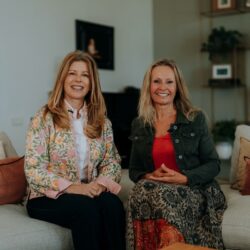
In this episode, Helen sits down with Swiss-born osteopath, yoga teacher and author Mirjam Wagner to explore a deeply personal journey of transformation, resilience and self-discovery.
From a life that looked “perfect” on the outside to a breaking point that forced her to listen inward, Mirjam shares how physical symptoms, emotional pain and life upheaval led her to completely redefine her path. Now based in Mallorca, her work blends osteopathy, Chinese medicine, yin yoga and mentorship to guide others back to themselves.
Together, they explore:
- What it means to “heal from within”
- Why modern life keeps us stuck in imbalance
- The power of yin yoga in a fast-paced, yang-driven world
- Hormones, cycles and reconnecting with nature
- The moment when “the soul gets sick – and the body follows”
- Why letting go is often more powerful than adding more
Mirjam also opens up about her move to Mallorca as a single mother, the island’s evolution over the past two decades, and how to approach relocation with intention rather than illusion.
This is a conversation about slowing down, listening deeply, and finding your way back to yourself, wherever you are in life.
When & Where Can I Listen?
The Mallorca Living Podcast launched on April 9, and new episodes will be published bi-weekly.
You can listen and watch on:
▶️ YouTube
▶️ Spotify
🎧 Apple Podcasts
🎧 Amazon Music
Join the Conversation
This podcast is for you—and we’d love for you to be part of it.
📬 Got feedback?
💬 Want to suggest someone for us to interview?
💡 Have a topic you’d love us to explore?
Transcript
Chapter 1: Introduction to Mirjam Wagner
Hello and welcome. I’m Helen Cumins and this is Mallorca Living, a space dedicated to those who are dreaming of making Mallorca their home. Today I’m delighted to welcome Mirjam Wagner from Switzerland, originally, now living in Mallorca. She’s an osteopath, a yoga teacher, Chinese medicine specialist, and also a wellness therapist. We’re delighted to hear more about her journey to Mallorca. Let’s dive in.
Mirjam, you’re so welcome.
Thank you. I’m delighted to have you here.
We first met back in 2021 with the publication of your first book, Yin for Women. And it was during those times where we couldn’t really gather together, but we did hatch a plan to bring a group of women together to present your book.
I remember, it was lovely. It was beautiful. Also here.
Could you tell us for listeners who don’t know you yet, what is it that you offer?
Chapter 2: Mirjam’s holistic approach
That’s an interesting question. I’m often asking myself how to put this under one roof because I keep changing, evolving, adding and shedding. But if I really would put it under one sentence, it’s like with everything I do, everything I teach, everything I offer, I’m supporting healing from within. That’s the thread that runs through everything.
As a participant in one of your experiences, whether it’s on an individual basis or in a group setting, what could somebody expect to experience?
I would say a journey home towards oneself with all the different tools or ways that I use, that I have been studying, practicing, experiencing for many years. And it really depends always on the individual. Now I’m not doing any groups anymore at all. I have been retreating from groups. I have been working with groups for 20 years, forming and teaching a lot of therapists, yoga teachers in big groups and settings with organ health, with yin yoga, with Chinese medicine — also everything to understand oneself better, so then we can hear, understand and respect the signals in a better way and have tools to respond. Now I am concentrating really on one-to-one sessions. As I’m also changing with the years, I get a different resource of energy and time available. And then it always depends what this person wants or needs. But there are two main streams I would say in these private sessions: either we go more towards holistic health, where somebody needs some healing touch — osteopathy, Chinese medicine — in order to help them reconnect to their health themselves.
Or it’s a more psychological, complete guidance in mentorship sessions where the holistic health can also be a part. But a lot of psychological conversations and integrating movement, stillness, breath work, reflections, feminine archetypes, whatever is there. So it’s quite complete.
Chapter 3: Personalized health guidance
A typical one-to-one session with you — what’s the duration?
It’s usually between an hour and an hour and a half.
Is this something that you would recommend that people do over a period of time?
Usually yes. Usually they also come back and we go — I accompany them during a certain amount of time. What happens is that with the holistic health treatments, some also just need immediate help now. And as the treatment then for 75 minutes, 90 minutes, is so complete, it often is enough that they can go on and maybe come back in a year or half a year because it’s so efficient.
And typically people are coming to you when they have a problem or an issue to resolve?
Usually yes. They have already tried quite a few things before, or they have been dealing with issues — chronic pain, anxiety, fatigue, exhaustion — and then they reach out. And often it does not matter if they are here in person or if they are somewhere else, we can always connect via Zoom and do sessions or meet here where then of course the holistic health treatments are also included.
You have a wide variety of tools to call on that you’ve obviously studied, learned and practiced yourself. How do you decide which tool to use, which direction to go, depending on what somebody needs?
Chapter 4: Books as a reflection of life
This is quite intuitive, I have to say. I mean, meanwhile it’s over 25 years of experience. So in the first conversation it always becomes quite clear what we start with. And then where it goes is a whole other story. And especially when I have them underneath my hands — once we had a conversation, they lay on my daybed on my consulta — there the language and the signals I get only through touch, it’s a whole other world. So I can never say really where we are going, but I usually know where to begin with. This helps.
This is beautiful. It’s great. Can we talk about your books? Because it’s one thing being a teacher, a practitioner and so on, but now you’ve actually put your work into words and on paper. I’ve read both of your books and I think they’re wonderful guides for women. I mean, that’s really what it’s aimed at, right? What was the inspiration? Maybe you start with your first book and then we can talk about your new publication.
Well, Yin for Life I started — I wrote in 2020, just when we started to be locked in. And if it didn’t happen, I think I would never have had the time to really. So that was what was born over this period of time.
Absolutely. And as I write also in the book, this book was not planned by me. It was really coming from a woman — from several women before, and then one woman who really did the final push and came up to me and said, “You really need to write a book. You really need to write all what you have been sharing with us down so you can keep supporting women on their journey.” And it’s the woman who also has made all the archetypes, the illustrations of the feminine archetypes.
And so it was kind of a forced project that then became such a joyful process for me because it was really gathering all of these wide varieties of directions that I’m so passionate about — to really gather them and find ways to present them, explain them in an easy-to-understand way, in order then also again to support healing from within, especially for women.
And so there is anatomy in it, organ health, hormones, how we have been made, Chinese medicine, western medicine, yin yoga, feminine archetypes, spiritual path — but always from the aspect that we do not need to decide for one side, for either being strong or soft and more quiet. We all go through different journeys and that we do not close ourselves up but stay open and keep exploring different aspects of us to stay healthy and adapt to the different stages of our life.
How is it a mirror of your life?
It’s a complete total one-to-one mirror. I had the challenge and the gift and the challenge always to be interested in many different things. And I think you know how this is — to navigate through these interests and passions and dedicate the appropriate amount of time, like years, I’m talking of years, to really dive in a certain topic wholeheartedly and to master it, to really know it, feeling it, experiencing it, studying it, sharing it and really embodying it.
And then I usually come to a moment when I feel the cycle is fulfilled. I can let it go. I want to let this be behind me and move on. And so this book was wonderful to then put the witness of all of these sections that I had been dwelling in for 20 years and put it down so that it does not get lost and giving me space to move on. And this is how I came down to the next topics and sections and areas.
Chapter 5: The role of yin yoga
Beautiful. Can you tell us a little bit about yin yoga, for people again who haven’t — because there’s so many different types of yoga. What does yin yoga offer?
In one sentence again, just that it somehow stays in our mind: yin yoga is a quiet, therapeutic and healing practice. So it’s not better or worse than the movement and actions. On the opposite, they both need each other. They are compensating each other. Yet in a world that we live in that’s yang-focused, where the yang qualities are all promoted and cultivated, yin got really lost and made so many people sick or suffering for one thing or the other because of the lack of balance, because of the imbalance.
And this is when in 2006 I discovered it on my own body, in my own life. I was always very fiery. I have a lot of fire energy and I just couldn’t do anything anymore because of my body and of my energy reserves. I just couldn’t do anything for a pretty long time. I couldn’t go running. I couldn’t work out. Any time I had in between being responsible for my children, working, building up a new life, I just had to lie down. And then eventually I opened up with blocks and bolsters.
And the same thing happened with my patients who came. I saw they do not need more to-dos. They don’t need homework. They don’t need more responsibilities on their to-do list because that was already overloaded. And that’s why they came to me. And I gave them positions where they had to be in for 10 minutes up to half an hour in the same position — comfortable but something opening.
That’s the key, isn’t it, of yin yoga — it tends to be poses for long periods of time but quite soft, right?
Yes. And so of course there are no standing poses. You are lying around the ground, sitting, lying. And instead of using muscle action in order to keep you aligned or in balance, you use all different props. So it’s a whole different process to allow yourself to get help and not to do it all yourself. And this is kind of the first step that brings you into this world of yin energy.
And how has that helped you in your daily life? Because I always — people lose the connection between the practice and the daily life. And I always share when I do yoga retreats or whatever: this is a practice for real life. But people lose the connection, right? Many times they think, “Oh, I sit on my mat and I do that and then I go in the real world and I do something completely different.” But the whole point is that it’s connected and aligned. So how has the yin yoga helped you from that period, I think you mentioned 2006, when you felt quite broken, to building you back up?
Well, this was when I realized I cannot live without integrating it anymore.
Chapter 6: Maintaining balance in daily life
And this is when I started to go out to the world to share it. Because my place was really more in the quiet space before, in the one-to-one, in my consult, the practice, the touch. And there I realized, now I need to go out. I need to stretch myself and get out and be in front of a public and share it with a broader public audience. So they would not have to go through these limits as I have, or they had other tools to understand it. And this was the push. But I can tell you that my life — it’s really the dance, like life itself, between these yin and yang polarities. And I notice it immediately if I haven’t given enough attention to the yin. But the yin is my guidance really, so that my fire then can really be also efficient.
Do you think in this modern-day life, where actually I think we’re all feeling quite overwhelmed, what kind of tools can people use to help them? What can they integrate into their life on a daily basis to help them probably slow down, or to recalibrate, or to rebalance? Because it can’t be always running and taking your reserves — there has to be time to put something back in, right?
Absolutely. This is something that I have come up really with conversations with my daughter. She is a family doctor in Barcelona and she works in quite conflictive neighborhoods where people do not have means to have Chinese medicine or do the holistic approach at all. And this was very interesting, and I put it in very much: it’s not so much what we add or integrate more when we are in this out-of-balance situation, but what can we step away? What can we let go? What do we need to stop doing? Or what are possibilities that we can change by letting it go, to eventually come down a little bit from this imbalance of yang, let’s say, or unhealthy lifestyle? And only then the body and soul are ready to then eventually take one little piece in — being aware of the breath, putting in a pause, having 15 minutes for myself.
I mean, if we talk about busy people, single mothers, families, people who take care of others, there are only 24 hours. So if we add more things to do, even if it’s to slow down, it can be just an opposite effect. So I think this seeing — especially the private social obligations that we put on ourselves — that we can make or distinguish what is really necessary, what not. And of course, our mobile and social media is the first point always, I would say. You can switch these off at 8:00 in the evening, or 8:00 in the morning, so you have every day.
Absolutely. I completely agree with you. It’s one of the things I have done myself — I have taken these apps off my phone and if I need something to check, I go searching for it, but it’s not there as a temptation.
Oh, that’s great. Because I think we waste so much valuable time. And our time is so limited that why give it away to something so meaningless actually, in a way, where other people are determining what you see, what you’re being fed and so on.
Absolutely. Isn’t it true?
Yeah. This is brilliant. I mean, to take this away — and I guess you know then how it’s not easy, that we take something away from ourselves, or that we really do not look, or we cancel something on our phone or switch it off. It seems so easy, but this addictive behavior that we all fall into — to just have an eye on that, and then so much will resettle itself already. It’s down to setting boundaries. Boundaries for yourself and boundaries for where are you getting your information from and how reliable is that information and is it necessary?
Because if you get the choice — and many people think, “Oh, I take a walk in nature,” but then they bring the phone. What’s the point? Don’t bother. Just leave the phone at home. Or get a flip phone if you have to have a phone on you for your kids or for other commitments, and just enjoy nature.
Absolutely. It’s kind of simple, but it feels like we have been now quite disconnected.
Chapter 7: Nature, hormones, and cycles
Because of all the beautiful things that modern life offers us. And like everything, everything good can also become bad or cause harm when it becomes too demanding, too overwhelming. So this awareness, I think, of who we are, getting to know ourselves, getting to become our own best friend — and I think this is really one of my big passions and intentions behind everything, because I feel it in myself.
I love that. And we as women, we’re not great at it, are we? We’re always the hardest on ourselves somehow.
We are pretty harsh on ourselves. We are amazing on giving and providing, and very harsh on ourselves. So becoming our own best friend is actually a lot of the work. Maybe that’s what is the essence of your work in the healing of women — that they come back to themselves and become their own best friend.
I hope so.
Because it does feel like that when you’re reading your books. It does feel like that, that you’re being guided in that journey. So let’s talk about your new book.
Hormones. I read it at the weekend. I really like it. I mean, women of a certain age — whether you’re younger women going through even puberty, and maybe in the 20s and 30s, motherhood, and then as you say, coming through in your 40s, 50s with menopause. We go through many cycles over the decades, right? And you’re really providing a guide here to understanding the impact of hormones on the body. So what inspired you to write the book?
So this really came from myself, from my longing to offer a way that we as women, who go through so many cycles and seasons and changing rhythms all the time, that we really understand it in a loving way — not in this medical, age-threatening way, but really like understanding that we are part of nature, and that nature herself moves through these very wise cycles in form of seasons.
And this is where I was when I was in my studies that I continue about Chinese medicine. There was a click while studying points and acupuncture points — which is a whole other thing — that I said, “That’s it. This is a way to approach us women that I for sure can understand better, that then I can hear the signals of the body that are often given through these intelligent messengers which are the hormones, and that invite me to participate in my journey through the seasons and make changes and adaptations depending on where I am — whether it is in my monthly cycle, in a cycle of a year, the seasons, in a life cycle, or even during a day. I go through different cycles.”
And I have had a very conflictive relationship with hormones all my life. I am very late that I got interested in them because it was so overwhelming to understand a hormone and then how it reacts and how it’s interconnected with others. It was just too much. And based on these natural cycles and based on Chinese medicine with the five elements, then I could also bring in the scientific part in form of the glossary where I talk about 20 hormones, but embedded in this poetic natural writing that I think speaks in a better way to us women.
Absolutely. What I love also is your connection with the elements. So I’ve come across the elements and used it a lot in Feng Shui, which we’ve used for our home and the office and everything. And it’s been a big part of my life for more than 20 years. But it was my first time to understand the elements connected with the hormones and the cycles. And I thought it was really beautifully integrated. What inspired you to take that wisdom and bring it together with the science?
I think it was really this simplicity of the elements that are always based on nature. So in my studies now also with Chinese medicine, it’s so complex — it’s like it’s complex as any medicine science — but always remembering and seeing that it’s all based on nature’s cycles and qualities brings me always back again. And then from there I can go into more complicated scientific areas. And this was really the moment when I saw the chance, the opportunity to bring this complex and complete world of the hormones, which will never be fully understood, really to bring it into our understanding based with this simplicity of nature.
I would love to ask you to do a favor for me.
Chapter 8: Integrating science and spirit
Mallorca Living is a video podcast dedicated to those who are dreaming of making a life for themselves here on Mallorca. This is a very personal project for me where I get to share with you wonderful stories about people who have actually made the transition to Mallorca. I would love to ask you to subscribe to this channel because it helps the channel grow and it makes sure that we continue to grow and prosper and reach as many people as possible who are interested in making Mallorca their home. Thank you so much for subscribing and liking and sharing your comments. We love to hear your thoughts and your feedback. Thank you so much.
I thought it was really unique. And you seem to be able to really integrate the whole medical side with the spiritual side and then with nature and so on. How do you manage to do that? Because you’re pulling on a lot of different disciplines. You seem to have quite an in-depth knowledge in each of the disciplines. Is that the life’s work, you think? Because through your osteopathy and your more medical side you have a really good understanding of the body and how the body works, and it seems like you’re not intimidated to understand the whole scientific part. Because writing a book like you have on hormones, it’s quite a challenge I can imagine. So tell me that, because I’m fascinated.
Thank you for seeing that. It really is. But I have to say, first of all, I’m in love with this life. I’m really in love with this life. And on every level — also because I had to go through a lot of difficult times when I did not respect all of these connections that I’m writing about now, that I’m living by now. But I’m a quite pragmatic person. I’m Swiss-born and raised. I’m Taurus. I have the earth element in me also. I need something substantial first because I can go into the invisible world. So when I was looking for where can I deepen my studies and knowledge, I knew it needed to be something scientific, and it was osteopathy, which was purely anatomy and like the physical works. Thank God with the teacher who also treated the energetic work, emotional reasons for getting out of balance. And I even went for a 10-day dissection course with Gil Hedley where I was dissecting human cadavers because I really needed to know. And it was only until the moment when I had a heart in my hand — because we went layer by layer, fascia by fascia, or the brain with the spinal cord in my hand and really had it there. It was then when I was freed from that, because I kind of knew what I needed to know. Not everything, because it never ends. But then I was ready to move on to the invisible parts like the chi, the Chinese medicine, the emotional parts, the organs.
And I love science. I love medicine. And I think it’s such a pity that today, like with many things, either we have to go for one direction or the other and we miss out so much. Because both of these medicines — traditional medicine, western medicine, and holistic medicine — they are so complementary and offer us a much broader spectrum to choose from.
But to choose from, we need to know ourselves. And I think this is the work that I see, and I understand it’s a hard work, and many give it then to other teachers, to gurus, to professionals, to practices, to whatever, so they don’t need to make the decision. They can give the decision to somebody else. And my books or my work is bringing it back to us. So of course I have people who do not come back to me also because they do not like that — they want to have a fixing, take the pill and be, you know, take that and then the problem is solved. And there are other people around who are [different]. But I think it comes back also to this complete healing, because we are beings on many different layers and levels. And maybe we heal the physical part but the emotional part isn’t, you know, or the energetic. So by bringing all these disciplines together, it feels to me like the healing process is much more complete.
Yes. Yes. Absolutely. I think this is when my journey started back in 2000, when I stepped out of my formal life.
Chapter 9: Moving to Mallorca
I want to talk to you about that. I think it’s a good moment, because I lived a completely different life, which was not bad at all. This was your life in Switzerland before you moved to Mallorca.
I moved from Switzerland. I moved away. Switzerland was not my place. I always felt restricted. I lived in the German part, studied in the French part, worked in the Italian part, and I never felt at home. So I went to Greece for a year on Crete and worked there, and there I discovered my love to the sea. And I knew that this was a fact, not just a holiday dream. It brought me to Crete somehow, still with my first husband, where my children were born. And then eventually I separated from him and the life in five-star hotels where we worked in and lived in. And I discovered a whole new life because I experienced how it is how the body reacts when the soul gets sick.
Tell me how do you know that, or how did you figure that out?
Well, it’s always a messy process, right? We wish you would just see it: “Oh my god, my soul is sick. I need to change something. I have the tools.” And of course we often do not have that. And so it was a messy process for me for sure, and a very painful process. It was not only moving away from this person who is the father of my children — a wonderful person also — but it was also moving from the society. My family excluded me because they couldn’t understand. So it was a really painful process where I was forced into my own space and asking myself, “Who am I? What do I want to do?” And the symptoms that I had were really kind of depression, which I didn’t recognize back then. But my whole system started to shut down — my light switched off. And this comes with a lot of physical pain, but I think especially with emotional, psychological unsettlements.
I needed to find my way through looking for different ways that weren’t the right ways until I connected to: “Oh my god, I need to have a life and find a way that I can be who I really am and walk my path no matter what, and no matter what will come.” But seeing it and trying step by step. And of course I had two children by my hand, so I had responsibilities. But I could see how my system shut off. And I think if I stayed there I would have been sick very, very soon — like psychologically sick, physically sick. Which I feel often when people come to me, and I can recognize that and these symptoms and guide them gently back into their connection, because it’s a vulnerable, fragile place. And not everybody needs to make a big, big change or cannot make a big, big change. I was able — I’m very grateful for that force that I had and that guidance. I became very — not religious, because I’m not [connected] to any church — but I became in those moments very a believer that we are held, that we have our protectors, that there are invisible beings around us who bring the right person, the right conversation, open the right door and opportunity.
So how did that lead you to Mallorca?
Well, when I separated already from the father of my children, I already wanted to move away, but I didn’t want to do this with the children so fresh and taking the father from the children from him. So I worked on me to get healthy. And three years later into the process, when I was more stable and solid and living a decent, good life — very simple — I just felt I needed to find a way to live by the sea if I wanted to stay healthy, [to preserve] what I had been building up.
What is it that the sea brings to you? What does it give you?
It brings these — because it’s different than a lake — it brings this constant movement. It’s not stagnant. The absence of stagnation. It’s also like — the water element is related very much to relaxation, right? Calming. Yes, to calming, relaxation and at the same time to renewal. So healing, renewal, calming. And of course what Mallorca has, it has the mountains too. So it has mother earth. It has the earth element. If not, I would have gone to Ibiza, where it’s much more water and air. But I needed the earth. So when I was looking around the Mediterranean and where the circumstances would be okay for me with a very simple job and two children and a future for them, this is how I found Mallorca.
Chapter 10: Life in Mallorca
So you took the plunge and moved here. What year was that?
This was 2004.
So tell us about your life when you arrived here, a single mom, and trying to get started. Did you speak Spanish at the time?
I kind of did and I didn’t. I mean, I spoke perfectly French and Italian and I had the grammar from Spanish. I tried many times. I was also once in Spain, but I didn’t speak it. But I truly bluffed my way through it. I just said, “I know Spanish.” And I was sitting every single evening with new words, with my vocabulary, with the dictionary back then, with the new words that I learned with my Spanish clients that I got. I started in Madaval Hotel in the spa the first year. And so I upgraded my Spanish and I was only surrounded with Spanish-speaking people.
Brilliant. So that came very quickly. And you enrolled your children then at school here?
Yes, we said, “Okay, let’s do it a year.” I didn’t give up my apartment at home in Crete yet, and they said, “Okay, let’s do it a year.” We did it really together. They were nine and 11 and they went to a German school — that’s not existing anymore right now — in Magaluf, a very small one, beautiful for them to arrive. And half a year later we all decided we want to stay, and they went to Son Caulelles their whole life until they finished.
Really? So they went to — it’s a Spanish semi-private school.
And that was good obviously for them too.
Very much. It gave them the opportunity to fully integrate in the Spanish culture life here on the island.
And you mentioned your daughter is a general practitioner, is a medical doctor in Barcelona. And that came from obviously her education here and learning Spanish and then going on. And did she study in Barcelona?
She did. She’s actually really at home in Barcelona. She loves it. And I of course am very happy she’s there, and I combine my study with acupuncture. I go once a month to see her, and she is really fully at home there.
And your son?
My son here also started in Barcelona with architecture. I mean, both of them did a gap here. So both of them traveled first and started there. And after a year and a half this was not his thing, and then he continued studying, traveling, and then started working, studying, and he’s now for the last six or even eight years in Holland in Utrecht and has his own business there.
So you gave them the travel bug.
It opened their world, no, to new possibilities.
Yes. This is kind of also why I chose Mallorca, because I saw there were different possibilities of schools and they were good schools — not so many as now, which was also easier to choose of course. But I knew we or they would probably not stay on the island, which was never kind of the vision. And so I needed to find a place where they could have education that enabled them then afterwards to choose a path that suits them.
So they were happy with your decision to move to Mallorca.
Thank God they were, because if they weren’t, I don’t know what I would have done, because we did it together. So all three of us needed to be happy.
Very good. And where do you live now on the island?
Now I live in Establiments. It’s still Palma.
It’s Palma. It’s not by the sea though. So how do you integrate sea life with Establiments?
I always relate Establiments to being a little bit like Italy. I don’t know, with the hills and the trees. It always reminds me when I drive around there of somehow the landscape of Italy.
You’re right. You’re absolutely right. I’ve never connected it to it. I always connected it to Bethlehem, because when in the morning I come down from this hill where we live — a little hill — I look at the back of the pueblo of the village and there are some palm trees and the color of the houses and the size and everything is so picturesque, and it always brings me back to Bethlehem the way we imagine it with the whole Christmas story. But it has something from Tuscany. Absolutely. And yes, it’s not by the sea and it’s more towards the mountain. I see the sea from our home from the bedroom. And it’s interesting because my absolute dream is to have a little bungalow by the beach like Formentor or Playa de Muro. But the practical side of it on many sides — being connected to Palma, the moisture, the humidity, being involved in life here — has brought me more towards Establiments. And also dealing with the heat in summer. So it’s with the mountain air it’s still different.
How long were you living there?
We moved in — or the house found us — when I just turned 50. So, eight years.
Before I was always in Bonanova at the border of Palma, seeing the sea very close, hearing the ships.
Chapter 11: Evolving perspectives on growth
So tell me, since 2004, since you’ve been here, you’ve seen such a big change with Mallorca. What’s been the biggest change, do you think, in that time span?
I would say in general I always say the change has always gone towards better. So they are improving, improving, better taking care of the architecture of what is being built, especially by the coast in Palma city. And the incredible amount of offer that we have, the diversity of offer in regards of lifestyle — like restaurants, shops, we buy our food, healthy food, vegan food, vegetarian food, which back then — I mean, you have been here before that I came — it was a whole other landscape. And I really enjoy the diversity of offers and of cultures that have been coming here and then adding their offer, whether it is in food or lifestyle, but also in practices, in opinions and perspectives how to see the world and keep participating in making the world a better place. And if we start here, so I think this is one of the biggest changes and positive changes that I have seen.
And what about the type of people coming to Mallorca now versus when you [arrived]? I think there’s also been quite a shift or change.
Yes, it has. And I have to really work with myself often because I catch myself being like in this protective attitude, like, “What do you want here?” or “Another one?” And I stay open because I have been received with open arms before. Because what I see now — a lot of people, many, many people come and of course recognizing the amazing place that Mallorca is and taking opportunities to build up a life here, earn their lives here. I’m always challenged when there is a lack of respect for what already is, and there is of course a lot of this too. So a lot of people come with their own attitudes, like “I’m the best and I bring this here,” and they don’t know. And at the same time a lot of amazing conscious people have come here that weren’t here when I came, that have incredible tools, knowledge to work the land, to work also in all different ways, and really contribute to a better lifestyle here in respect to the resources we have.
I agree totally. The spiritual world — because you and your partner, you’re both very involved in the spiritual world in Mallorca. Tell me a little bit about that landscape, that world, because for somebody listening who’s maybe searching for that, Mallorca is quite an interesting place to find.
It’s different. It’s definitely interesting on a spiritual, energetic, spiritual level. So much is possible now. A lot of these practices that have to do with healing in a spiritual, holistic way — the spectrum is really broad and the professionals and people who know about this has increased a lot. So there is a lot of offer here. And as always where there is a lot of offer of that, we need to be very aware of what is more spooky, more authentic. But at the end also I mean I think there is enough for everybody, and I think this is beautiful. So my partner and I, David and I, we feel more like we are from another generation now, getting into our mature years. So we come from the world of yoga, of pranayama, of mantra, kirtan. And this is already seen like a little bit like a dinosaur practice compared to, you know, breath work, trauma healing, sound bath, mushroom, all of these kind of practices. So our decision also to change and move on into a more one-to-one and more retreated state has a lot to do [with] how the world is also evolving, also the spiritual world.
And that’s a global thing, because you’ve worked all over the globe, that’s for sure. So have you seen that in other continents and other countries? It’s the same?
Yes. This shift is definitely global. And we have to think a lot of our teachers when we started, when we were mid-20s. So they must have — how must they have seen us, you know, then, full convinced that this what we do and how we put it in is what the world needs. And now we are at the spectrum that we see the young ones or new generation in all different ages come and be convinced that this is the right thing.
Chapter 12: Wisdom and future goals
So it’s this evolution also that comes with the years and aging and going through seasons and going another round and staying open to that and still finding a way, a place where can I be authentic, offering what I believe in and I practice and I want to share.
But I think yes, when you talk about seasons, it’s this idea of mastery. And a lot of people forget — there’s a whole cycle of learning, right, and then practicing and experiencing, but the mastery phase is such a beautiful time when you can, like you’re doing with your books, pass on the wisdom to the next generation, to the students, right, because that becomes the foundation for them for the next phase of evolution.
That’s true. That’s true. So it’s a beautiful time. And many people feel they kind of stop one thing and forget that there is this kind of final phase of passing on the wisdom to the next generation, which is mastery.
Yeah. I think it’s challenging, right, in a constantly moving world and especially with the speed we have nowadays, to find your place again and again. I think it needs really this understanding of the world evolution, our place here, not taking it too personal that all these changes are happening. I remember a lot my parents and my grandparents having a whole lot of respect for them, what they have all gone through, and now expecting or seeing and trying that I do the same, or that I do not shut off and get stagnant and just say, “But this is the right thing.”
So, but I feel for our generation and those before us and for the aging process, it’s not easy and it can be painful, right?
Well, I think it’s down to acceptance. You know, you resist it or you accept it. If you resist it, you have a fight. If you accept it, it flows more easily. So it’s with life all the time the same.
One question: how do you see yourself in the next years? Like, what is your next goal, your next vision, for where do you see yourself going the next four or five years?
I think or I feel like I want to keep going like this: staying healthy, staying happy and connected to the people that really matter, and staying engaged with the world in a way, in the rhythm that reflects the season I am in. There is nothing I want to achieve or like more books. Are there more books on the horizon? I think they come really from within, because I am not planning them. And then it’s like, “Oh, there is the need, the longing to put something out.” So we will see, it’s on standby. And you will get the direction.
So, a final question. If you could give one tip or piece of advice to somebody who’s thinking of making Mallorca their home in the future, what would you like to share?
Chapter 13: Advice for those moving to Mallorca
Well, if there is a possibility, come before you make the move. Come as often as you can in different times of the year and really explore the island in the different seasons and get a feel for the different energies that the island is in and the different rhythms that she moves, as they can be quite different if you come in January or in August.
And if you do not have the possibility to come before and you just make the move, just find a place where you can start your life in a simple way and let the perfect vision rest there and wait until you can fulfill it. Because we might often come with a too-perfect vision that then does not match the reality, and this can bring a lot of suffering, conflicts, and then even frustration or having to leave again.
So just giving the island time to show herself to you and giving ourselves time — or them who are coming — to see if it’s really the right place for them. Putting time in: before a year, it’s probably not probable that we have really an idea if we feel okay here or if the island is opening her arms to us.
It’s very true. Very good. Good advice, Mirjam. Thank you. So our last quickfire questions: beach or mountain?
That’s a tough one for you. It’s tough, but no doubt: beach.
And sunrise or sunset?
Sunrise.
Summer heat or winter cold?
Winter cold.
Siesta or fiesta?
Siesta.
And pa amb oli or ensaimada?
Pa amb oli.
And north coast or south coast?
North coast.
Very good. Thank you so much for being here. It’s been such a pleasure. I always feel so inspired when we’re together and sharing, and we could go on for another hour or two.
Absolutely.
I wish you the very best with the launch of your new book, Hormones: Seasons of Change, Cycles of Wisdom. And I see that you do have some events coming up around the launch of the book, so if anybody’s interested please check out the events. I saw it on the calendar with the Mallorca calendar that you have some events coming up. And also, if somebody wants to buy a copy of either of your books, can they get them on Amazon?
Yes, it’s the best, it’s really the easiest way to get it from Amazon. And you support me there also really greatly because it’s a self-publication through Amazon and it only gets printed when it is ordered. You get it right away. And of course if you like it, then do put a review — will also help. And you mentioned that I have the soft cover, but the hard cover of Yin for Life is also coming out.
It’s already also on Amazon, the hard cover. Yes. And all of them — the Hormones — it’s in English, in Spanish, and the German version comes out in a month or two.
Brilliant. And the other book, so a month or two would be, let’s say, May of 2026. So for somebody who would like to have it — and honestly, it’s a wonderful read, very informative, a lot of great information and inspiration. So thank you so much for all that you do and for the wonderful person that you are. It’s really a pleasure to know you. Thank you.
Thank you so much, Helen. Thank you for having me here. It’s really an honor and I hope we can continue our conversation.
Of course. Thank you so much.
Thank you.
If you’re dreaming of making Mallorca your home, let me invite you to use our property buyers agency service. With our service and our help, we can guide you to the right location that fits with your lifestyle. We’ll also help you find the perfect home that fits with your dream. Contact us today for an online consultation or book an appointment and come and see us in Palma. We would love to help you make your transition to Mallorca a reality.
Address details