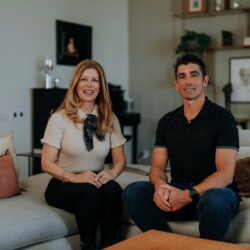
In this episode, Helen sits down with Jon Ander Arambalza — endurance athlete, Mallorca 312 captain, and one of the leading figures in adventure racing.
Originally from Bilbao, Jon shares how a life shaped by mountains, movement, and discipline led him to Mallorca, where he has built both a family life and a world-class sporting career.
From competing in multi-day adventure races with minimal sleep to helping shape one of Europe’s most iconic cycling events, Jon offers a rare insight into the mindset required to perform at the highest level, and why mental strength matters more than physical ability.
Beyond sport, this is a conversation about lifestyle: raising resilient children, disconnecting from modern distractions, and choosing a life grounded in nature, movement, and purpose.
In this episode:
- The evolution of the Mallorca 312 from 199 riders to 9,000
- What it takes to compete in multi-day endurance races
- Why “the most important is the mental”
- Life in Mallorca as a sporting family
- Practical advice for anyone relocating to the island
A powerful episode for anyone interested in performance, discipline, and building a life with intention in Mallorca.
When & Where Can I Listen?
The Mallorca Living Podcast launched on April 9, and new episodes will be published bi-weekly.
You can listen and watch on:
▶️ YouTube
▶️ Spotify
🎧 Apple Podcasts
🎧 Amazon Music
Join the Conversation
This podcast is for you—and we’d love for you to be part of it.
📬 Got feedback?
💬 Want to suggest someone for us to interview?
💡 Have a topic you’d love us to explore?
Transcript
Chapter 1: Unpacking the phenomenal growth of Mallorca 312
Hello and welcome. I’m Helen Cummins and this is Mallorca Living, a space dedicated to those who are dreaming about making Mallorca their home. Today I’m delighted to welcome Jon Anders, captain of the Mallorca 312 cycling event. We’re going to hear lots more about cycling in Mallorca and him competing at a world level in adventure sport. Let’s dive in.
Jon, you’re very welcome.
Thank you. Yeah, delighted you’re here. We’ve known each other for a long time. I don’t know if you realise, but our anniversary is actually coming up very soon. We started training together in May 2020, so it’s been a long road.
It is. Yeah. Has it gone so fast?
It’s gone so fast. And I always remember you telling me maybe in five years, six years, you’ll actually be an okay cyclist. And I thought, that’s crazy. How could that be? Why does it take so long to be a great cyclist?
You know, like for everything in life, there is not a special build. So you need to keep working in so many things in life. So now you know.
So have I reached my goal, do you think, on the way together?
Still on the way. On the way.
So tell me, you have been part of the Mallorca 312 from the very beginning and we now see the success of it, but I guess it didn’t start like that. Can you tell us how did it all begin?
Yeah, it is. They started, like I said, the Dart Club started as a friends’ local race or event. And after a couple of years doing that, they finally made it an official race in 2010. So I remember that day we were just 199 people.
Okay, 199. And was that when you did the periphery of Mallorca?
It was. Yeah. And that’s why it’s called the Mallorca 312. The 312 kilometres to do the perimeter. But obviously it grew so big because now it’s over 8,000 participants, right?
Yeah, 9,000. 9,000. Wow.
And at that point, why did you limit it? Oh, you know, the Tramuntana, the road of the Tramuntana, the space around is not so big to be more than 9,000. You used to do the time to turn the short one and you know how narrow the road and the places we used to stop—they need to be a little bit bigger and there’s not more space, so to be comfortable, to be secure, I think that’s the perfect number. But initially the race went from Platja through Palma actually, but that stopped because as the event grew bigger and bigger, they didn’t want to close the roads for Palma, right? And then they diverted it. Did that make a big difference too?
I think so. Yeah. Because now we can enjoy differently. It is a special race. All road is completely closed for the cars, so we have all the road available. At the beginning, from Calvià to Andratx more or less was open road.
Oh, okay.
Yeah. So now—I know it’s a different race because we’re not doing all the loop, the contour of the island, but it is nice because it’s a little bit harder. We climb 1,000 extra metres in total. So it is quite challenging.
Yeah, I have completed the 167 three times now and I can’t even begin to imagine what it is like to do the whole 312. And I know people who have completed the whole race and said they would never do it again. What—I mean, you’re doing it every year. How do you prepare for something like that?
Yeah, I’m going to tell you a secret, but—
Okay, great. Tell me after.
Yeah. The most important secret is don’t think about it. Okay. Just go and do it. You need to be ready for it physically. You need to be trained. You need to be focused. But then it’s don’t think, just go for it.
And what about the cut-off times and all of this?
Yeah, of course you need to be fit. That’s a different thing. If you need to finish the long one, you need to be enough to finish, to arrive to the cut-off. But the most important for long distance is don’t think in short, think in long and go step by step.
So you’re usually the first one over the line, right? You and your team in the green dot jerseys. And what is your role for the day? What is the purpose?
Yeah, this is something new. We started 15 years ago in the first Mallorca 312 and we saw it was an amazing thing and after that we started getting a little bit bigger. People started knowing us and yet the most important is we started at the beginning to make the race a little bit secure, to go all together. We train the pros not to go too fast initially, and just to go like a big peloton and after 30 kilometres they start going, they start climbing. So we don’t really care on climbs. And after that moment we start going on back, because you know when the police they are controlling the time on the crossing and they’re opening the road—it is completely different if you can see a cyclist or you can see someone to follow. It is psychologically different. So we are like the person or the group you want to follow or you can see to know when they’re going to open.
So it’s like a reference, a real reference, because in other races they put in a motorbike and you know they can do like this and go faster, but on the bike that’s not possible. So it’s like a real timing to follow.
Yeah. You can follow somebody. So you are always the last over the line and then it’s literally—it closes at that point.
It is. They’re not closing the race. The one they’re doing is opening the road. So officially you are out of the time, nothing happened, but you can be out and then come with us. But yes, it is the last timing. Why is Artà—I guess it’s because it started there, but everybody says that the heart of the Mallorca 312 is in Artà. What do you mean, the heart is like with the fun and—
No, you need to go and see that.
Yeah, but I would have to participate in 312.
No, but I guess it’s because the founder is originally from—yeah, all the group they are from Artà and they left the race like the—what was growing there. So they left it since the first year. And all people, they do their celebration there more than on the finish line. The atmosphere, the energy they give to you, that’s amazing. All people having a beer, they enjoying, they smiling. Yeah, it is something completely different.
So why do you think it’s grown to such a success? Why has—I think the team, the organisation, they are very good. They know how to be—it is you have the feeling you are part of the race. It is something nice and the atmosphere, everything is very well done. They’re looking for you.
It’s not just—there are other races that are just looking for the money or they just taking care of the company. They’re growing, taking care of everyone and they seem every year they’re trying to get better and better and make small improvements, trying to change things.
Well, I only have experience of the Mallorca 312 and I have to say I think it’s an incredible event, how they organise it, and there’s so many people involved and everybody seems so helpful and supportive. And I don’t know, it just seemed like such a great thing to be part of. But I don’t have experience doing races in other countries, so I have nothing to compare.
I’ve been in many races and I think the most important is the team, who is organising. And that is going to make a big difference and they are very good organising. Because they are always trying to make everything better and to change things. Very good.
Chapter 2: Enduring challenges: the mental game of adventure racing
So racing, cycling, is such a big part of your life and living in Mallorca. Do you feel privileged to live here when you enjoy?
I do. I do. But the most important thing is I decide to be here. So yes. So I know why I’m living in Mallorca. I’ve been around the world. I’ve been—I’ve seen many places. There are very nice places around the world, but I think for training, travelling, to be safe, I think the island is—I don’t want to tell a lot of people, but I think this is one of the best places to live if you’re into sport.
So tell us about your adventure sport, because it’s not something that’s really well known, but of course it’s an endurance sport. It’s a really tough sport. Can you explain what adventure sport is?
Yeah, it is quite difficult to understand. A lot of people now, at the moment, maybe they know what it is because there is a movie called Arthur the King. Oh yeah, I saw the movie. It’s about the dog and that is a real—the movie is done from a real situation. So a lot of people now they know what it is. It is, like you say, a long-distance sport. We always combine mountain bike, trail running and kayaking, but it can last for days already. It is like we have in World Cup and World Championship—the World Cup used to be three to five days. I say three because sometimes could be three, three and a half, four, and that’s for the winners, and they close the course like not double but two or three days after for the rest of the teams. And the World Championship used to be the longest—it is minimum of four, five days, could be—we did a World Championship, I think the longest we did was nine days.
Nine days. And you sleep—you sleep in the wilderness literally.
I think we did once, in Australia, I think the record in five days we slept, I think, three hours.
Oh my gosh. How can you function with that?
Oh, suffering a lot. Suffering a lot.
But that’s one of my questions—resilience. Like, how do you go through the mental barriers because obviously there’s—you reach a limit of physical exhaustion but you still have to keep going as a team.
It is. Yeah. Yeah. Because this is a team sport. We always racing four together. Three men and one woman. Three men and one woman is mandatory like that. Or could be three women, one man, doesn’t matter. You can combine it. And yeah, the thing is at the beginning you know the time and the place for the starting line, but you don’t know anything else. So you need to manage the stops wherever you want. You can stop at the hotel if you want, but you are losing time. So if you want to win, the best is to stop the minimum and to know how to manage all the time. Depending the weather or depending the state, you will stop earlier or later. Depending—every situation is complicated.
Are you all motivating each other and trying to keep each other going in the tough times?
Yeah. Yeah. The most important for endurance sport, on working in a team, is to work together all the time. We need to work together like one person. So if one is getting tired, if one is going slower, we need to carry the luggage or maybe we need to pull him or help a little bit, or time to time maybe they need to help me. So it’s not always the same person. You never know when you’re going to be in a bad situation. And we are like a family. We are just one person.
You don’t actually train together all the time because you all live in different places.
Yeah. This year we have a new member. We have a new woman on the team. She’s very strong. She’s super motivated. And she’s going to be here in Mallorca for the event. We will talk after—she’s going to be one week here training with us, knowing each other. And then we have another small event and two races. So I think it’s enough.
So your last event was in Canada, right? And you go some days before to prepare everything.
Yeah, we try to do it depending. We couldn’t make it because we’ve been in Marató Contador a couple of days before—it’s another race, the Chiso is helping to organise and that one is in Valencia and we’ve been a couple of days before the race helping in that race, doing the same job. But we used to be one week, 10 days before every race. And then preparing mentally. It’s more to be calm, not to have stress, to keep all the equipment, food, everything ready, because it’s quite complicated to have everything ready and to be focused on that, sleep well, be prepared the first five days.
So what’s been your most memorable moment from your adventure racing days?
Good or bad? I have a lot.
Yeah, so what’s your most memorable—maybe the first win in a World Cup. I have a very good memory because you know when at the beginning you are not used to win, so you think it’s impossible to make something like that. So when we arrived to the finish line, it was something amazing that I don’t know.
And you’ve won—how many times have you won the World Championship?
I now it’s difficult to check, maybe 15 times. Wow. 15 World Cups.
Wow. That’s incredible. That’s impressive.
Yeah. Many, all my life. Yeah. I’ve been racing all my life.
And with the same team members?
One of my team—he’s from Bilbao. We’ve been together maybe almost since the beginning. The other one, Marco, he’s living in California. Maybe more than 15, 16 years.
That’s a lot.
Yeah. So you’re a good team together, huh?
Yeah, we know each other very well. If you’ve been through those kind of times, we can look each other and we know what we need.
So that’s an incredible thing. Why do you do it actually?
Chapter 3: Jon’s journey: raising an active family in Mallorca
That’s funny because—maybe I need to go when I was a child. Please start at the beginning, tell us. So you grew up in Bilbao?
I grew up in Bilbao. I was a very active kid. So my parents started putting me in different sports. I was doing judo until a very good level until I was 20 years more or less. And every weekend I was always at the mountains with my parents, skiing. Your parents are both very active as well—they were very good cross-country skiers. So I was every weekend running or trekking or skiing. And I think with 18 years old I went, before the university, I went to the Pyrenees and I did a guiding degree. I did like a teacher or a guide for guiding at the mountains. Outdoor guiding. Yeah, I’ve been studying there. And after that, I’ve been travelling around New Zealand, USA, practising climbing, kayaking, and doing a lot of things like that before the university. And obviously I did the sport degree at the university in Madrid where I had a lot of good contacts from Madrid and I started growing my experience and fitness and getting a base of part of the things I know. After that I started working in a gym in Bilbao and after one year—I know maybe not more—they called me from here, from Mallorca. I saw Magasport in a magazine—for me it was one of the best gyms in the world. So of course I decided to come here and I started the new life.
And that’s when you met Chis, right?
I know Chis—I don’t know if I knew another one before, and then Chis or both together. Yeah, it was like—we’ve been in Zaragoza in a big event of fitness where everyone was talking about different areas and I knew them in Zaragoza and they made me the offer in Zaragoza. So I came here just to know the island. And I told my partners in Bilbao, “No, I’m going to be learning a little bit more in Mallorca for a year and then I will come back. Don’t worry.” And after one year, I said, “Okay, maybe another year.” And after the second year, I knew my wife. We had two dogs, then two children, and finally I’m here 24 or 25 years after.
Are you married to Mallorca?
She’s mixed. Her father is from Bilbao, so it’s like—but she did grow up here. Yeah. She works here.
And actually it’s good that you bring up family because you are very much a sporting family. So actually you met at work, right? Because she’s also like you.
Yes. She’s also a personal trainer, Pilates trainer.
So your whole—but your children now are also big sports fans, right? So what’s a typical week for yourselves?
Yeah, it is depending. The year is changing. They are kids—the one they want to do is just have fun, they want to play. So now they are 13 and 14, now it’s much easier, everything is already almost done. But at the beginning—because I know a lot of families, they have this problem and the problem they had, it is the same for me. I don’t have a special secret. We’ve been working day by day to be doing a sport every day and that is with your children, and it’s including them, right? You included them from the beginning. Like it is for me now, by giving them this because I think it’s the best education I can give them. They’re going to take the best of the sport and use it on life and mentally they’re going to be stronger and better than the ones not doing it. So sport is giving you so many things and I know by myself. So now I’m giving them since the beginning and now for them it’s much easier. They don’t think, they just doing the activities, they need to train and they are focused on the level. I don’t care the level. Because my daughter, she’s doing at a high level and my son, he’s doing at a medium level and I don’t care. I don’t get that. It’s up to them.
But sport is such a big part of your lives, right? So a typical Saturday and Sunday—tell us what a typical Saturday and Sunday looks like.
Yeah, I remember because I used to go biking on Saturday and time to time going with a peloton and I—it is part of the things—I can hear on the rest, “Maybe next Saturday I can go and maybe I’m not coming with the group because my son has—I don’t know whatever—I need to drive him,” or so. That kind of thing. We’ve been working together and now the funny thing is everyone is training on Saturday morning, so everyone is happy, everybody does their thing, right? So until one or two o’clock for lunch, everyone is in a different place working or doing whatever, and then we meet each other. We meet for lunch. Then usually we need a big siesta because during the week maybe we don’t have it. We have activities together in the afternoon, easy activities. And then the good thing is everyone needs to sleep a little bit longer on Sunday. So we used to sleep, not worry about the timing, and depending time to time—you know in Mallorca the weather now is getting nice—so we used to maybe go for a trekking or do an easy activity all together. Look, it is more a sport, but I don’t use it like that. I use it—everybody needs to learn. And it’s how I try to teach them different things of life. So they need to suffer time to time a little bit. They need to do things they don’t like. They need to do different things. And you know at the mountains you never know what is going on. Time to time we don’t have water or it’s getting longer than we expect or an accident like you experienced at Christmas time.
Yeah, true. You never expect that. You never want to have an accident to show the others how to act, but it is like that. I never fall in the mountains, but with my family, a couple of months ago I fell and I dislocated my shoulder. It’s not normal, but it could happen to anyone.
But even when you go travelling and everything, you know, it’s a whole exploring and nature and it seems to be very much a part of your life. And what I think is nice is you seem to be very strict about the technology and all of this with your kids. So you try to give them real experiences rather than the virtual life on a mobile phone or whatever.
Yeah. Because, you know, I think we are lucky because we come from the generation we didn’t have the telephone. We didn’t have that kind of thing. You remember—if you want to maybe connect to somebody, maybe you need to call to his house, leave the message there, you never know did they get it or not. Or you plan something and you are waiting for the rest of the people—maybe they coming, maybe not. So those things, they are changing now in life and I understand because I understand my kids in the situation they are. So I try to keep them to the reality, show them the rest of the things. And then they can compare a little bit and choose what is good for them, what is not good for them. Because they are very young and they don’t understand why the social media is not so good if you are using too much. They don’t understand. But we do because we know what is the real life and what is the not real life—how they showing everyone on internet. And I don’t like my family to be there. I’m lucky because they don’t have social media. They don’t use it so much. The phone we have—they have a contract for the phone. If they want to use it, they need to sign it and follow the rules. And the phone is our phone. They need to put it always on the table. They are not allowed to put it in the room. They have a timing to use it. And I think it is the good way for the young people because they don’t know.
Chapter 4: How sport builds resilience and life appreciation
I would love to ask you to do a favour for me. Mallorca Living is a video podcast dedicated to those who are dreaming of making a life for themselves here in Mallorca. This is a very personal project for me where I get to share with you wonderful stories about people who have actually made the transition to Mallorca. I would love to ask you to subscribe to this channel because it helps the channel grow and it makes sure that we continue to grow and prosper and reach as many people as possible who are interested in making Mallorca their home. Thank you so much for subscribing and liking and sharing your comments. We love to hear your thoughts and your feedback. Thank you so much.
Your daughter is for me a fascination because she’s so young and she’s so committed and so motivated. Tell us a little bit about your daughter and her.
Yeah, I think she’s a gymnast, right?
Yes, she’s doing gymnastics. I think since the beginning because she was always on the ground, rolling and doing things. So I never did gymnastics but we’ve been talking and we said, “Okay, let’s try with gymnastics, maybe she will like it.” And it was amazing. Now it’s the only thing she’s thinking. Yeah, she’s always thinking in that.
And how many hours a day does she train?
So today she’s finishing school at two, so I think she’s there since two with the food and everything until nine at night during the week. She’s trying to train a little bit less because she needs to study or do homework, something. So she needs a balance with the normal life. But the weekends, maybe on Saturday they train for four to five hours a day. Summer, when they don’t have school, she’s training double, say maybe seven, eight hours.
But she’s on the team? She’s in a club—On Cheska club. And then they have like the centre for high performance. But if they want to be on top, they need to keep training the maximum they can. Who knows? Maybe she will arrive or maybe not. This is very difficult to say at the moment.
Might be a lack of commitment on her part. That’s for sure. Because the most important thing is the mentality. Not in a kid—I mean for any sport athlete, the most important is the mental.
It is, and it’s actually what lets people down, I’m sure, in endurance sport and so on. It’s many times the mental, it is the mentality.
Yeah. Because I know a lot of people they are stronger than we are. We are not—we are strong but not super strong in all the sports we are practising. The big difference is the mental.
And how do you do that? How do you build that?
I think part of you grow and the rest you keep learning, depending how you say—the stimuli, what you do in your life. If you always stay, you are not watching to the sides, deciding—so it’s going outside your comfort zone, really, always. It is that’s always in life. But I can tell you my races and the real life, it is the same.
Well, that’s what I wanted—like, where is the crossover between what you do?
It is the same. Every race I do, after that is like a mental cleaning. I’m always coming home. I’m always looking to my house. I have the best house I can have. I have the best family. I have the best ever. First thing because I’m choosing what I want and think of second thing, because I’m not doing anything to change that—it is the one I’m choosing and I need to be happy with that because it’s the one I’m looking for. And I think the most important in life—everyone is looking at what the others are doing or what the others have, and I think we need to look at the one we have at home and just appreciate and be happy.
Going through these endurance races and so on makes you appreciate more the life you have?
100%. Everything. You don’t know how happy I am when I arrive to my house, I lay down in my bed or I have just a basic soup or just being with my family.
Well, I had this experience yesterday—I was up in Randa on my bike, I thought I will die with the cold, it was so cold. I had a 10-minute shower when I got home and it was like heaven. So I get what you’re saying.
Yeah. Exactly. Exactly. So time to time we need this kind of disconnection. But we live the complete opposite because actually in our life it’s always that we want to be consistent, status quo, comfort, and not do everything to maintain that, to not go out of that.
That’s modern life.
Yeah. I think it’s the stress or maybe we get blocked or whatever. So we need to—I’m not telling everyone to do the same I’m doing, but we need to find the way, that way where you can be happy, you can disconnect of everything and you can just find you and just start thinking about everything, just the positive thing you need and you want. And then look what you have and maybe you have too much.
But it means going against what is the norm, because everything in our life now has become convenient. Convenient food, convenient travel. We move the minimum because we try to get a car or a bus or a way of getting there without actually utilising our physical energy. And it’s the same with cooking—going and buying the ingredients rather than buying something that’s ready-made. And the whole life at the moment, everything is changing.
Yeah. Yeah. But the movement is basic. I mean, I’m always telling you, try to take the stairs. We need to be moving. We need to be active every day because every year we’re getting opposite. We’re trying to be more comfortable, sitting all the time, taking the car the maximum. So that’s the reason we need to do more sport, just to connect with the reality and with ourselves.
And what do you think about people who are then spending so much time on their phone, their evenings are kind of scrolling, and computers?
I know computers and—yeah, it’s like a drug. I can tell you the sport is the same—it is a drug—but it’s giving you so many things, so many positive things. So I know it’s very difficult if you never did a sport to start doing a sport, but it is the moment—never is too late. And you need to go just step by step. You don’t need to be pushing since the first day, but just go for it. Start doing something, then start doing something more. Then start putting like a goal, something, a challenge, a real goal. It doesn’t need to be very long. You put every month or time to time a small goal and then you can put a big goal at the end of the year or the middle. I have like a couple big and a couple small and that makes you more motivated and you will enjoy more the moment.
Your day-to-day work is personal training and so on. Can you tell us a little bit about that?
Chapter 5: Jon’s training philosophy & Mallorca as a cycling paradise
Yeah. The reality is I’m mixing all my experience, all I learned since the beginning—like the one I learned guiding, the one I learned at the university, and the most important, all my experience I learned with my friends, with my partners all around the world, and my experience racing, my experience with the food, my experience with the stress. Everything is what I’m trying to give everyone. So that’s the reason it’s not just a training—I could mix and make it more real coaching or helping everyone with the type of training or the type of talk we need in every session. So it is the one I’m trying to do, and look, maybe I’m doing the same every day, but it’s not, because maybe you think I’m helping you every day, but it is opposite too. I’m learning every day with everyone, with every new situation. I’m trying to help maybe with an injury or I’m trying to help with a problem, or maybe sometimes it is not a massive problem. It is a motivation problem. Could be something mental. You have maybe too much stress or you have a problem and everything is affecting your body or your training or your level. So it’s more or less to find and to know that situation. And that is the one I’m trying to give to my kids because I’ve been learning all my life this and they are learning easily every day how to manage and how to fix those things.
So they will have my degree—they will have it, they would have 20 years.
Very good. So when you’re with a client, let’s say, you’re not just focused on the physical side of it. It’s like more the holistic side of everything.
Everything is important because if you have a shoulder injury, of course, we need to work on it. But maybe it’s connected with something else. So maybe you need to go on holiday. So maybe you need to find something extra. That’s the reason most of the people I’m training—I can tell you 90% or maybe 100%—they are cyclists. So they’re doing something outdoor because the outdoor activity is giving us a special connection other sports are not giving so easily, and it’s because of nature, I’m convinced. I think so many things.
Yeah, but I think it’s the—for me anyway, my experience—I started cycling in 2017 and I was already training in the gym and doing all of that, but it was nothing. It completely changed my life when I started cycling. And I think it’s a combination of being in nature, the connection with nature, and then the whole physical benefits of actually doing something cardio.
And one very important thing—you don’t need to be super fit to be cycling. If you want to go for a run, you need to be fit. But I love seeing here—I’m sure you see it all the time—these two men maybe on a bike and they’re friends and they can be like 75 or heading even more and they’re out going on their bike out for the day and I think, wow, what a joy to be able to do that at that stage of your life.
It’s beautiful, right? Yeah. So cycling is something you can do for many, many years.
And it seems to be very trendy now that people in their 40s or 50s are starting to take up cycling. It’s become a trend globally, isn’t it?
It is. I don’t know, maybe because one of the things I told you—you don’t need to be super fit. Maybe you can, you know, you don’t have impact like running or other activities. You can do a long ride. You can know a new country because you can ride around and it is maybe running or walking you will do 10 or 20 kilometres. Cycling you can cross different—yeah, you can cross a couple of valleys, you can go city by city, or you even just go for a lunch with friends and do that kind of thing. So I think it’s a very good way to be active and to be moving and to experience.
Why do you think Mallorca is so popular with cyclists?
Yeah, I think the weather, the roads. Yeah. And the island, it is beautiful. So and yeah, the climbs—they are not super steep. They are not very long and they are in the middle. They are perfect. And you can do flat, you can do mountains. Everything is close. We have good food. Mallorca is very secure. You feel safe on Mallorca. There are other countries maybe you need a car, a support car, or maybe someone to take care.
And there’s such an infrastructure. I mean, you must have seen it now in the last 20 or 24 years—the infrastructure that’s been built up around cycling on the island. It’s incredible. There’s so many cycling shops, so many mechanics, tour operators—everything.
Yeah. We have like a double season. We have summer season. Everybody knows the summer here, but now we have the cycling season since many years ago. I think Matt Hürzeler he started in Alcúdia I think 30 years ago or more, and after that now the cycling is increasing a lot and now there are a lot of shops just for rental bikes, a lot of places in Alcúdia, they have a lot of hotels, they have the proper place to leave the bike and they are ready for cyclists. And yeah, it’s a very good atmosphere on the island at the moment. Yeah, it’s quite a good event.
Where would you advise people who haven’t cycled yet in Mallorca? Where would you advise them to base themselves, or not to miss out on?
Yeah, of course, that depending the level. It is completely different. If you want to cycle just 60 kilometres in a flat or an easy area, or you are in a good level and you can go for the Tramuntana. But yeah, of course, everybody knows Formentor, Sa Calobra or places like that, but I think there are a lot of places, you know, they’re not so popular and they are very nice on the island. Like I don’t know, I can tell you Puça or Port de Pollença or Santanyí or the middle of the island. I mean the roads around the middle of the island because you’re many times not even on a secondary road, you’re on a third road, so you hardly meet a car. And we can cycle these in high season and not meet a car on the way, which is great.
It is, yeah. This is maybe the best thing from Mallorca. It is part of my job—personalise that kind of small event. So depending the people they come in, I’m doing maybe just the inside of Mallorca mixing with a couple of special things of small villages so they can know the real Mallorca with me, or go to the highest level and do the Tramuntana or Sa Calobra. Sa Calobra is in the top 10 of iconic rides in the whole world.
Did you know that? No, I didn’t know.
Yeah, it is. If you search it—iconic rides in the world—Sa Calobra is in the list. It is now the biggest problem we have is the buses. After 11 we need to take care. So it’s I think it’s a good activity for the beginning of the day. But yeah, Mallorca is amazing because we can do whatever mix and then you can go the same day to the beach and then go for a nice dinner in a good restaurant. And this kind of activities mixing like that in another country maybe could be almost impossible.
And then if you do have a problem with your bike or you need something, there’s people on hand to help.
Yeah. There are very good professionals here. They are very good shops, very good mechanics.
Chapter 6: Discovering Mallorca 360 and local integration tips
Okay, I want to talk about the Mallorca 360 because I think it’s a good lead into it. So for who is the Mallorca 360 for?
Yeah. The Mallorca 360 is an event we are trying to do, but we’re starting. Yeah. This is Mallorca—the contour of Mallorca in two days, two stages for me. Yeah, always with a supporting van, all the stops that we will take care of the people, enjoying a lot and with all my team for guiding and helping everyone. And of course they have the same experience I do. So they’re going to be not just helping physically, they’re going to be pushing and helping mentally, explaining situations, making everything more special. And doing cycling, different, feeling secure and having the best moment everywhere. And it’s a small group.
It is, it’s going to be a very small group, maximum of 10.
Yes. So that way we will make something very special. And it’s overnight in Port de Pollença and that’s all included in the package. Yeah, we are starting in Palma Tennis Club. We will do a briefing there the day before explaining everything very well, giving a special surprise there, having a cocktail and something to eat. And then yeah, next day we will start early in the morning doing all the Tramuntana. It is around 160-something kilometres, sleeping in Port de Pollença. That’s the big day because it’s about 3,000 square metres climbing. Yeah, it’s 3,000 metres. Stopping two, three times on the Tramuntana. Nobody needs to take care about anything because we put in everything—all the food, drinks—and in case someone has any problem, there is a mechanic on the van. We have a photographer always with us. So we will have nice pictures of the days of the event. The second day is going to be not the easy day, but because still another couple of 160s, it’s much easier than the first day. It’s much easier—we will roll always in group, that’s going to make it easier, talking each other.
And from my experience, because we’ve done it now twice already, and I think one of the biggest benefits when we do it with you is that you set the pace and also you see when people need a break or if we need to make a stop, or we once had somebody who was maybe not as fit as everybody else and you were able to help them get over the climbs.
Yeah. Not care about that because the first day it is the toughest day. We will stop almost in every climb, almost. And in a couple of them we will have food and drink. And anytime anybody needs a bottle of anything, they can have it from the van.
So what level do people need to be?
I think a middle level. Not very high level expecting we will go fast. It is more—I think it is challenging for everyone. So but I think in the past we did maybe an average 24, 25 kilometres per hour, something like that. I think we did it in 14 hours more or less—less, I think even 12 and a half.
Okay.
We don’t really care about the timing. It is more than efficient to be efficient all together. And the good thing is we will be three guiding. So the second day we will be always two in front, so the peloton is going to be a little bit bigger.
That is going to make it—and it’s a mix of men and women. There’s some women involved as well, which is good.
It is. Yeah.
Yeah, more and more women are cycling on the island. You can see it a lot. It’s great. And in the 312 also a lot.
Yeah. And now the big difference I can see—there are groups of just women. Or a woman alone. Yeah. A couple of years ago I never seen that there. Yeah. That’s really great. Super.
So for somebody who is interested to participate in the Mallorca 360, they can contact you via the link that we will put in the information below this podcast.
Yeah, I think all the info is included there, but also they will find you on Instagram or on your website.
Yeah, we can put my phone number on.
Okay, great. Super. Well, Jon, thank you so much for all the information. One last question for somebody thinking of moving here to Mallorca—what kind of advice would you give somebody now that you’ve lived here so long and know what the island has to offer?
Okay, I think one of the most important things is try to involve with the local people, try to know local people and try to learn the language. Absolutely. So that way you’re going to be more—and they’re going to help you anywhere. If you want to be opposite, of course you can come and stay here, but I think the best is to be friendly, to make friends, local friends or friends like they living here, not just friends of your main country. Yeah. So try to mix a little bit. They’re going to offer you more things and you will feel more integrated and you will know the real Mallorca. And everything is going to be much easier after that.
And from a sporting perspective, if somebody say is living in their home country and dreaming to create a new life for themselves where it involves sport and nature and so on?
Yeah. You need the first connection. To have a local connection or somebody who lives here who can guide you or help you with the rest or introduce to a new peloton or something like that. And after that everything is much easier because you start knowing people and you will feel like you are here. Because the one you don’t want is to go to a new country and to be alone. I think you need friends anywhere, everywhere, good context, but that’s what we try to do with our service of property buyers agency.
I have my last questions—our quickfire questions. So do you prefer beach or mountain?
That’s a difficult one. No, it’s not. It’s very easy. Remember—now you’re not very—100% more. Maybe one day per year, but I don’t really like it. I don’t like it. Beach? Okay.
And sunrise or sunset?
Oh, that’s difficult. Yeah, both. I think it’s depending. I think you’re a sunrise, though. As I know you, you’re an early riser.
Yeah. I know it is depending on the moment. Yeah.
Summer heat or winter calm?
Oh, of course. Like everyone, the balance of everything. But maybe the winter, the winter because you can cycle.
Siesta or fiesta?
Oh, siesta, of course. I love it.
Pa amb oli or ensaïmada?
I’m more pa amb oli. Yes.
And north coast or south coast?
Well, that’s difficult. Yeah, I’m going to say the north.
Yes, to be fair, most people choose the north. Although the south offers a lot too, but the north—I think the north is amazing.
Amazing. Yeah, you’re a performer too and so on. Jon, thank you so much for being here. Thank you for all the years of the training and the encouragement and so on. I did feel like yesterday that I want to quit cycling because I was so destroyed after climbing up to Cura. But anyway, that’s the way—life is like that, you need to be over there.
It is. It is. I’m really looking forward to participating in the Mallorca 360. I think it’s going to be an amazing event and thank you that you give us the opportunity to have this experience of Mallorca and for all you’ve done with the Mallorca 312.
Yeah. Thank you and all the team. I think you’ve done an incredible job creating such an amazing event. So, thank you. Well done.
Thanks a lot.
Yeah. If you’re dreaming of making Mallorca your home, let me invite you to use our property buyers agency service. With our service and our help, we can guide you to the right location that fits with your lifestyle. We’ll also help you find the perfect home that fits with your dream. Contact us today for an online consultation or book an appointment and come and see us in Palma. We would love to help you make your transition to Mallorca a reality.
Address details