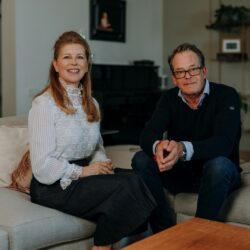
In this episode, Helen speaks with Dr Carsten Henningsen, founder of Palma Clinic, about healthcare on the island and his journey from Germany to Mallorca.
After moving to Mallorca in 2009, Dr Henningsen helped grow Palma Clinic into one of the island’s leading international outpatient clinics, serving patients from across Europe and beyond.
They discuss how the healthcare system in Mallorca compares with other countries, why some patients travel to the island for treatment, and the growing focus on preventative medicine and longevity. Dr Henningsen also shares what it was really like building a medical business in Mallorca, and his advice for anyone thinking of making the move.
When & Where Can I Listen?
The Mallorca Living Podcast launched on April 9, and new episodes will be published bi-weekly.
You can listen and watch on:
▶️ YouTube
▶️ Spotify
🎧 Apple Podcasts
🎧 Amazon Music
Join the Conversation
This podcast is for you—and we’d love for you to be part of it.
📬 Got feedback?
💬 Want to suggest someone for us to interview?
💡 Have a topic you’d love us to explore?
Transcript
Dr. Henningsen’s journey & the founding of Palma Clinic
Hello, I’m Helen Cumins and this is Mallorca Living, a space dedicated to those who are dreaming of making Mallorca their home. Today I’m delighted to welcome Dr. Karsten Henningsen from Palma Clinic, who’s going to tell us more about the healthcare landscape here in Mallorca. Let’s dive in.
So Karsten, you’re very welcome to my Living podcast. Thank you for being here. Thank you very much. I want to talk to you today a little bit about the healthcare landscape on Mallorca. You’ve been here a long time. I think we originally met at one of our business launches. Exactly. I don’t know how many years ago that was. 17 years ago. 16 and a half. 2009. Wow. 1st of April 2009 I was announced. Oh really? Then we met at your business lunch. You joined our business lunch and that’s where we met.
When did you establish Palma Clinic? When I came here, more or less 17 years ago, there was no Palma Clinic. There were a couple of foreign doctors, Dr. Russ and Oliver Hark, and they asked for a guy like me in internal medicine. That’s your specialty – internal medicine, including gastroenterology and cardiology. As I had a little bit of business experience from my time in Germany before, I told them, “Come on guys, we have to improve the system a little bit and make it bigger for the people, for us, for everybody, to continue the really good service, but to make it bigger because we knew there was potential in Mallorca to provide really top level service.” The original idea was to bring these competencies under one clinic and collaborate with various specialists from different sectors. We started really small with a gynecologist, a pediatrician, an orthopedist, and myself in internal medicine. That was four. Today, to be honest, there are around 50 people. The number of disciplines is around 10, but next month we will be 11 because we are looking for a psychiatrist as well. Everything is running really good, and we are a little bit proud about what has happened.
Attracting talent & delivering patient-centred care at Palma Clinic
Generally, are your patients from all over the island or within a close radius of Palma? No. We work together with hospitals – we are not a hospital, we are a clinic for outpatients and we try to avoid hospital stays – but people come from all over the island. If they need a second opinion or are thinking about going into a hospital, we are there, accessible next to the hospital with big parking. But they are not just coming from Mallorca. A lot of people come from Germany, the UK, Switzerland, Austria – we have international patients. Does it take a long time to get an appointment with yourself? Normally not. Our idea is not to treat 100 people per day. Our idea is to treat as many people as we can with the time they need, meaning around 10 to 20 people per day. We organize it so there are no waiting times, sometimes 15 minutes or so. If it’s a high urgency emergency case, they can get an appointment on the same day normally. If not, then within the same week or the next week. So it’s always accessible.
You have managed to attract highly talented, qualified, experienced medical professionals over the last 17 years. How did you manage that? It’s still hard work. Mallorca is super attractive not just for holidays or living, but for working here as well, especially for medical doctors. But we cannot give a chance to everybody; we have to select people. To be honest, because we have a really attractive location and a name, which was hard work over the years, we have a lot of people asking. We are in a little bit of a luxury situation where we can elect the specialists. Sometimes it doesn’t work, mostly not because of quality standards, but because of their personal situation – they end up leaving the island or something like that. Most people are not from Mallorca; they are coming to Mallorca. They have to have all the papers first – without the papers they cannot work. Then of course they have to feel good here. But most of the time it works really well because the perspective for doctors working here is good, and the quality of life and wellbeing for them is also good. It is not as stressful as it is in Germany.
What kind of values do you propose with Palma Clinic? What are the core values that you will not compromise on? The most important is high-end quality, but in combination with friendliness. The people have to feel good because they are not coming to a restaurant; they are coming because they have a problem. We have to solve this problem and manage it, and after that they have to pay for it as well. So they have to feel really good. I don’t like to say this, but it’s like this: we are the best on the island. You say that humbly. I have experience because I am actually a patient of yours for many years, and I have really seen how you have evolved. It feels to me that one of the core values is this standard of service where the patient is always at the centre, the most important point of everything – how you are going to look after that patient. Sometimes you have to go through bureaucracy with insurance companies, with hospitals, and I think your staff are used to just pushing through and making sure they get a good result. Exactly. We are used to doing that. This admin work is never the work for doctors; it is a must-do, not a like-to-do. But by the way, I used to do visa and it is a lot less than in my home country.
Mallorca’s medical care: prevention, serious conditions & individual attention
Your typical patient is obviously international because the island has people from all over the world. Do you notice a difference in what they are looking for depending on their nationality, or is there a commonality where people have similar expectations? This is a little bit difficult because finally it is the same: people have problems and they like to have a solution. We can provide a lot faster solution than normally, and they know this. That is the reason they come – because we have a lot of these specialities under one roof. If I have a problem that I think is neurological, I can send it directly to the neurologist. Or dermatologist, ophthalmologist, orthopedist, whatever. This is one thing – service and high-end quality. The other thing is that people are taking a little bit more care in general lifestyle, doing more sports, and they like to do more preventive things as well. The island fosters that wellbeing because you can do a lot of exercise here – water, mountains, cycling, whatever you like. They like to know their success with these things and ask, “Okay, now I lost some kilos and my cholesterol and blood pressure have improved. I like to check these.” This is a preventive thing, and I like it because it helps a lot to keep your health good before you have a problem. Prevention is becoming much more prevalent in medicine in general, and here because people are looking good and they like to look good, they take a little bit more care in staying fit and healthy. People now are conscious that they want to grow old but maintain their health. The word anti-aging is not the right word; longevity is the word – to get old but in a good physical and psychological condition. If you don’t feel good, your brain is not good. The awareness in general has improved an awful lot.
What about people who have a really serious problem while living here or on holiday? What is the medical care like for that patient? There are a lot of different possible problems. For example, if there is a severe car accident, the people need to go into a hospital. That is not what we do, but we can do it by side and help and moderate the things. We have some really good hospitals for these situations. The public system, for example Son Espases, is really good in traumatology. Unfortunately, cancer happens here as well. We can take care in our clinic to moderate and help and support, but normally treatment is done in the hospitals where we have really good contact. The treatment is perfect. So some of your doctors oversee the treatment for patients with cancer, helping to coordinate and check results, or push things a little bit faster in the hospital. General treatment like chemotherapy or special therapy is not what we do, but 100 meters across the parking there is a hospital with a really good oncology department. If there is a problem with the language or understanding the disease or treatment, we help with that. For serious heart conditions, or I myself had an operation on my spine because I had a stenosis of the channel. I did it here because I got an offer in Germany but I did it here, and I am so happy. The treatment was minimally invasive and I was in hospital for one day; in Germany I would have had to stay for three weeks. I don’t like to say Germany is bad, it’s just nothing. The point is that here is at least as good as your home country, and depending on circumstances, it can be faster. Most of the time it is faster. The quality is at least the same. Sometimes better. And maybe you get more individual care here. Would you agree? Yes. We take care of our patients and we give more individual care. In the hospital it depends a little bit. The nurses here are used to having some relevance, they are helping – it’s a different culture. When you are in hospital here in Spain, a family member is often there and a bed is provided for them in the same room. The idea is that the family member is there to look after your needs, while the medical staff are more dedicated to prescribing medicine and making sure preparations are done. It works really well.
Navigating healthcare insurance & Palma Clinic’s collaborative approach
With your clinic, the majority of patients are using private insurance from their home country, or they self-pay. Most people have private insurance. Our patients are worldwide – the US, whole Europe, German and English speaking. In summertime a lot of people come from Australia and New Zealand. They have different insurance, sometimes just travel insurance for emergency cases. Some people have private insurance from Germany or Austria, and some are long-term residents here with insurance like DKV, Axa, Mapfre, Adeslas. Private insurance covers these as well. Self-payment is not the main thing; most people have some kind of private insurance.
What do you think of the healthcare system for those who are not fortunate enough to have private insurance and rely on the social security system? As I mentioned, if there is a serious problem, the public system works really good. For outpatients, the waiting time is long. So my recommendation, if you are planning to live here longer, is to get private insurance. It is not so expensive – in Germany it is a lot more expensive because the system is completely different. Would Spanish insurances cover your fees? The public system is not covering, but if you have a Spanish private insurance, people can attend your clinic. They pay and then get the money back with reimbursement. For the public system, most of the time this is working as well. We have a lot of Spanish people coming because they prefer to go to a Spanish doctor and their public system, but sometimes they have to wait too long and they know we are really good, so they come and self-pay. Most Spanish people use the public system, but if they need a second opinion or are in pain, they come to us. We never had a problem with payment.
Your proximity to Palmaplanas is obviously very close. Do you also use other hospitals? I don’t like to say this, but Palmaplanas is closed. I do my endoscopy in Palmaplanas because it’s 100 meters over the parking. If we need a high urgency CT scan, we use that. But for other things, we use the clinic in the city or the clinic not far away, or the clinic in Son Espases which is the public system. We collaborate with all of them. Is your one location at the moment here in Palma, or do you have other associations? Our main business is in Palma, and we collaborate with people in Cala Major or Santanyí, but they are not part of Palma Clinic. They refer patients to us because it goes beyond their expertise. It is difficult to have the same standard we have in the Palma Clinic in several different locations. It is easier for patients to come to us. Within the clinic, we can do blood tests and X-rays. The only things we cannot do are the big machines in radiology like MRI scans. We thought about it, but a lot of people provide that, so it doesn’t make sense. CT scans – every time we think about it, but it doesn’t make sense because other clinics have these machines, and you can get an appointment very fast. An MRI scan is more or less the next day or the day after. An emergency CT scan is the same moment. X-rays and ultrasounds we do by ourselves. Blood tests we do by ourselves or send to Germany and get results the next day. We are completely independent. Bigger operations we cannot do, and we don’t have beds for overnight care.
Why Mallorca’s healthcare system attracts international patients
I would love to ask you to do a favour for me. Mallorca Living is a video podcast dedicated to those who are dreaming of making a life for themselves here on Mallorca. This is a very personal project for me where I get to share wonderful stories about people who have actually made the transition to Mallorca. I would love to ask you to subscribe to this channel because it helps the channel grow and makes sure that we continue to grow and prosper and reach as many people as possible who are interested in making Mallorca their home. Thank you so much for subscribing, liking, and sharing your comments. We love to hear your thoughts and your feedback. Thank you so much.
The hospitals do function very well here. I think that’s what we want to communicate, because for people who are thinking of relocating here, sometimes it’s a big concern: what is the healthcare like on a small island like Mallorca? There is no need to worry about that. More and more people are coming. After corona, a lot more people came to Mallorca because of home office. People from Germany cannot get an appointment even with private money – it’s a little bit easier with private, but not a lot. So they fly in. We have a lot of flying-in patients to get things done because the service is faster and a little bit better. Our prices are a little bit more expensive than in Germany, but private insurance pays these. We are not like the United States – extremely expensive – but we are a little bit higher service orientated, and our prices are completely okay. English or German private insurance pays these, and Spanish as well.
Dr. Henningsen’s personal journey from Germany to Mallorca
I want to talk to you a little bit about your own personal life. You chose Mallorca. Why did you decide to leave Germany and come to Mallorca? I expected this question. To be honest, it was a little bit an accident. I don’t know if you know, I have a Brazilian passport as well. My mother was born in Brazil. My whole life I travelled a lot with my parents to Brazil or somewhere else, and every time I was thinking, “Do I like to stay my whole life in Germany?” Hamburg is a super nice city, beautiful. I had a really good job in Germany, but it was a little bit like running the same thing. I was a doctor and a kind of manager in a clinic, but I had to do a lot of negotiations, meetings, talking about administrative things. It was a little bit boring. Then I read in the newspaper that Dr. Russ was looking for a guy like me. There became a personal thing as well. I love sailing. I took my sister and my brother-in-law for a five-day holiday and said, “Come on, we’ll have a look.” I met these friendly people, looked around, and said, “If not now, when? Then never.” I decided really fast – after a couple of weeks I thought yes. My parents weren’t really happy about this decision. Your father is a doctor as well, and your sister? Yes, my sister is a cardiologist. My father is internal medicine like me, and he was my teacher. He wasn’t planning that your career direction would take you to Mallorca. Anyway, I came here. To be honest, after the first three months I thought, “Oh my god, what did you do?” because it was completely different. 17 years ago, Mallorca was quite different as well. I had my 40th birthday. But after three months, I thought, “Okay, this is not bad.” Things started to run, and I had a lot of ideas. Today, I would say if I don’t have to go back, I wouldn’t. It was a very good decision. But we don’t need to lie – not 100% everything is super fine. Mallorca can be a pirates’ island sometimes, and you have to be careful here and there. When you hear that, it’s like alarm bells – something is wrong and nobody is telling you.
When you think about your move now, what do you wish you had known then that would have helped you? This is difficult to say in a couple of words. You have to be really open-minded and not be afraid if things are not running or working like they should work, like you know how they normally work. Having a plan is a good idea, but being able to change the plan – be flexible – is essential. Patience you have to have. In Germany we are used to having things clear, and sometimes there is a surprise but normally it works. Here it is different. But this can be great because if you are able to assimilate and think, “Maybe this option is even better, I didn’t think about it before,” and you are open-minded and flexible. I think that is what you at Palma Clinic do very well – you bring the German efficiency but with a surrounding of the more relaxed Spanish culture. That is a nice experience because on one hand you are confident that you are being looked after and you are in good hands, but at the same time it feels good because it is warm and friendly. That is a beautiful combination. The most important is to be open-minded, stay friendly and cool and relaxed. It is important to be highly professional. If you start something here because you didn’t work in your country and had problems, it could be a little bit problematic. You have to have a really good standard in your profession. Then with a little bit of patience, open-mindedness, and not being afraid, things will run.
Did you feel frustrated by that when you first arrived here, trying to reach the same standards? No. You have to change your mind a little bit. The rules here are a little bit different than there, and you have to adapt and change your standards – not in a negative way, just to organize a little bit differently. Then things work. If you keep on saying, “I like to have this like this because I’m doing this every time like this,” you can run into problems. Then life in Mallorca starts to get stressful, and maybe it is better you go somewhere else.
Overcoming challenges & building a strong business reputation in Mallorca
What about the business side? Palma Clinic is an important clinic on the island, but it is also a business. What was your experience setting up this business here? The same as what I said before. You cannot expect things to run like you would do in Germany. The system we created – I couldn’t do the same in Germany because of bureaucracy. It was hard. You have to fight against a lot of competition partners. Mallorca can be a pirates’ island. Not all the Mallorcan people were really happy that we came and installed Palma Clinic. Over the years we are collaborating with all of them, but the people didn’t wait for us. Of course there are other competition partners. You have to be a little bit straight and tough to survive and grow. But if you are good at this and you have a little bit of patience, in the end it is all about reputation. The island is a very small place, so your reputation is your most valuable asset. You can do as much marketing as you want. If people are talking badly about you, it’s not working. If people are talking well about you, you don’t need to do a lot of marketing. Word-of-mouth recommendations are your best source of new clients.
The vibrant lifestyle & appeal of living in Molinar, Palma
Karsten, where do you live on the island? When I came here, I liked to live centrally as well and had an apartment in Santa Catalina – a very lively spot. 17 years ago it was a lot less lively, of course. For weekends I had the idea to have a finca somewhere, and I rented a huge finca. But after two years I thought no, I had to decide – finca or sailing. I gave the finca back and said, “Come on, let’s go sailing.” Now I am living in Molinar. For anyone listening who doesn’t know this area, it’s beside Portitxol, between Palma and the airport. It’s probably the most expensive area per square metre on the island. It started to be like this thanks to the Swedish people. It is super nice because it is never too full. In summertime there are bars and restaurants, a lot of Spanish people, not just foreigners. It is very local, super friendly, and super relaxed. After work I go to the sea and go surfing. I’m not on the first line, but the second line. I have a little terrace and we can look to the sea. In the summertime after work, I take my surfboard and go to the sea. Parking can be a bit of a challenge, like everywhere.
I always relate Portitxol and Molinar as the healthy spot for Palma because you have the promenade, the sea, so many things. Even if you weren’t a sporty or active person before, if you live in this area you are going to want to walk that promenade, or run, cycle, swim. It is a really nice quality of life. It feels a little bit like California or Australia – it has that kind of vibe. In summertime, all the people are on the beach, which is big enough, playing volleyball, tennis, swimming, surfing. It is a little bit like Venice Beach. If you are an active person and you love the outdoors, this is the ideal location. If you just like to walk, you can do the same. If you love being in nature and by the sea, it is beautiful. You can actually walk into Palma centre, cycle, or take a bus.
How long have you been living there? About five years. I’ve got two flats in Santa Catalina as well. In summertime I live in Molinar, and in wintertime I go to Santa Catalina. But to be honest, Santa Catalina now is a little bit too full in my opinion, and I love Molinar. I feel settled in Molinar. The finca days are over. Last year I looked for another finca and thought, “Why not?” Then I said no – I have enough work with my sailing boat.
Embracing Mallorca’s waters: sailing & an active lifestyle
Where have you moored your sailing boat? In Club Náutico. That’s about 10 minutes from home by bike. If I need a bed after a Friday dinner or something, I can sleep on the boat. It’s perfect. Where do you go sailing? Normally I go sailing around the Bay of Palma. In summertime, the boat and I leave for a couple of weeks – to Porto Colom, stay there, then go to Menorca. Menorca is beautiful for sailing with so many beautiful colours. With this boat it wouldn’t be a problem to go to Sardinia. It’s not a really big boat – 12.30 metres – but it’s safe enough. The problem is time. You need a little bit more time, and I have limited time because I’m still busy working. The high season for the clinic is mostly from October until June. In summertime, people are leaving for holidays, so it’s not the high season for us, and we can do holidays as well and go sailing.
Sailing is your passion? Yes, one of them. What else? Water sports in general. Years before it was golf, but golf and sailing – then I could stop working. I used to do windsurfing and kitesurfing, but I stopped. Now I am trying to do wing foiling – a bit difficult. I have to learn that. So the water is your playground. When you live on an island like Mallorca, you have so many options. It would be a disaster not to go to the water. I don’t think you have any regrets about leaving your home country and building a life for yourself here. Nope.
Essential advice for adapting to life and work in Mallorca
For somebody in their home country listening to your interview and dreaming of doing the same, what kind of advice would you give? If you do this, do it 100% like I did. If you come here to have a look, give it a try. But if you are starting a business, you have to do it 100%. A lot of people come to the island and have businesses elsewhere. If they can do that, fine. But one of the most important things is to learn Spanish – not Mallorquín, but Spanish. A lot of people come here and think English or German will be enough. No. We are living in Spain. Spanish is the key that opens the door. You have so many other options when you speak the language. The most important thing is to learn Spanish. It gives you a much more enriching experience and shows respect to the people here to say, “This is Europe, but this is not Germany, this is not England, this is not the United States – it is Spain, part of Spain.” And the people are not getting more stupid by learning another language – it helps the brain.
Quickfire insights & final thoughts
Thank you for all of that. I want to ask you our quickfire questions. Beach or mountain? It depends. Summertime is beach and water. Wintertime could be the mountains as well, because I love the mountains. I like hiking. Sunrise or sunset? Sunset. Summer heat or winter calm? To be honest, winter calm. Summer is sometimes too hot. Siesta or fiesta? Both. Pa amb oli or ensaïmada? Pa amb oli. North coast or south coast? That is a difficult question. It depends on my mood. The north coast is very beautiful, and the south has plenty to offer too. We are lucky to have both.
Karsten, thank you so much for joining me here today. It has been a real pleasure. We have learned a lot about the healthcare landscape on the island, and I think it has been really informative for anybody who is thinking of moving to Mallorca. Thank you so much.
You’re welcome. Great. Thank you.
If you are dreaming of making Mallorca your home, let me invite you to use our property buyers agency service. With our service and our help, we can guide you to the right location that fits with your lifestyle. We will also help you find the perfect home that fits with your dream. Contact us today for an online consultation or book an appointment and come and see us in Palma. We would love to help you make your transition to Mallorca a reality.
Address details