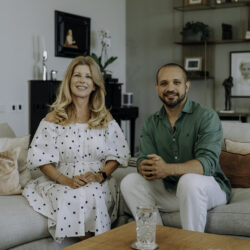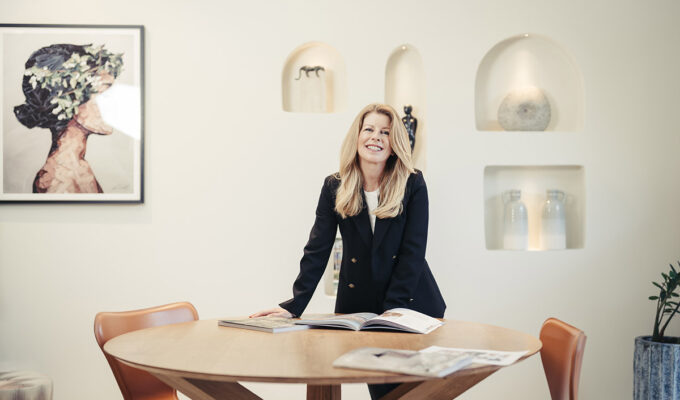
In this episode Helen speaks with Dr. José Hernández Poveda, a brain surgeon turned longevity specialist, about the future of medicine and how his pioneering clinic in Mallorca is redefining health. From the power of DNA testing to the shocking truth about muscle mass and Alzheimer’s, Dr. Poveda reveals how lifestyle, advanced diagnostics, and personalised care can help us live not just longer, but better. A fascinating conversation about prevention, wellness, and why Mallorca may just be the perfect island for longevity.
When & Where Can I Listen?
The Mallorca Living Podcast launched on April 9, and new episodes will be published bi-weekly.
You can listen and watch on:
▶️ YouTube
▶️ Spotify
🎧 Apple Podcasts
🎧 Amazon Music
Join the Conversation
This podcast is for you—and we’d love for you to be part of it.
📬 Got feedback?
💬 Want to suggest someone for us to interview?
💡 Have a topic you’d love us to explore?
Transcript
Arriving in Mallorca
Hello, my name is Helen Cumins and this is Mallorca Living, a video podcast dedicated to those who want to create a beautiful life on this island of Mallorca. Today I’m joined by Dr. Jose Hernandez Pova and we’re going to hear about Jose’s journey to Mallorca.
Originally from Venezuela, he grew up in Miami, studied in Madrid, and then moved to Mallorca. And he has now established a longevity clinic in Mallorca, which we’re going to hear a lot more about. Let’s dive in.
Jose, thank you for being here with us. Thank you for inviting me. It’s a pleasure like always.
We met originally at our business launch in January. You came to check it out, you’d heard about it and said, “Okay, I’m going to attend the business lunch.” And we had the pleasure to be sitting opposite each other. And you started to tell me about your clinic Age Reversal, which is a subject actually very close to my heart. So let’s talk about the journey since we met last January.
Yes. So it has been quite a journey. I went to this meeting that you organized just to see because I was a very new business person here on the island and I wanted to meet some more entrepreneurs and people that are growing their own business. From my connections around the island, they already told me this was a great place for that and that’s where I met you. Since then we have developed this relationship and you’ve learned a lot more about longevity and my clinic has begun to grow actually a lot more and it’s a project that now has become a national and soon to be international project.
Establishing Age Reversal
So let’s talk about when did you set up Age Reversal in Mallorca? Exactly one year ago in June, past June.
What is your passion with longevity? Because you are somebody who’s on this subject. You are incredibly passionate.
Yes. So the best thing for me about longevity is that it’s the branch of medicine where you can help the most to other people. As a brain surgeon, that’s my main medical background. You can help a lot of people, but a lot of the time it’s too late. When you find the damage, when you find the problems that they have, you can sort of make it less worse, but the damage is already done to the body. So longevity medicine is just about preventing your body from getting any damage. So it’s the branch of medicine where you can gain the most out of.
I love this idea of the medicine we have experienced now is this version 2.0. It’s this idea of where we go to the doctor when we want a treatment for an ailment. Whereas in your case, it’s very different because you’re looking at how long can you prevent a person from having any kind of disease and therefore enjoy a good quality of life.
Exactly. And it’s not that we are against the traditional medical system, what many times is called Medicine 2.0. It’s more a complimentary system because we need that sort of medicine. When you have a heart attack or when you have an accident or when you have an aggressive cancer, you need that doctor there to help you save your life. They’re exceptionally good at saving your life. But what Medicine 3.0 is about and what we are actually doing is trying to make those encounters with traditional medicine less frequent, less severe and later in life. So the two systems are important but I think what needs to change is that we need to invest a lot more resources in Medicine 3.0 because it’s better either for the system and for the people.
The Goal of Longevity
What fascinates me about this 3.0 is that it’s not necessarily that you are going to live longer, like you’re going to live to be 120 or 150, although you said it’s possible which we’ll get to later. But I’m more interested in this idea or this concept that you can live longer without a disease. I mean in the end I think we all want to grow old healthy as such and therefore we can enjoy a really good quality of life because a 50-year-old today is not what a 50-year-old was 30 years ago.
Absolutely. And longevity has two vectors. That’s how many years you’re going to live and the quality of life of those years. The first one is very easy to measure. You’re just either alive or you’re dead. And the second one it’s a little bit more complicated and we tend to subdivide it in three more objective things that are your physical capacity, your cognitive capacity and your emotional well-being. So if we have a way to ensure these three things are going to maintain at a reasonable level as you age, we say that you have a higher quality of life and that’s the main goal of longevity medicine.
Real Patient Impact
Jose, can you give me some examples of how what you do has helped some of your patients?
Well it’s interesting because for example, one of the most rewarding for me, as you know, I’m a brain surgeon and one of the things that brought me to the longevity field was brain aneurysms. So actually my second patient here on the island, I found her brain aneurysm through doing tests for longevity, through my longevity testing.
Just my second patient. Wow. She had a brain aneurysm, a pretty big one. We had surgery. I removed the aneurysm. As part of your test, you do a brain scan MRI test and then from there you could predict or see that this problem.
Yes, you already have it because an aneurysm doesn’t give you any symptoms. You just have it there. It’s like a sack that’s growing over the years. One day it can rupture and that’s when you have huge problems. You can die or you can have some severe problems for the rest of your life. I just found that there. She had surgery. We removed the aneurysm and she’s just 50 years old. Wow. And if we hadn’t found that she most likely would have died in the next two years.
The Role of Genetics
What about with family history and genes and all of that? Because now with DNA testing, it seems to have given us access to so much more information. How are you using the DNA testing in your work?
Yes, it’s very interesting because we can predict what’s going to happen in the future with high certainty. For example, this is the tool that allows us to do personalized and individual medicine because I can tell if someone has a higher risk of a specific cancer like colon cancer or dementia through the APOE genes or maybe some specific disease or intolerance or even food or some drugs how they can affect you.
If I know someone has a tenfold risk in prostate cancer, then it doesn’t make any sense to go through the normal checkups that anyone is going to go every four or five years. Then you have to go every 6 months because it’s almost for sure that person is going to develop that problem. So you have to be on it. You cannot just wait until it happens.
So traditional medical protocols and screening techniques are designed for a population basis. It just kind of works in most people, but you don’t know if it’s going to work on you. And you don’t really care if it works in 90% of people if you’re in the other 10%. So that’s what this allows us. This allows us to see where exactly do you lie in this probabilistic chance of developing any disease and making sure that it never happens because genetics is not like a death sentence. There’s a lot of things that you can do to modify your genetics through epigenetics, through lifestyle, through modifiable risk factors. So it allows you to take action very early in life.
Preparing Patients for Information
I also wonder about when people put themselves forward for DNA testing, are they ready for that information? You know, it can be overwhelming the feedback. How do you prepare your patients for this?
I believe information is power and the more information you have, the better, but there’s certainly some type of people that they prefer not to know. So my patients, I always let them know what’s going to happen. And even some of them prefer not to know, but I know. So they say, “You just tell me everything I need to do in order to keep me healthy and safe.” So you don’t get into the details with them. It’s like you sort of prepare a plan for them.
I can do the plan and they don’t need to know that they have a tenfold risk of colon cancer because some people can have really bad time if they have anxiety.
This is it. You can become a bit obsessed with it, right? And also I have to say what’s now available on the internet, social media, it can kind of become really overwhelming, right?
Yes. It’s a big problem because there’s a lot of people giving health medical advice without proper medical training in social media. So most of my patients, they’re people that are worried about their health. And they come with ideas that they have mostly gotten through social media. And so you have to always make a lot of job on taking those beliefs down and explaining them through science why this might not be the best idea for your health.
Social Media and Longevity
Having said that, I see that you’re using social media yourself and you’re being very successful. I mean you are very active on social media. What makes you different than anybody else?
Well, social media is hard because exactly the algorithm of social media, it doesn’t reward you for being a boring doctor that’s telling always the same. It wants controversy. It wants things that people are going to be entertained about. So it’s hard. It’s very hard to try to make scientific educational content to entertain people. So that’s what I try to do. I try to use my medical science to teach people what I’m doing about longevity. There’s a huge interest in longevity science. It’s the hot topic in medicine at the moment. That’s I think what I have going on for me.
But I have to pull you off there because one of the videos that you got, one of the video clips that you got the most views on was one where you said there’s a drug that can roll back 10 years of your life, right? You have something like 1.6 million views on it at the moment. And do you not believe really that that’s what people are looking for? They want a pill to take and then everything, you know, their medical past and their abuse of their health maybe in the past is all gone away and they can just take the pill. That’s the dream. That’s what everyone wants, a quick fix.
Yes. I just take an easy fix. It doesn’t exist right now. There’s a lot of people and tons of money going into this research. There’s Altos Labs from Jeff Bezos. There’s Retrobioscience from some other investors. Some of the richest people on the planet are investing huge amounts of money in developing this technology because whoever gets there first is going to be the next trillionaire.
Bryan Johnson and Publicity
What do you think of Bryan Johnson? I mean he is making this topic very, let’s say, known and he is willing to put himself out there and be tested and publish all of the information. Is he helping the longevity topic or hindering it?
Both. I think he’s helping because he’s making it something more noticeable in media. A lot of people now know that this exists. Mainly in Europe still people don’t really know this is a thing at all. So when I say I’m a longevity doctor I still get some weird faces like what is that about? But Bryan Johnson has come and given us a lot of noticeability in social media.
But what he’s doing is not medical longevity. He’s experimenting on himself and he’s done many things that are actually detrimental for his health. He has a medical team that gives him some guidance. But he’s willing to push the boundaries in order to create data that can then be used maybe in mainstream. But it’s very hard to have data that you can use when you have one person.
And also he’s doing what we call a shotgun approach where you just take everything. You take 200 pills every day. You do 20 different treatments, machines, training, and super strict diet. And if you have something that’s going good for you, we don’t know what it is. Because it could be one of so many different things.
His lifestyle isn’t for everybody, right? It makes no sense for me because he’s only living to live longer. With no joy at all. He doesn’t have a partner. He’s just training for half of the day. He eats in a very narrow window. He sleeps perfectly eight hours every single day and the rest of the day he’s doing medical treatments or medical tests. So you’re just not enjoying life. So what we do is we actually try to get into our clients’ lives and help them introduce longevity as an investment in time. You have to put in some time into it because there’s no quick fix. But the reward is that you’re taking a lot more time at the other end just like any financial investment.
Cost and Accessibility
Talking about finance, is longevity medicine only for the rich?
Well, not really. It’s an investment. No, it’s not for the ultra rich, but it’s not many times included in insurance, medical health insurance, which seems crazy. Because of course if you have a really strong possibility of getting cancer and you can prevent it or some other major illness, wouldn’t you imagine the insurance companies, it’s in their long-term interest that they actually support this?
Yes, absolutely. Because it’s a lot cheaper to prevent the onset of disease than to treat a cancer or pneumonia or being in the ICU or a chronic medical treatment. That’s a lot more expensive than preventing that from happening in the first place. But it’s just that the medical system is very arranged in this notion that medicine is to treat people. And in fact, insurance companies will only pay for something after you’re sick. If you’re not sick, they don’t cover most checkups that we do. The checkups that are included in either private or public medicine are always very cheap and they are not the best that medicine could do in order to find those problems early.
The Age Reversal Program
Talk me through what the normal program at Age Reversal is. So if I go to you as a new patient, what are the tests I’m going to do? What is the process?
We have developed a standard program that goes through a year. First we’re going to get to meet you and know most things about your life: how you eat, how you exercise, what worries you, how’s your relationships with your family, what do you want to do in the future, especially where do you want to be as you age? Because that’s one of the main things that’s going to tell us what you need to do.
If you tell me, well, I want to be 90 and I want to be climbing mountains and cycling the world, then we have to make sure that your biomarkers today can predict that you will be able to do that. And that’s what we can do. That’s the magic of longevity is prediction. We can know what’s going to happen in the future by looking at your biomarkers today.
For example, especially for cycling, we have to look at your VO2 max. Your VO2 max will go down very predictably as you age. So we know that if you have a certain VO2 max today, if I can make sure that you’re going to be at around 30 when you’re in your 80s, I know for sure that you’re going to be able to cycle around the world.
What other tests do you do? So VO2 max is a really important one. What other tests, what are the biomarkers that you use? Because actually they’re the results but you need a whole series of tests that go behind that.
Yes. So in this program we have things like a very comprehensive blood work where we look at absolutely every measurement inside of your blood that has a predictive power. We look at gene testing, full genome sequencing where we are just like looking at your instruction manuals. All of us we come with some sort of errors in our instructions and those mistakes, if we know them for a long time we can prevent that from actually happening.
One of the most important for me is the APOE gene that tells us about Alzheimer’s risk and it can even be a tenfold increase or a fivefold increase. That’s around maybe 50% chance of developing Alzheimer’s. So that could really change someone’s life if you know that when you’re 50 or when you’re 40 and you can do a lot of work on preventing it.
Major Age-Related Diseases
For me it’s the worst. As a brain surgeon I’m very concerned. And what can you do to prevent brain health? If we go through the major ailments or what mortality brings about, it’s pretty clear, isn’t it? You have your three top. Do you want to talk us through this? It’s going to be cancer, atherosclerotic disease that’s heart disease, and especially through heart attacks, and what we call ACVD in the brain, that’s just lack of blood flow in the brain arteries that actually kills some part of the brain just like it occurs in the heart attack, and the metabolic diseases: diabetes, obesity, those sort of problems, and the dementias, mainly Alzheimer’s disease. Those are maybe going to cause, depending on the country, around 80% of mortality in that country.
And that’s modern day. Yes. First world diseases, right? Yes. Because we used to die from infectious diseases 100 years ago. But since Medicine 2.0 has offered a cure, we are now dying of different things. So our bodies were not intended to live through 90 or 120 years. So we are now developing these diseases that medicine is not really prepared to prevent. So we have huge amounts of data on how to prevent it but the system is not really working.
Alzheimer’s Prevention
I was talking to a friend of mine, a neurologist, just about this topic you just mentioned: how to prevent something like Alzheimer’s. And they know how to do it because there’s a ton of data. We know that muscle mass is the main predictor of Alzheimer’s disease. Muscle mass in your body is going to determine actually whether you develop it. One of the determining factors. The most important. Wow. How many people relate that though? Many people don’t know that.
And people often seems like they don’t believe it because what does the muscle have to do with your brain? How getting to lift in the gym is going to make me a smarter guy? It doesn’t really make sense. But at the molecular level, it does.
There’s especially two types of substances that are produced in the muscle that go into your bloodstream, go into the brain, and have a protective place in the brain. They’re called BDNF, brain-derived neurotrophic factor, and something called irisin. They are proteins that increase the connections in the brain and the formation of new neurons in one place called the hippocampus that’s related to memory. This is the mechanism through which getting bigger muscles and more muscles is going to help you maintain your brain. It’s the number one intervention we have right now because once you develop Alzheimer’s, there’s very little you can do to roll it back.
Foundational Lifestyle Habits
What about alcohol and daily living, eating processed food, smoking, no exercise, all these which is actually quite common. There’s lots of people live like that.
That’s the basics. You just need to have the knowledge and to have the longevity mindset to know that everything that you’re doing today is going to affect your life in the coming years. So it is really like a deposit account, right? What you’re depositing today is the payback you get in probably your 50s, 60s, 70s, 80s.
Yes. Absolutely. And removing toxins and things that are actively harming you is the first place. So it’s like you have a leak in your bank account. So what can people do? Give us your, let’s say, your three habits that you think are critical for people that want to have a good quality of life as they grow older.
Yes. In fact, we have what we call the pillars of longevity that is just lifestyle. For me number one is exercise. The benefits of exercise are unmatched by any other intervention. There’s no pill, there’s no food, there’s anything that can match the benefits for your body.
Is that cardio or resistance or both? Well, we subdivide exercise into different biomarker-based categories. We have resistance training for muscle mass. We have cardio: we have zone 2 training especially for metabolic flexibility and mitochondrial health, and then we have high intensity intervals in cardio also for increasing your VO2 max. There’s also mobility and balance exercise that gain a lot of importance as we age because that’s what’s going to keep you from falling or for having an accident. These are the main pillars of exercise and it’s hard because it requires time.
How often do you go to the gym? Every day. It’s like religion for you. How long do you spend there? Around an hour and a half each day. I see it on social media. You’re posting a lot about what you do yourself, right? So you’re quite captivated by this subject. So you’re like your own role model, let’s say.
Yes. Everything I tell my patients to do, I do it myself because if I haven’t gone through it, how am I going to help them do it? I guess your patients are much older than you. Some of them. It ranges from 30 years old to 80, 85.
Sleep and Nutrition
Tell us the second thing. The second pillar for me is for sure sleep. Sleep is one of the most underrated abilities that we have. It’s ahead of nutrition actually. That’s why I said it in the second place because sleep is very underrated and is one of the main drivers of disease if you’re not sleeping well, especially for Alzheimer’s and heart disease and diabetes, metabolic conditions.
It’s deep sleep, isn’t it? You need this deep sleep to regenerate all the cells. Yes, there’s actually two types of sleeps. There’s deep sleep and there’s REM sleep. Both are very important. In deep sleep, you’re mainly regenerating your body, getting your body ready for the next day. You clean up proteins that get stuck in your brain. They get flushed out through something called the glymphatic system. And that only occurs during deep sleep. Those proteins, if you don’t take them out, in the long term they’re going to transform into what we call tau protein and that’s what causes Alzheimer’s. So not enough sleep is very directly related to Alzheimer’s disease.
It is not only about the quantity of sleep, it’s the quality of your sleep. That’s why we can measure it. And then there’s REM sleep. REM sleep is rapid eye movement. This is another type of sleep that’s mainly related to emotional health, to creating new memories. It’s where everything that you learn and your subconscious mind come to terms through the night. It’s a lot related to learning and to emotional health. So you need to make sure that you have around 20-25% of REM sleep and 15-20% of deep sleep every night.
And you don’t know if you’re not measuring it. A lot of people say, “Well I sleep for 8 hours but when I wake up in the morning I’m just as tired.” Maybe you’re having micro wake-ups that you don’t notice. Or a lot of people take alcohol before going to sleep. People think alcohol will actually helps you sleep and it’s the opposite. It will absolutely tear down your deep sleep. You will sleep for 8 hours but you will have almost no deep sleep after ingesting alcohol.
And the third has to be nutrition. Nutrition being very important, it has the benefit that is the most flexible of all. You could achieve a longevity-oriented nutrition through many ways. You could do keto, you could do low carb, you could do carnivore, you could do vegan, intermittent fasting. You have so many strategies to optimize your nutrition. And every single one of them has benefits and downsides. You have to find the one that works for you.
In my case, I have been living this ketogenic diet since about 2020 and it absolutely suits me. But then I’ve had friends try it and it didn’t work for them at all. So you, as you say, the flexibility is in the sense of finding the one that works for you that you can then stick by.
Yes, we are omnivores as a species. So we can eat a huge variety of different foods and still have a healthy body. And there are of course some nutrients that come from a specific source that can boost your longevity. But just about maintaining energy balance, getting enough proteins, getting the most amount of nutrient-dense food, just by following those three principles you can adapt any nutritional plan. The best diet is the one that you can follow for the longest time.
Supplements and Emotional Health
And where does supplements come into that? Is that your fourth pillar?
Yes, supplements and drugs are the next intervention. There are five pillars. The fourth would be emotional health and stress management. And the fifth would be supplements and drugs. Once you get the first four lifestyle pillars in check, then we have to start tweaking different supplements and always doing it for you. What are the supplements for you, for your goals, for your blood work, for your biomarkers? What do we want to achieve?
Not because most of my patients come and they have a list of 20 supplements that they’ve been taking and I ask, “Why are you taking this supplement?” They say, “I don’t know. I saw someone on social media that told me it was good.” It’s better to have it than not having it. You need to know why you’re taking a supplement because they work. Supplements work and they can actually help you improve your health, but you have to do it personalized for you. You can’t just take a list from someone online and say, “Well, I’m going to copy what he’s doing.” It’s not going to work for you.
And on the emotional side, I mean obviously I have my own personal experience with the whole spirituality side and integrating meditation, yoga, breathing exercises. This is all critical stuff to longevity, right?
Yes, we try to work a lot on meditation, breath work, yoga and we can actually measure with things like your HRV, your heart rate variability, or your cortisol levels to see how stress is affecting your life and your body. That’s like the proxy for how much your emotional damage is causing into your body. So we know if you’re meditating enough, we know if you’re too stressed, if you’re working too much. And you have to talk to people to know what the problems that they have and try and help them find the proper specialist or a therapist or whatever they need in order to get their mental stability because there’s no point in trying to live a hundred years if you’re miserable. If you’re miserable, better you die. That’s why it’s one of the pillars. You need to enjoy your life.
Mallorca as a Longevity Hub
And this is again, living in Mallorca is an incredible place because not only do you have this huge connection to nature, the environment and it’s a slower pace of life, but there is many practitioners who can help you on the island. Yoga studios and there’s a lot on offer.
Yes. If you want to improve your health, you will find the proper professional here to help you. You don’t have to think, “Oh, I go to Mallorca and I’m not going to be able to find that specialist.” Of course you will. And now with online anyway, we have access to everything.
You said that Mallorca is the perfect place for a longevity clinic. Why?
Well, it’s a place where the kind of people that live here, you know, there’s a lot of people from around the world that has gathered in Mallorca to either do business or people that have had previous success and are now moving here to enjoy a little bit more their lives, to have a more relaxed state. And this makes a special configuration of people that are a lot worried about their health because they have just done a shift in their mind about “I need more time. I need to be healthier. I need to be living better now that I’m in a better place in my life.”
Mallorca as a Longevity Hub
How can I maintain this for a longer time? So that’s what I saw when I came here. I actually came here by chance. I was offered a job here as a brain surgeon and I just said well let’s go explore Mallorca and see how it is. I have been with this idea of opening a longevity clinic for a long time. I have been studying longevity for maybe six or seven years prior, in the US mainly.
And when I came here, I just said, well, this is a good place to open this sort of business because you have a captive audience really. I mean, that’s what I feel. It’s not only about first of all, you have to have the attitude that you care about your health. Secondly, you do need the budget in order to pay yourself for the tests and for the help you need. And then you need to have time because if you’re starved of time, don’t have the budget and don’t have the attitude, you need all three actually in order to make it work.
Absolutely. Longevity is about time. You need to invest time to get more time. And you need the budget because it’s not an extraordinary budget. But what you need more than the money is to have the mindset that this is something that is worth investing in because it’s not going to cost you maybe more than your car or changing a getting a new car every 5 years.
You mean maintaining a car is going to cost you the same as maintaining your physical body. And you can change your car every five to six years, but you can never change your physical body. So that’s where the change actually has to be is in your mindset and understanding that it’s important. It’s very actually the most important thing in your life is to maintain your body and to make sure that it’s going to work as you want to. It’s your temple that you’re going to live in.
From the US to Mallorca
I want to ask you what did you because you’ve come you grew up in Venezuela, you were from Venezuela originally. Grew up in the US in Miami, right? And obviously the States is seen as the place in terms of it’s very commercial the whole medicine side of things but there’s a lot of money going into research and development and so on. How does a little island like Mallorca compare to what is on offer in the likes of the US?
Well, that’s been actually quite a challenge in opening my clinic here because everything that I’m doing, it previously didn’t exist here. It didn’t exist. What you were offering.
Tell me what makes it different. What are you offering that’s different? For example, we’re doing full body MRIs. A full body MRI you get an image of absolutely everything that’s going on inside of your body. In the US, you can get in any city, you can just order a full body MRI and you’ll get it in minutes. Here, I had to fight with every single clinic in order for them to let me do it.
Why would you do that if… You wouldn’t do it unless there was an ailment that you need to identify. Is that it? Yes. And they had many… So it’s still the 2.0 model rather than the 3.0. And I had to talk to many, many doctors, radiologists and explain to them what we were doing and give them the scientific papers that explain.
But I remember myself when I went to the clinic to have the blood test as you had prescribed, they were like, “No, this is too much. No, no, no.” And they were like trying to say, “Come back another day or do something else.” But it was interesting the reaction, right? You have to fight with the traditional model constantly. And most of the tests that we do to get all of this very novel information about your body, about epigenetics and inflammation and mitochondrial damage, it doesn’t exist in many places in Europe.
So where are you sending all these tests? Because you’re obviously not doing it on Mallorca, right? You’re taking the blood samples, you’re taking all these, but you’re sending it somewhere else.
Yes. For the patient experience, it’s very simple. They just go and take a blood draw, but then they have to send samples to Croatia, to Germany, to Denmark, to the US.
And why are you sending them to these specific labs? Because what they’re measuring is so specific that there’s only one lab in the world that is doing it. And most of the most important labs in the world are in the US because that’s where the money is and that’s where longevity has really taken its ground. Everyone knows about longevity in the US and there’s hundreds of doctors doing longevity right now. In Spain, I believe there’s only one or two of us.
The Longevity Doctors Network
And you’re part of an organization you told me like a global longevity organization. Can you tell me a little bit about that? It’s called Longevity Docs and it’s basically the doctors that started longevity science.
I discovered them as I was researching my own longevity protocols. I started on my own just by thinking, well I know that medicine is not doing everything that it can for your health. We have a lot of resources but we are just not using them because the system is not designed for that. So I just started investigating on myself and I found out that there was another group of doctors that had the same idea as I had and they had joined in a group called Longevity Docs and I contacted and joined them. Just in the beginning we were like 15 docs. At the start we are over 200 now.
The most important thing is that we share all of our knowledge of longevity. Instead of having maybe 500 patients each, now that we’re 200, we have over 100k patients together. And we share our protocols. We share what’s going on in the scientific news. Every time something is published in Nature, one of us is going to get that article into the discussion group and try to take the research into what the patient can benefit from. It takes days. The average in medicine is 12 years.
12 years. When we have research that has a huge change until when the patient can benefit from it is 12 years. So we’re taking weeks and not years. So everything that’s going on in medicine, it can translate very rapidly into something that you can benefit from.
Focus on Women’s Health
I want to talk to you about women’s health because it’s obviously something very close to my heart and especially women in their 50s when they’re going through a big change in their life, in their bodies and so on. How can you help? How can longevity medicine help women?
Well, women’s health is something completely different from men’s health. We have to take a different approach. Hormones are what’s keeping your body working as it should. And one of the main problems for me in traditional medicine is that menopause treatment has been demonized for the past 20 years.
It all came from one study that seems to have been completely wrongly interpreted. It was a fascinating podcast that I listened to that you gave me and it seems to have been the basis for a lot of… A whole generation of women have missed out on hormone replacement therapy because of this study.
Yes. In fact, I just saw that the FDA has backed down on that recommendation this week. Just after 20 years, they finally said, “Okay, this was wrong.” It’s all a debate about estrogen. It’s basically: should women at a certain age, in menopause, have access to progesterone and estrogen? What is your take on that? Do women after menopause need these hormones?
Absolutely. All, I would say almost all of my patients are on HRT. We have the numbers. You have bone density, you have cardiovascular risk. Your risk of developing cardiovascular disease, your risk of dementia and Alzheimer’s, your emotional health, your sleep, and your energy levels. I notice it myself on my bike. The level of energy and the capacity for endurance sport was way greater prior to menopause than after.
Your immune system, your libido. There’s so many things in your body that are dependent on your estrogen and progesterone and testosterone also. In your body. And in menopause, it’s just from one day to the next, your hormones are gone and your body doesn’t know what to do. In fact, your brain starts rising a hormone called FSH that’s trying to tell your ovaries, “Please give me more estrogen.” When you see a woman that has been in menopause for five or six years, the FSH values are so high that the lab can’t even detect them. It’s undetectable because it goes off very high.
What’s the implication of that? That’s because a lot of people tell me no. They think menopause is something that’s natural and we should embrace it. I was told for my age, you’re doing fine, just live with it. You don’t want to do fine, live with it. You want to be the best version of yourself and your hormones are going to help you achieve that. So why do you have to tell someone live with it? If I have something that’s going to help you be a better version of you, healthier version of you, why would I take it away?
But it’s this risk of breast cancer and ovarian cancer. I mean, that’s the crucial point that so many people believe wrongly that if they take HRT, it’s somehow going to bring about ovarian or breast cancer.
That’s a lie. But it is the belief by many. This is the kind of scaremongering that is going on in the medical world and many, many doctors don’t have a clue that this is a lie. When I was in medical school I remember exactly the day that they told me that HRT produces breast cancer and we have all grown up with that knowledge and it’s a lie. I see it every day. Sometimes my patients when they go to their gynecologist, they are alarmed and they say, “Why are you taking this? Who gave you this? This causes breast cancer.” And some of them come very scared to me. “My gynecologist just told me that this is going to kill me. What’s going on?”
Cancer Prevention and Early Detection
But the numbers for breast cancer are alarming. I mean, in sort of Europe now, it’s nearly 1 in 8 women are getting breast cancer. How are you helping in terms of longevity? How can you help women particularly because it is very, very scary when you hear those kind of numbers.
Yes. And cancer in general is rising. It’s very common and more and more common each day and I think it has a lot to do with how we live. Cancer is because of a mutation in your DNA. There are so many things that could go wrong to make a normal cell mutate and become a cancer cell. So what we do is we try to make those factors smaller so that you have the least probability of developing cancer.
If you have your antioxidants and if you have some ways to repair your DNA, if you’re not exposed to toxins, if your inflammation levels are very low, if your mitochondria are working and producing enough energy, we can measure all of these things and we cannot prevent you from developing cancer today, but we can get that risk reduced as much as we can. And also the main tool that we have for cancer today is early diagnostics. Because cancer is not something that appears from one day to the next. Usually it’s growing inside of you for years, but especially at the beginning there’s very small cancers and they grow exponentially. So when they reach critical mass, they suddenly explode and they grow very, very fast. But if you detect them when they’re actually very small tumors, the risk of them killing you is very low. A stage one cancer can be maybe a 5% risk of death, whereas a stage four with metastatic disease could be a 90% risk of death.
So the difference could be a year or two. So if you find a cancer when it’s really small, you can just go on and about living your life like nothing has happened to you.
Well, I have to share that I had a similar situation back in 2021/22 where a routine checkup, an annual checkup with my gynecologist detected a lump which subsequently I had a lumpectomy and that lumpectomy was actually precancer. I was very lucky because it was detected so early that I actually didn’t need to have radiation or chemotherapy.
But what was interesting, and I suppose this is probably the most interesting part of our story of meeting on that fated meeting back in January, is that I didn’t have any DNA testing after that, let’s call it cancer scare. And when I did the DNA testing it revealed that I actually have the BRCA1 gene which actually gives me about an 80% plus chance of developing breast cancer or ovarian cancer in my future. Without the DNA testing, I would not have known it and it wasn’t a protocol after the breast cancer scare that I should have a DNA testing to find that out.
What is your feeling about all of that? Just imagine you already had some precancerous lesion in your breast. Why wouldn’t you be genetically tested? It should be an automatic thing.
Yes, it should be automatic. But even in the US, from talking to other women who have had similar experience, they have had the tests. But here in Europe, for sure, it’s not an automatic thing that, oh, you’re quite young to have breast cancer. Is there a history of breast cancer in your family? Oh, maybe you should be having a DNA test. In the medical model here in Spain, you have to fulfill some criteria in order for you to get tested, like having two or more family members that have had breast cancer or that you had to have it before your 40s or something like that. So you have to fulfill some criteria in order to get tested, but it shouldn’t be. That’s just budgets. It’s trying to save money, not save lives.
For the sake of a few hundred euros or whatever the DNA test is, you can put your mind to rest because it’s not actually only about me. It’s then gets into your children if you have them, so it’s really important to know this kind of information for families.
For me, getting to know your genes and your risk is absolutely mandatory and the sooner you know, the better. For example, in your case, if you have also a very high risk of developing ovarian cancer and breast cancer, you can have your scan every year. And maybe they would have found it, but ovarian cancer screening is a lot less frequent and a lot less thorough. So it has a very high chance that it could have… Getting an ovarian cancer that no one would have known. And it was very difficult to detect.
I really recommend people have their annual checkup. Women especially, it’s so important. It’s such a basic thing because you hear of so many stories when it’s too late.
Yes. And as you rightly say, if it’s caught early, it actually can be very curable. But if it’s not… I know women who have died in their 50s because of not having an early detection.
For example, lung cancer is probably number one or number two cause of death globally. And it’s not always even now is every day is less related to smoking. You can, there’s a lot of people that have never smoked and they can have lung cancer and there’s not a single test that no one is going to do on you to see if you have lung cancer as you’re getting your X-rays for breast cancer. So there are tests that could allow us to see that early and that’s what we do every day. We try to focus on every single type of cancer that could affect you and do something to detect it. So we can do a very low dose CT scan of your lungs and make sure that there’s nothing there because a very small tumor in the lung is something very easy to treat. And it’s probably one of the top three causes of death and no one is doing anything to detect it early.
But are you, in your longevity clinic? Yes, of course. Or kidney cancer. There’s not a single test to see if your kidneys are okay. So in an annual checkup with your doctor, for example, you’re saying these are the kind of tests that don’t occur normally.
They will never do. I have one patient that he had kidney cancer and he regretfully came to me after he had his cancer and they removed his kidney because he had a five cm tumor. He always tells me, “I regret not knowing you before because I would have still have two kidneys and not just one if I’ve known you two years ago.”
Because you would have had a different protocol.
The Patient Program Post-Testing
Can I ask you Jose, when somebody attends your clinic, you do a series of tests. Then let’s say you have your results and your unique results for you. What do you then? What is the program after the results stage, the evaluation for that patient then for the future?
Of course. What we do is we try to focus every single knowledge that science tells us that can help you improve your biomarkers, improve your quality of life or improve the chance of living a longer life and try to introduce that into your daily living. And we start with your basic lifestyle. We do a lot of biomonitoring to see how your food is affecting you, how you’re sleeping, how’s your muscles, how’s your stress levels. So we try to measure all of this and try to introduce practical things that you can do. How should you modify your diet in something that is achievable for you and that will produce some benefits. How should you train? How many sessions of this type of training or how many sessions of this other type.
And you’re involved in all of that process? Yes, I have a team and we’re working with something called health coaches that are people that work in healthcare, not necessarily doctors, maybe nurses or psychologists or nutritionists, physiotherapists. And we teach them how to integrate their knowledge into longevity to do the follow-up on the patient and help them make sure they’re training right, make sure they’re not getting any injuries because of doing some movement how it shouldn’t be doing or that they’re not carrying too much weights and that they’re actually eating what they need to eat.
So you need someone that’s helping you through this process because if you’ve lived 50 years of a life that has been hurting your body, you can’t just change from one day to the next. It’s something that has to be progressive and something that understands what are the challenges of adopting this new lifestyle.
That’s why I’m right now in the process of hiring new doctors for the expansion that we’re doing right now throughout Spain. And one of my main problems is finding a healthy doctor who’s living the lifestyle themselves. I’m not going to hire any doctor that hasn’t gone through this. They have to eat, breathe, and sleep it.
But it doesn’t necessarily maybe have to be doctors because there is really some great wellness practitioners out there and actually I meet a lot of. The island seems to be a magnet for people who are interested in their health and well-being and very happy to share that information with others.
Yes. Absolutely. So that’s where the health coach comes in because it’s someone that can really help you improve your health week by week in the follow-up, how you’re doing. But you also need the doctor to do the medical part, of course. I guess this is where you oversee anyway the results so that there would be an ongoing monitoring that if somebody has an alarming rate at something, that you will be working with that person.
I am just reaching a point. I’m not enough. You’re not enough. I need someone else like me.
The Ultimate Luxury
Well, that’s great. Well, hopefully you will find somebody. I’m very delighted that you decided to choose Mallorca to set up your clinic because I really do believe that there’s many people who are enjoying a really good life here and this would be the ultimate luxury. I mean, it really is. You know, forget about the yacht or the bodega or the incredible handbag or whatever you want to equate it to, or a piece of art. Looking after your health seems to me to be the ultimate luxury in life.
There’s absolutely nothing that’s more important because all of those things, you would stop caring about them the second you lose your health. When you’re sick, it means nothing. When you’re sick, you only want one thing. So if you can prevent getting sick in the future, then you will be able to enjoy your yacht or your handbags or anything that you enjoy in life, your family, just being around the people that you love. Of course, you’re going to lose everything if you don’t have your health. So it’s the ultimate luxury to be able to take care of your future.
And it’s also this idea of having a vision about how you want to grow old. I love this idea of being able to play in the garden with your grandchildren, go dancing, maybe cycle up a mountain, whatever it is that actually rocks your boat. That’s kind of the vision that can motivate you to put in the work.
I always tell my patients, especially in training, because this is very related to physical exercise, that you’re not training to look good in the summer or to win a marathon or to be the fastest in cycling. You’re training for your life. You’re training to be able to fulfill your objectives as you age, to enjoy your family, to enjoy your body, to keep doing whatever it is that you like. Think about those things and you’re training for that because you take that for granted today, but in 20 or 30 years, it’s not going to be as easy. So you need to start training today if you want to keep up.
But I think you need the vision in order to have the inspiration that’s going to drive you today. And that’s the key, right? Because a lot of it is psychological. We know what we need to do to live healthy. We do. There’s so much information, but it’s like the monkey on your shoulder, right? You delude yourself. You try it for a while, you give up, it’s hard to kind of really keep it.
But there’s a caveat to what you just said and is that if you’re not measuring what you’re doing, you don’t know if it’s actually working. But even now since, you know, I use this Fitbit, there are many models on the market. I know you usually have the ring to monitor. It’s like monitoring your sleep, monitoring how much exercise, all the technology is there now to do that.
For example, I see a lot of my patients, they do a lot of exercise. And a biomarker for your health in the next 20 years is your muscle mass. Many of them do resistance training. They go to the gym. They have personal training. Especially women. Women are very, you know, “Oh, I don’t want to get muscly.” Why not have great muscles? It’s going to be the best insurance you have for your future health. And when you measure, the best way to measure muscle mass is through something called a DEXA scan that you’ve done one yourself. And when you actually measure, you see that they’ve been trying so long to get enough muscle and they’re not. Since they’ve never measured it before, they might be in the bottom 20% of people.
It’s really hard work and especially if you can measure you can actually improve it. And you need professionals around you and there are some really good personal trainers on the island. There’s like all the professionals in a way that you need are here on the island, but you need somebody like you first of all in order to have your unique outcome really from all the tests.
Yes, and that’s actually one of the problems in longevity is fragmentation. That if you really, really want to have a longevity lifestyle, you have to knock on so many doors: your nutritionist and your personal trainer and your doctor and the testing and the labs. And also take responsibility for your own knowledge. I mean I think you know there is a lot available now and you’ve got to put in the work right to educate yourself also.
Yes. Because you can’t delegate the responsibility of your health to somebody else. And that’s exactly what I’m working on now. My next project is trying to get a 360 longevity model that’s going to provide users with everything they need, even from all of the basic pillars of longevity to supplements to education to nutrition and biomonitoring and advanced treatments like red light therapy or hyperbaric oxygen or hypoxia training. So everything that’s in longevity, try to get it into, bring it together. So you only have to go to one place and you’re going to have your doctor, your testing, your machines, your supplements, your food, everything you need there. Make it easier for people because right now if you’re really interested in longevity, it’s going to take you a lot of time knocking on a lot of doors.
Conclusion and Quickfire Questions
Jose, I could talk to you for another two or three hours, but I think we’re out of time. But before we finish, I do want to say thank you again. I mean, I’m forever indebted to you because I think maybe you’ve helped me to change the course of my destiny and of course I can be a personal advocate for what you’re doing and I’ve certainly benefited enormously as a result and I want to really say a heartfelt thank you for that and I wish you all the continued success. I do hope listeners have, you know, at least get on your newsletter list, subscribe to your podcast and listen because you give out a lot of really good information and people can access that. And of course, if people want to become a patient of yours, they should contact your clinic. We will give the information below.
As a final note for longevity but about Mallorca, because in the end this is about living in Mallorca. What advice would you give somebody thinking to move here to Mallorca or who indeed is already living here in terms of how they can maximize and enjoy the good life in Mallorca?
Well, I actually think Mallorca is a great place to live, not only because of the great weather and all of the amenities that you can find here on the island, but because of the people that live here. I think it’s a special configuration of like-minded people. And in longevity, one of the most important things is community. Getting surrounded by people that have the same interest that you, that care about each other, that you can create social meaningful connections. That is something that’s hard to measure. Well, in the Blue Zones for example, it’s a very important part of it, right? It’s one of the main drivers of longevity. We are, from an evolutionary standpoint, social creatures and how our emotional state influences very deeply how our body works, how our heart, the risk of cancer, risk of brain disease, it really relates to the people that you have around and it’s an integral part of your quality of life. So that’s something that this island has to offer.
So maybe it’s an island of longevity, right? Yes, I would love. I mean, in my case, I can certainly recommend it as it’s been one of the most… It’s Paradise Island, really, isn’t it? So why not come and live in paradise? It’s going to be one of the best health decisions that you can take. And even just seeing the sunshine and the good weather and being able to live outdoors, it all lifts your spirit, which in the end, contact with nature helps a lot.
So, I want to ask you our quickfire questions. Are you a fan of beach or mountain? I’m more of the mountain side.
Sunrise or sunset? Sunrise. I’m a morning person.
Summer heat or winter? Winter. That’s funny. Everybody says that now ’cause it’s so hot.
Siesta or fiesta? None. Siesta can really harm your sleep and so can fiesta.
Come on. You’re only in your 30s. You must enjoy the odd fiesta.
Pa amb oli or ensaimada? Pa amb oli.
North coast or south coast? North.
Beautiful. Thank you so much, Jose, for being with us and I wish you many, many years of continued success in Mallorca. And thank you for choosing this beautiful island to establish your clinic.
Thank you very much for being here today. Thank you, Helen. It was a pleasure as always talking to you and we will continue our journey together.
If you’re dreaming of making Mallorca your home, let me invite you to use our property buyers agency service. With our service and our help, we can guide you to the right location that fits with your lifestyle. We’ll also help you find the perfect home that fits with your dream.
Contact us today for an online consultation or book an appointment and come and see us in Palma. We would love to help you make your transition to Mallorca a reality.
Address details