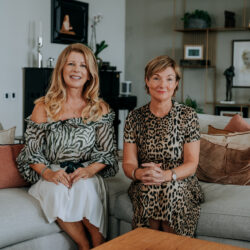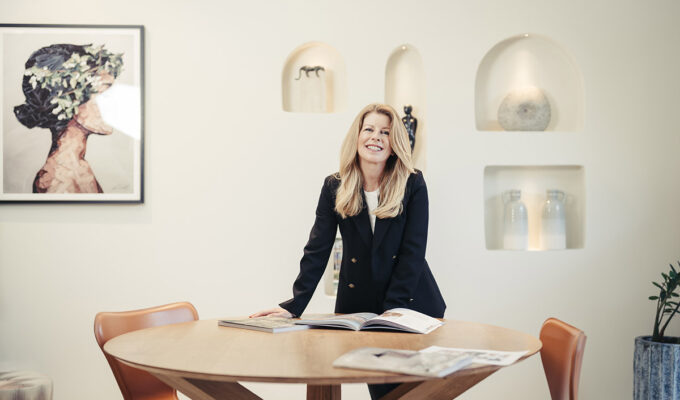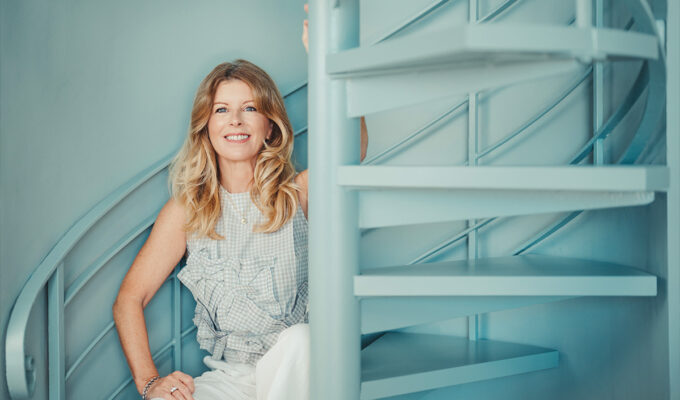
When entrepreneur and philanthropist Rachel Clacher first came to Mallorca, she was searching for sunshine, community and connection, but what she found was something far deeper. In this heartfelt conversation with Helen, Rachel opens up about building her dream home in Alaró, co-founding a boutique property development studio, leading her award-winning company Moneypenny, and creating positive change through her charity WeMindTheGap. She also shares the moving story of her daughter, Josie, and how the island became a place of healing, purpose and renewal.
An inspiring episode about love, resilience, and the power of creating beauty – even after unimaginable loss.
When & Where Can I Listen?
The Mallorca Living Podcast launched on April 9, and new episodes will be published bi-weekly.
You can listen and watch on:
▶️ YouTube
▶️ Spotify
🎧 Apple Podcasts
🎧 Amazon Music
Join the Conversation
This podcast is for you—and we’d love for you to be part of it.
📬 Got feedback?
💬 Want to suggest someone for us to interview?
💡 Have a topic you’d love us to explore?
Transcript
Meet Rachel Clacher
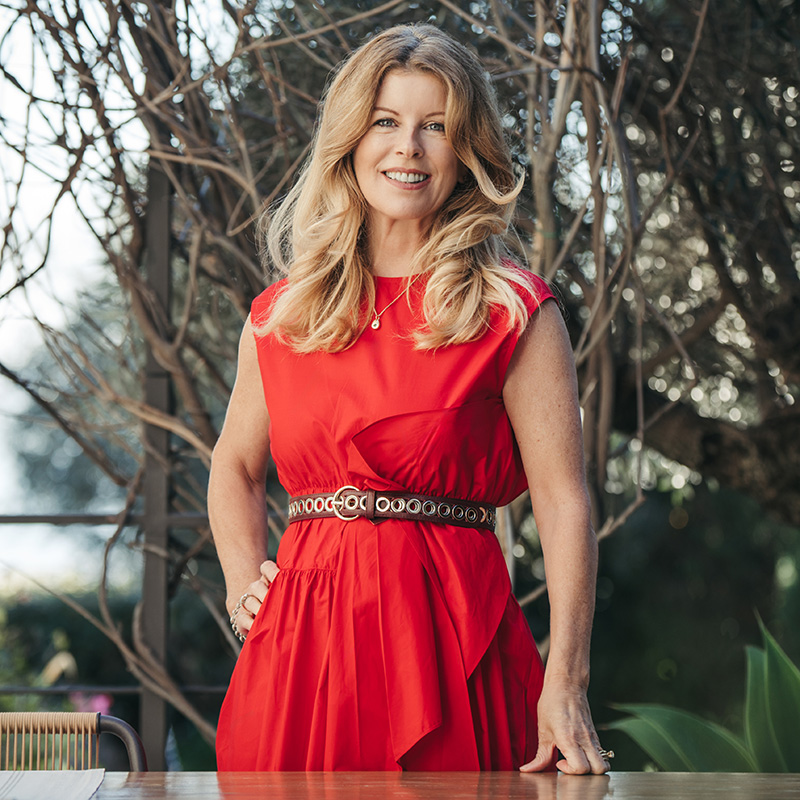
Hello, I’m Helen Cumins and this is Mallorca Living, a space dedicated to those who are dreaming of making Mallorca their home. Today I’m delighted to welcome Rachel Clacher from Wrexham in North Wales.
Rachel, you’re very welcome. Thank you so much for being here. It’s an honor to have you.
Well, it’s great to be here always.
Discovering Mallorca & Finding Her Dream Home in Alaró
So Rachel, how did you come to have a second home here in Mallorca? How did you discover the island?
As a family, we’d been coming for several years, to different parts of the island. We then made the decision that we would look for a second home. Luckily, we had some friends who live in the center of the island. Our initial thought was to look for somewhere on the coast, but through conversations with them, we honed what we were looking for. We realized that what we were looking for was community and a year-round place to live. So we ended up buying in beautiful Alaró, in the middle of the island.
Fabulous. Had you known Alaró at that point?
No, I didn’t know Alaró at all. In fact, our lovely estate agent introduced us to the village. But the minute we got there, I just knew that was going to be home for us.
Why was Alaró calling to you and your family?
The brief we wrote for ourselves was that we wanted to be part of a year-round community, somewhere very beautiful, and not too far from the airport. People at home were saying, “Oh, you’ll never find somewhere that answers all of those questions.” But we did. Alaró has a very strong sense of community. It is a vibrant town all year round, and it’s beautiful.
Absolutely. I’ve had the pleasure of being in your house. Can you describe the property you bought and why you chose that particular one?
Of course. On our list was that we wanted somewhere on the edge of a village so we could walk to bars and restaurants, but that also had its own private space. What we found is a place right on the edge of the village. When you’re in the house, you have no sense that you’re in the village because we’ve got beautiful views of olive groves and sunsets. But literally, you walk out another door and you’re in the heart of the village. It’s quite extraordinary.
It is actually a very unusual property. You open the door and it’s like a different world in there.
It is. It’s like an oasis right in the center of the village.
Restoring a Historic Home & Creating an Oasis
It feels very much like an old, historic home, although you’ve made it more modern with the furniture.
Yes. I think it was one of the main houses of the village. There were spaces where animals were kept underneath and old carriage sheds. We’ve been very lucky. That’s what’s so beautiful about Mallorca—the bones of the buildings are so strong and beautiful. The beautiful honey stone, the marés stone, the beams, the huge arches. There are so many traditional features that lend themselves to living in a timeless way.
So there’s no mistaking that you’re here in Mallorca, in the Mediterranean, when you enter your home.
Right, with the olive trees, lovely citrus trees, we’re growing our first pomegranate tree, we’ve got our first avocados. It’s beautiful.
So you’ve really embraced the Mediterranean essence.
Absolutely, and that indoor-outdoor living. We’ve turned even more of the outdoor areas into living areas. They weren’t really used by the previous owners, and we’ve really made the most of every single thing we’ve got. We know that even at Christmas, you could be sitting outside having Christmas dinner in the sunshine. We’ve got different spaces for different times of year.
Did you do a lot of reform to the house?
We did a fair bit. There was one huge part which was the original carriage shed, and we converted that into a self-contained apartment with two bedrooms upstairs. That was a really important project for us because it was through that project that we then met Frances and Jess Coertze. With them, we’ve set up a property development company.
From a Home Renovation to Co‑founding Development Studio Coertze & Clacher
I was lucky enough to find a builder who I just loved working with. I love buildings. I love spaces. I’ve done a load of building projects and I’ve never worked with anybody as fabulous as Frances on a building project. At the time we were making some pretty dull investments at home, and I just said one day, “Why don’t we just invest in Mallorca in creating beautiful homes?” Why don’t we invest in Frances and Jess and in doing more of what we love there? Everybody who came to our home felt that it was very special and I just felt there weren’t enough places that offer the same things available locally. So that’s where we’ve spent a lot of our energy. Doing the reform took us on a very unexpected path to this business, which is growing and thriving and is just so exciting to be a part of.
Yes. I think you’ve kind of raised the bar in Mallorca in terms of reforms and new build homes. From my experience, I’ve definitely been quite like, ‘wow, that’s amazing,’ to arrive at that level of finish.
Well, I would like to think so. I think what we have set out to do with Coertze & Clacher is build the houses that we would want to live in ourselves.
Designing Homes They’d Want to Live in Themselves
So there’s a completely no-compromise approach. It’s not about design for design’s sake. Every house—we’ve got about nine projects now and more in the pipeline—we imagine ourselves living there. What would we want if we were there? What standards of design, of finish, of feel, of comfort would we want? I think that’s resulted in something quite special.
Yes, absolutely. Because you understand how you want to live, and potentially then complete that for other clients like yourself.
Absolutely. And it’s not just about thinking how the house is going to be a home today in August sunshine, but how it’s going to feel in January when it’s cooler, but the skies are blue. It’s about looking at it all year round.
But you really do go the extra mile. I remember seeing one of your projects, the two houses you built at the top of Alaró. I was in the garage and I jokingly said, “I suppose you have underfloor heating here.” A friend said, “Well, actually, we did put underfloor heating in the garage because maybe people want to use it for another purpose.” I thought, what property developer goes to that expense? I think it just absolutely demonstrated the level at which you finish your properties.
I think it’s a real love and excitement about the buildings themselves. How possibly could somebody live in this? When we bought our house in 2019, it was also quite difficult to furnish it here on the island because we didn’t know where to go. You could be waiting a very long time for things to arrive. So actually, what we’ve done with all of our houses is not only imagine how it would feel to live in it, but we also furnish it. We want the new homeowners to be able to turn up literally with their toothbrush and just come in and enjoy. That’s a really exciting part of what we do—imagining how you would live there and what you would need.
So one of the things I love that we’ve done is, on the floor of all the bedrooms in that house, we have a coffee machine. There’s a little hidden cupboard that you open and there’s a coffee machine sitting there, so you don’t have to go upstairs to the kitchen.
The other beautiful thing you’ve brought in is local artists, right?
Celebrating Mallorca Through Local Artists & Materials
Absolutely. I feel very passionately—and we all do at CNC—that our homes need to be a celebration of all the gorgeous stuff that is here in Mallorca. So not only is it local stone and we’re using local artisans, but we’re using local artists to provide beautiful things for the house. Alaró has a very long tradition of shoe-making. We were gifted a cellar’s worth of shoe lasts, which must be hundreds of years old. A local artist, Katherine, has created these beautiful installations for us that display these shoe lasts as a piece of her art. We’ve got lamps, mirrors, we’ve built some beautiful lampstands. It’s lovely to celebrate that, and it also makes the property so unique.
Absolutely. And a great starting point for people who are also going to begin their journey on the island and maybe become collectors of local art.
There’s so much talent. It’s sort of overwhelming, the number and the breadth of artistic endeavor there is here on the island. And of course, we should celebrate it. If we’re lucky enough to call here our home…
It’s so important that if you have a home in the UK or Germany or somewhere else in the world, you open your door here and you feel embraced not only in the property but in the whole culture and heritage of the place.
Of course. And that is why we’re here. Of course, the island has beautiful sunshine and landscapes, but actually, what we do has to sit in the right place in the island, in the homes we have. It’s not about importing the cheapest, most expedient materials from all over the place. It’s about what is here. How can we build and develop and nurture that? So our homes are an expression of the island rather than being parachuted in from elsewhere.
Life in Alaró: Village Markets, Fiestas & True Community
Taking yourself outside of your property… you walk through your beautiful doors and you’re on the street in Alaró. How is that extended to the local village? Tell us a little bit about what life is like in Alaró.
I think Alaró is just a lovely place to be. It’s very at ease with itself. Life is centered around the square. My happiest place is having a coffee—the most beautiful coffee in the world—after queuing for it on a Saturday morning.
Really?
Yes, Saturday morning has this beautiful market. It’s small, with stalls of extraordinary vegetables and fruit, and there’s a lovely coffee man for whom each cup of coffee is a work of art. Standing in that queue every Saturday morning is my happy place in the world.
How would you then? You take your coffee and sit?
I take my coffee and then I go and get a samosa—a really bizarre combination—but there’s a lovely guy who makes these extraordinary homemade samosas. Then you just sit there and watch the world go by. It is a locals’ market, not a tourist market. It is, for me, just that Saturday market, which is a 200-yard walk from the house, and is a distillation of everything I love about Mallorca.
It sounds like it’s that moment where you feel you belong.
Yes, absolutely. You’re a part of this community. What’s gorgeous is that Alaró has a huge tradition of fiestas, as so many places do. Some of them are wild, these extraordinary demonstrations with all the fireworks. It’s an extraordinary experience to go and be part of that.
And can you be involved as a foreigner?
I think so. You’re not on the sidelines looking in. You can participate and it’s great fun. You just feel swept up by this whole wave of energy. There’s a fiesta where everybody comes and eats as a street along one long table with bunting. You sit with neighbors you’ve never met. It is beautiful.
You’re really selling it very well, Rachel.
I think Alaró is particularly beautiful and wonderful, but I think there are so many villages in the center of the island. Now more and more people are discovering that there is this different kind of life.
It’s so important to explain to people that if it’s a priority to integrate into the local community and have more of an experience of the culture and heritage, then maybe choosing one of these villages would be a better experience.
I think it just depends. Everybody is different. It’s super important to us. What’s great about Alaró is that yes, there’s this whole community aspect, but it’s also practical. I can walk to a lovely supermarket. There’s lots outdoorsy—you can walk into the national park. There’s just so much stuff on the doorstep.
What about your adult children? Do they enjoy the Alaró scene?
One of the things on our original list was that the kids should be able to get in and out by themselves. There’s a really sweet little bus that connects to the train station that takes them into Palma. Our children are older now, but they feel they can go into Palma; they’re not reliant on us. They love it. My daughter is with us at the moment with a whole load of her friends and they haven’t really left the village; they’re having such a lovely time.
Weekend Routines & Walking to Alaró Castle at Sunrise
So a typical weekend for you and the family here?
It depends on the time of year. Obviously, there’s the Saturday market, which is our happy place. We’ll buy a hot chicken and make a beautiful tomato salad for Saturday lunch. Quite often we’ll get up and walk up to the Alaró castle. We’ll drive up this tiny windy road, park, and walk up for an hour at dawn to watch the sunrise. It rises over this extraordinary landscape where you cannot see anyone else. It’s just beautiful.
Do you miss the sea?
Yes, I do. But we can go to the sea. Being in the middle of the island, we can go to whichever bit of sea we like.
How far are you from your nearest beach?
Probably a good half an hour.
And do you tend to go north or south?
We quite often go north, up to Camp de Mar or to Sóller, but also down to the south. In the summer when it’s busy on the beaches, we get up early and go for an early morning swim in a beautiful bit of blue sea somewhere.
I want to talk to you about a subject which is not an easy subject. It was around the time you were planning to move here that your life was turned upside down.
Losing Her Daughter Josie: How It Changed Everything
Your daughter, unfortunately, had a very sudden death. This brought your world crashing down. How did that influence your decision? You had literally just decided to buy the house.
We were in the process of buying our house when Josie died. We were on holiday in a villa in Alaró. As you can imagine, it just knocked the bottom out of our world. I still can’t believe it’s true now. It’s been six years since she died, and our lives have been very different to how we expected them to be. We have this huge Josie-shaped hole in our lives that, six years on, is still a shock. It’s the worst club to be a part of, the club where a child has died.
I think we made some very clear decisions at that time. I don’t think we realized they were decisions, but our family and friends at home maybe assumed we wouldn’t go through with the purchase of our house here, which would have been really understandable. But actually, for both David and I, we had this kind of understanding that it sort of strengthened our need to be here. At a time of such great and terrible grief, I don’t think we could bear the thought of holding something negative towards the place. In some respects, Josie is here and will always be here. We ended up having her cremated in Sóller in the most beautiful place. All of these things kind of added up. We bought the house and she had seen the house and was a part of that decision. It felt like it strengthened our resolve and our need to be here, and therefore our connection with the place.
I think our decision to set up CNC was obviously influenced by that because we both feel very strongly that this community is very important to us for many more reasons now. So that’s one of the reasons we’ve decided to do what we’ve done. It’s been terrible and tricky and unexpected and shocking. But we have to accept that it’s happened. Given that it’s happened, where are we happiest? Where are we able to drive positive change? Where are we able to have an impact? Where are we able to be at peace? And the answer to all of those things is here.
It’s incredible, Rachel. It’s really an amazing thing because most people would leave the island, run away, and never want to see the place again, and it would be really understandable. But from what you’re saying, it’s almost like the island is part of your healing and your connection to Josie.
Choosing to Stay in Mallorca Through Grief
Well, the island is part of our story and therefore has to be part of our healing. I’ve not thought about it in that way, but it is an unavoidable fact that Mallorca will always have a huge place in our lives. It was a place where we were very happy as a family. Josie was my summer child; she was born in August—it’s her birthday this week, actually—and she loved being here. So, it is part of our being here.
It just shows that something so drastic in family life, you’ve also somehow turned it around and embraced it.
Yeah, rather than resisted it. Wouldn’t it be terrible to be in the world and not be able to think about a place which is so big in your life? So, actually, yes, we have embraced it in a really positive way, and the island has become such an extraordinary, powerful force in our family life now because of Josie. We build on that. Here, we do so many things that she would be so proud of us for and that she would have loved. In some ways, she’s with us, and her friends come…
That’s so beautiful, that you’ve invited her friends to come and be part of that healing also here on the island.
Absolutely. It’s a very important thing for us. This place has become a gathering point for us, for so many of our friends and family, to celebrate her and her connection. It’s very beautiful.
Turning Loss into Purpose & Personal Growth
During all of that in 2019 and 2020, you’ve been heard to say, “Accept what we cannot change and change what we cannot accept.”
Well, it’s a very famous quote. I think one of the reasons I am able to get on with my life after this terrible loss, one of the reasons my husband is and my two girls, Beth and Nell, is, is because there has to be some acceptance. Without acceptance, you can’t move; you’re fighting. So, I think without acceptance, you’re stuck. We don’t want to be stuck. We want to be out there in the world doing things. And I think that is what we can do.
But then by the same token, there are loads of things that we have within our gift. Maybe the terrible experience of losing Josie has, in a weird way, made me more confident about who I am because I know I am this person with this terrible loss. But I also have two extraordinary daughters, her sisters here. So, there is stuff that we can change. We can change our narrative about how we deal with our grief. We can change the narrative about how we move forward in our lives. We can change our own narratives. That need to seek ways of changing has led me on an amazing journey here on the island as well, into more spiritual things and trying to understand how I can change things. What can I do to change things that I can’t accept?
You’ve also set up the charity.
Yes.
Giving Back: Founding WeMindTheGap & Empowering Young People
WeMindTheGap has been a massive driving force in your life and has brought about very positive change. Maybe owning this quote is something that’s been a part of my life for a long time. But after losing Josie, I suddenly understood what it means to accept what we cannot change and to change what we cannot accept. So, yes.
Maybe we can start with Moneypenny, because WeMindTheGap comes out of that really.
How Rachel Built Moneypenny into One of the UK’s Happiest Workplaces
Moneypenny is a really amazing business that I set up with my brother in 2000. It’s a telephone answering, outsourced reception, and communication company that’s now a really big business. We have about 1,400 employees, the majority in Wrexham, some in London and Atlanta in the States. We look after millions of calls for our clients, who range in size from small one-bands to magic circle law firms across the world. I’m not involved on an executive basis and haven’t been since 2018, but it’s a business we set up on very strong principles: treating other people as you want to be treated yourself, making Moneypenny the kind of business we would want to work in ourselves, and always wearing our customers’ shoes.
Those principles led to us creating a really unusual business that’s been recognized as one of the happiest offices in the land, one of the best companies to work for in the UK. We have transformed the conversation around opportunity and ambition in our city of Wrexham, where we sort of set up by accident in 2000. It’s become a very important business. We’re the biggest private employer for miles around, and our reputation is for excellence and for always pushing the standards in customer service.
I saw some photos of your head office and its innovative design.
Oh, absolutely. I was very involved. Seeing the homes you’re creating here in Mallorca and what we created there… there’s somebody at work here who really cares about all the details. Of course, the principle is the same as with our homes: is this an office I would want to walk in the doors of every day?
It’s very innovative and really challenging. It’s very rare for a business to build its own office; most are built by pension funds. But we asked our team what they wanted from the office and then found extraordinary architects who listened and created this beautiful space. The shape of the building is dictated by the fact that no one sits more than 5 meters from natural light, which is what our team said they wanted. They all wanted natural ventilation, so we have a natural ventilation system. We have social spaces, a pub, a treehouse…
The treehouse is so cool.
Yes, it’s a meeting room. What it allows us to do is hang our reception desk underneath it so it doesn’t feel confronting; it doesn’t look like an office. It could be in the middle of a forest. We learned so much from designing that space, and it’s become recognized as one of the most beautiful office spaces. And it’s in a field in Wrexham. How fantastic is that?
But it must also help the employees, who voted you the happiest place to work.
Absolutely. It all fits together—the physical environment and the culture of the business. It’s critical to us that these people stay long-term. The most important people we designed it for are our PAs and receptionists who are on the phones and live chats day in, day out. It was about standing in their shoes. We just kept asking them what they wanted. So, yes.
I have this conversation a lot: every space has to have a floor, a ceiling, walls. If we’re putting these things in, let’s just think a little bit. It doesn’t cost any more money, but let’s think about how we can make those elements as right and as appropriate for the people who are going to use it, so that when people are in those spaces, they feel at ease, comfortable, appreciated, and valued. It’s about the decisions that go into buildings. There are a million minuscule decisions, but it’s about knowing these decisions have to be taken anyway. By not making decisions, you’re making decisions. If you’re not going to think about who’s using the space, more fool you.
But it’s more effort and more thought, focusing on the small details. Most people just want to get the job done and move on.
I think that is the most important job. One thing we talk about a lot is: think big. Have the biggest ambitions in the world, which is what Ed and I did at Moneypenny. But to think big, you have to act small. You have to get the tiniest things right. In terms of what we do as a job, we’re looking after calls and live chats, so every last conversation we have with somebody is the most important thing we ever do. It’s not about me being important or Ed or our chief exec. It’s about the person who’s looking after our clients; that person is the most important person in our business. It’s about creating environments in which that person can thrive. The only way you can do that is by getting the small things right.
It’s difficult to do in the sense that you’ve got to work at it every single day. It’s relentless.
You’ve got to know that knowing someone’s name as you walk in the door is the most important thing. It’s important.
Giving Back: Founding WeMindTheGap & Empowering Young People
This led then to your charity work.
Yes. Obviously at Moneypenny, the thing I loved most was seeing our team amaze themselves with what they’re capable of achieving with the right support. I had this awareness that there were lots of young people lacking in confidence and capability and support to actually go out and get a job. So, what would happen if we gave those young people—who haven’t had the opportunities the rest of us maybe take for granted—the love and care and support that we gave our Moneypenny team?
In the first instance, it was a project within Wrexham. What would happen if we gave somebody from the local homeless hostel all the love and care in the world? How would that change their lives? I identified eight young women in 2014 who had been referred to us by homeless hostels, Youth Justice, Barnardo’s, the DWP. These were young people really on the margins, who had had very few opportunities and whose stories were terribly difficult.
I had money to employ these eight young women for six months. I crammed into six months of employment every single thing I could imagine I would want if I was 19 years old and living in a pretty miserable homeless hostel in Wrexham. That included work experience, but also all those holistic life skills: communication, sexual education, who you are in a team, the unwritten rules of employment. We did outwardbound activities, canoeing on the river, just to do stuff with other people.
What we learned is that the power of community, the power of friendship, the power of opportunity is awesome. Those young women amazed themselves and amazed us. It was the most extraordinary six months of my life—I didn’t sleep for six months because I suddenly realized the enormity of the job I’d taken on. In my little safe, middle-class, middle-aged world, I assumed everybody just needs a bit of care and opportunity and everything will be okay. But actually, the barriers for these young people were so enormous. What they showed me about their spirit and their capabilities and their ability to grasp life with both hands was so life-affirming.
We’ve gone on as a charity. We now run four or five different programs, and we’re changing hundreds of young people’s lives every week. I’m so proud of that. We have an amazing team. What I love most about it is that it is the simple things that make the biggest changes: being part of a community, having support, love, friendship, care—all the things we all deserve in life. It’s led to me having a real passion for social mobility and, from my safe world, understanding the challenges. Our society is broken, but we can fix it.
Leadership with Empathy: Her Journey to Being Awarded a CBE
You were recognized for this initiative by the Queen and were awarded a CBE. That’s an amazing accomplishment.
From listening to you, it’s all coming from your heart. It’s your drive, your passion. So, it’s beautiful to get that recognition, but you’re actually doing it because you feel it’s a purpose.
It’s great to get it. I still don’t quite understand it, and I still find it all a bit… but actually, it is a testament to the power of community, really. I love that in the UK they do recognize the people on the ground investing in the community. It is a very nice thing about the establishment.
You’ve managed to get government support for your charity.
Yes. And Wrexham… you’re definitely a big initiator in your community. I don’t think anything stops you.
But, you know, extraordinary things happen. I’m from Wrexham, and many people listening will know it now because of the football. It’s just extraordinary that this has happened in our tiny, gritty city. We are on the world stage. Wrexham is now one of the biggest football brands in the world. It’s amazing. It’s really put Wrexham on the map. It’s so bonkers, and you think, well, if that can happen, then what else can happen? Everything is possible.
I’m spending a lot of my time now as chair of the Wrexham City Board. I’m trying to make sure that all this extraordinary Hollywood fairy dust that’s flying around translates into real change on the ground. And it will do.
What kind of things are you doing there?
We’re doing all sorts of things. We’re trying to make sure we’ve got a university that is growing. It’s about creating an environment where we all work together rather than in silos. I’m hoping to develop… there’s a government scheme we’ve got some money for. I’m hoping to build a most extraordinary youth club in the center of the city that will become a beacon for young people all around the area, and to tie that in with all the existing youth provisions so we have this extraordinary network of opportunities. I’m working with Transport for Wales so it’s accessible. I want Wrexham to become—it already is—a place of opportunity. Moneypenny, WeMindTheGap, the football club are all creating opportunities. But I really want our young people to look at something and say, “That’s built for us, that’s ours, and that’s our opportunity.”
Are you getting the local support you need?
Oh, yes, I think so. It takes time. It’s a whole different world; I’ve never had to work with the public sector before. But it’s fantastic.
I think any location is very lucky to have you. Mallorca the same as Wrexham. You really bring a lot to your community. You’re not somebody to just sit down and think, “Oh, let somebody else do it.” You really are somebody who, when you have the idea, rolls up your sleeves and pulls everybody in.
But it’s a bit like you, Helen. Once you do something… when we set up Moneypenny, we had no idea what we were doing. But actually, you realize that everybody’s just doing stuff. You do stuff and you learn, and it gives you confidence to go and try and do other stuff and learn. I think that’s the journey. You do and you learn.
Reflections on Leadership, Resilience & Creating a Meaningful Life
With all that you’ve done, what are you most proud of?
Oh, gosh, I don’t know. I think… I don’t know. If I hadn’t started the Moneypenny journey, I would have never started the WeMindTheGap journey. All of these steps, they’re all steps. You start somewhere and then you end up somewhere else.
Maybe it’s also a part of what you were saying. It’s all the small things. It’s the small decisions. It’s not that you leave one big thing; it’s your daily decision-making.
I always think that the success of somebody’s life—and I don’t mean in financial terms, I mean in total of what you contribute to the world—is actually a series of small decisions that you do every day. It’s not the big things, actually.
Yeah, I don’t think it is the big things, because the big things are made up of those small things. Sometimes it’s the small, mundane, horrible things that you don’t want to do, but you push yourself to do them. They remind you of the love you have for the things that have to be done.
I think it’s also having that internal compass about whether this is the right thing. As I grow older, I’m trusting my compass more. When Josie died, it was very unusual for us all to be here as a family, and it was very unusual for us to decide not to fly home and for her to have her funeral here. But it just felt like the right thing. So, I think sometimes we make… it’s being aware of when things feel like the wrong thing. When she died, this kind of machine kicked in, and we were speaking with the British Council about flying her body home and all those things. I just woke up one morning and thought, “This is not right. This is not right.” Maybe there’s a confidence that’s built over the years that means when it comes to a really big thing, you actually think, “No, I can make this decision.”
So, maybe that’s one of the things I’m proudest of, because it was totally against convention, against everything that everybody else expected. But it was right for me and my family.
I don’t think you’re somebody who follows the conventional path.
Yeah.
Your head office for Moneypenny is testament to that. Your continued love and connection to Mallorca in spite of everything. You’re not somebody who’s walked the normal path, and I think that’s what makes you you and so special.
Yeah, but that’s what makes everybody who they are. Maybe a lot of us just follow, and you’re obviously leading in a good way.
Rachel, it’s been an absolute pleasure to talk to you. It’s something I’ve wanted to do for a long time. I managed to nab you when you were on the island this time, and I’m very happy we could have this really inspiring conversation. Thank you so much.
But before we finish, I have our quick-fire questions. So, beach or mountain?
Well, I have to say mountain. I can always go to the beach.
Sunrise or sunset?
Sunset.
Summer heat or winter calm?
Oh, I think… winter calm. Almond blossom. Cycling.
Siesta or fiesta?
Fiesta. Obviously. Always.
Pa amb oli or ensaimada?
Oh, I don’t like either, but I… I would… I like the crusty bread, the good one.
North coast or south coast?
North coast.
Rachel, thank you so much. I really hope you can continue to contribute to Mallorca in the amazing ways that you’ve found to be able to do that. And I wish you many more years of joy, fulfillment, passion, and deep connection to Mallorca. Thank you so much for being here.
Thank you.
Address details