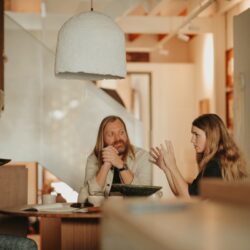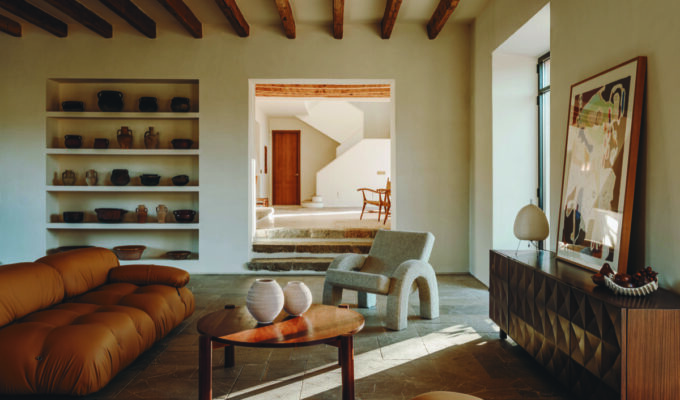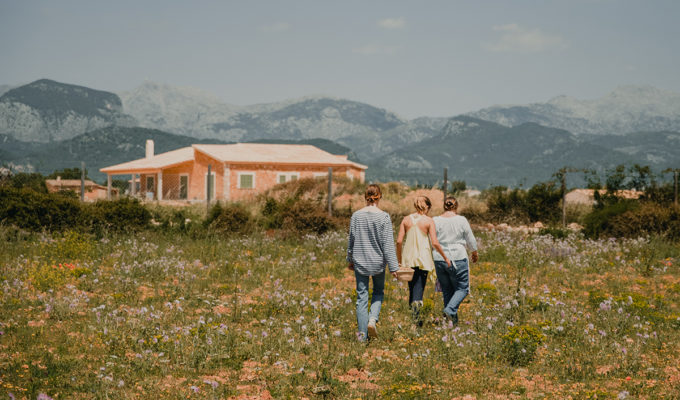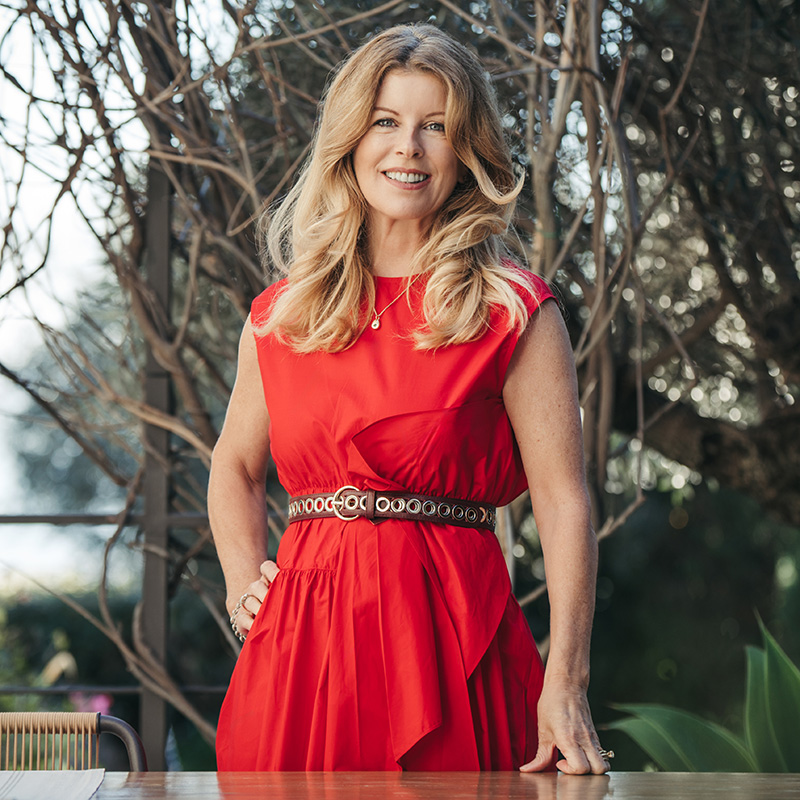
We meet the founders of Ask og Eng, Kine and Kristoffer, at their home and showroom in Binissalem. Shaggy sheepskin rugs soften microcement floors, light settles on irregular ceramics, and the warmth of their bamboo creations – the reason we are here – transmit a way of life before either has uttered a word. Kine pours coffee into a handleless artisan cup, which is satisfying to hold, and the story begins: how a Norwegian architect and a photographer found meaning in sustainable bamboo design, and later, their place on the island.
Stronger than steel
It began with the renovation of their apartment in Oslo and an unsuccessful search for environmentally friendly options. Kristoffer, an architect raised by a practical, tool-loving father, decided to build their own kitchen from bamboo. “I thought, how difficult could it be? … Turns out it can be quite difficult,” he says, with a laugh. What began as necessity soon became a deeper inquiry into the material itself.
“Most kitchens are made of MDF and will actually release toxins into your home for the next five years,” Kristoffer explains. In a room so central to preparing food, material matters. Bamboo matures in just five years, compared to decades for hardwoods; it is harder than white oak and stronger than steel. Yet it has often been dismissed as utilitarian; something to conceal.
Kristoffer lifts a slab to show its exposed edge. “We keep the end structure open, because we want to tell the story of how it’s made.” The layered grain remains visible. “You don’t cover up these things. You use them.” They call it honest architecture.
They quickly attracted a following on Instagram; first for the beauty of their designs, then for their environmental logic. Clients across Europe began calling. A commission in Ibiza brought them south; Mallorca followed. Here, they found outdoor living and a slower rhythm that felt sustainable in every sense.
Designing for wellbeing
That honesty extends beyond aesthetics. “We try not to be too trendy.” Their kitchens are modular and often freestanding, designed to last decades. “If you just do it once, then you can keep it.”
They have many reasons to be proud, but the donation of a kitchen to the neonatal ward at Whittington Hospital visibly moves them. Their first son was born two months premature. “We know exactly what it’s like to live in a hospital for many months,” Kine says. “It does something with your mental health.” In a space defined by fluorescent light and hard surfaces, their bamboo kitchen introduced warmth and tactility; a place where parents could pause and feel human again. In the end, their work is not simply about sustainable kitchens, but about shaping environments that support wellbeing, both visible and unseen.
Text by Emily Benet