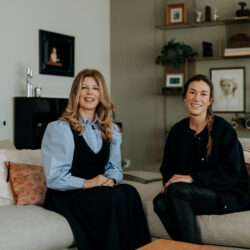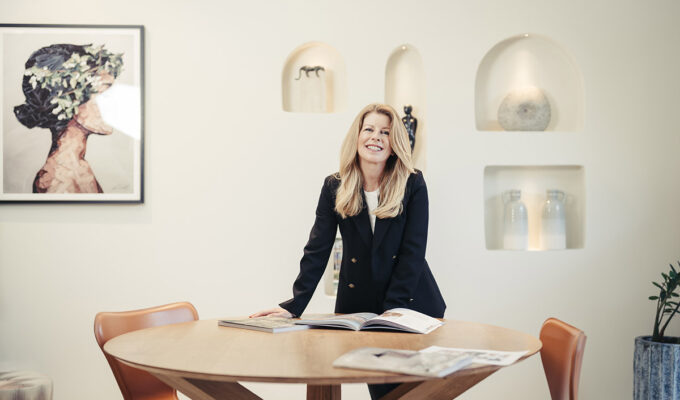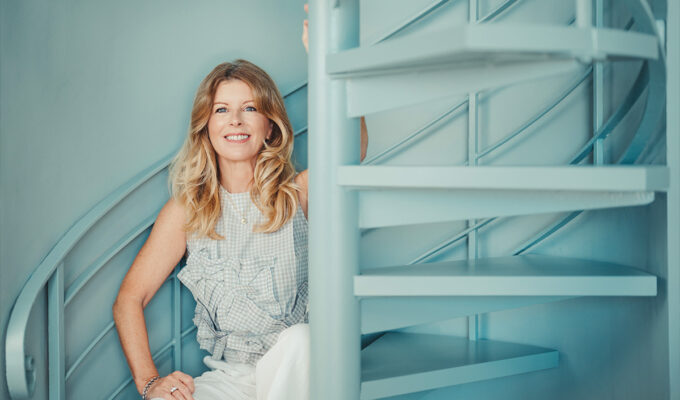
Nina Moons moved from Austria to Mallorca in 2020 while pregnant and in the middle of a pandemic — and slowly built a new life from the ground up. In this episode, she shares the emotional reality of relocating with a young family, finding community, and launching The Calendar Mallorca, a platform helping residents connect with the island’s daily life and traditions.
Helen and Nina talk motherhood, entrepreneurship, integration and the patience required to truly settle in Mallorca. A candid conversation for anyone dreaming of building a life on the island.
When & Where Can I Listen?
The Mallorca Living Podcast launched on April 9, and new episodes will be published bi-weekly.
You can listen and watch on:
▶️ YouTube
▶️ Spotify
🎧 Apple Podcasts
🎧 Amazon Music
Join the Conversation
This podcast is for you—and we’d love for you to be part of it.
📬 Got feedback?
💬 Want to suggest someone for us to interview?
💡 Have a topic you’d love us to explore?
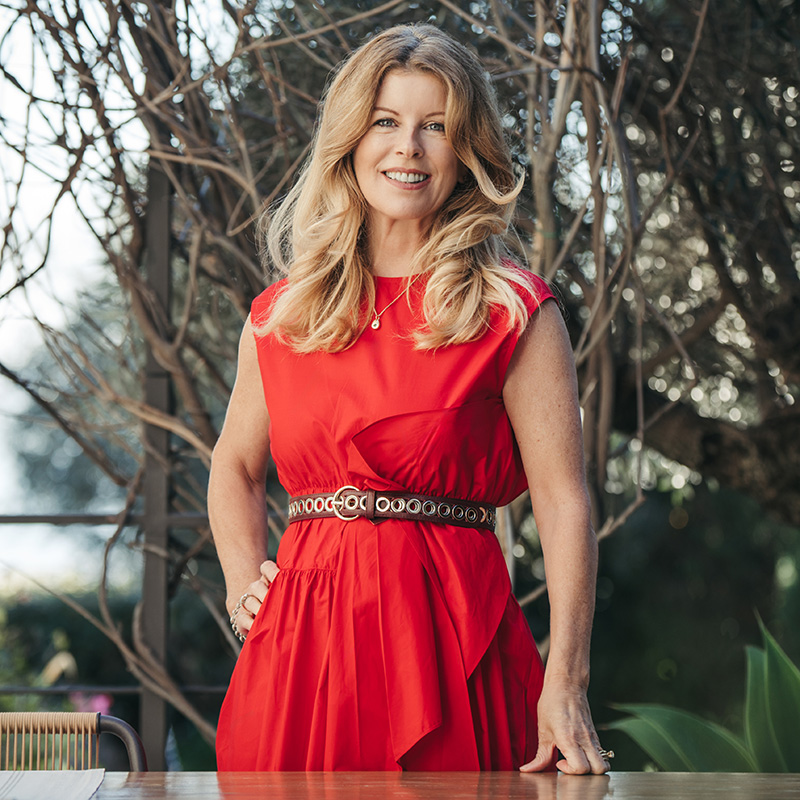
Transcript
From Austria to Mallorca: A Pregnant Move During the Pandemic
Hello and welcome. I’m Helen Cumins and this is Mallorca Living, a space dedicated to those who are dreaming of making Mallorca their home. Today I’m delighted to welcome Nina Moons, originally from Austria, who moved to Mallorca in 2020. We’re going to hear more about how to create a wonderful life here in Mallorca with a young family. Let’s dive in.
Nina, you’re very welcome. I’m so happy to have you here.
Thank you so much for having me. Yeah, it’s a pleasure.
So, we met actually back in 2020. And I’m really interested to hear about your journey since you moved here. In a sentence, could you tell me how do you feel your life is here in Mallorca?
I really like the Mallorcan sentiment of “poca a poc,” little by little, because my life has changed so much, or it’s thrown me a little bit at times while living here over the past five years. That’s become kind of my way of living here. It’s little by little, not stressing yourself too much, taking one day at a time, one week at a time, especially with small kids.
Small kids. And what ages are your kids? Four and seven. You have a boy and a girl? Two girls.
Two girls. Okay. So, you had one when you already moved here, the eldest one, and you were already pregnant with your second one. So, how was that when you moved to Mallorca with a little one plus a one on the way?
It was stressful. I mean, I was used to moving because I used to live in Southeast Asia and then South America, but I never moved during a pandemic and pregnant with a toddler. We kind of arrived here and we didn’t have a home or anything yet. Oh my god. So, yeah, it was a bit stressful, but it was also fun. It was a great experience.
So, what made you move to Mallorca? What made you choose Mallorca?
My husband’s job. At the time, he was working in Peru. I was working as well, but he was like, “I think we’re ready to move back to Europe.”
You both worked in the hospitality industry, right?
Yes. In Peru, briefly, I went into fashion. I worked for a sustainable fashion company there. We actually thought that before moving back to Europe, we would have one more stop maybe in South America, but then the pandemic happened. It was the first time that we realized that if something happens back home – he’s from Belgium, I’m from Austria – we couldn’t just get on a flight and fly over to our families. That made us realize that we actually wanted to be a lot closer to family. And then also having kids, we didn’t want them to see their grandparents only once or twice a year. We wanted to be somewhere where they were able to visit whenever they wanted. Their birthdays are coming up now in February, so the family’s flying over and it’s so much easier.
So, you worked in the hospitality industry for a very well-known luxury brand. Your husband had the opportunity to move here and accept a role in one of the hotels on the island as the general manager. Right. Correct.
So, where did you decide to settle here on the island?
When we first arrived, I thought it was great. We rented an Airbnb in Palma, in the center of Palma for like a month just to get settled, especially with the little one and everything. Then we took our time to look. We first rented an apartment near Son Vida in Son Rapinya, near the golf courses, and we really liked the area. So, we bought an apartment there recently. I really like the area because you’re in Palma, but you’re a little bit outside. You’re surrounded by green. I can go on a hike with the kids and in 10 minutes I’m in the mountains, but at the same time, I can go with the car or the bus straight into Palma for meetings and all of that.
It’s literally 10 minutes from Palma. So just to describe for our listeners, it’s a suburb of Palma, but it’s surrounded by schools. So it’s very popular for young families, right? Was that one of the attractions for you?
Yes. At the time we didn’t know yet what school and everything, but for me, coming from Austria, it was like being close to the mountains and having so much green around because we literally live opposite the golf course. There’s just so much green in Arabella Park, opposite Son Quint. In the new development there. Beautiful. But then also the proximity to Palma and the beaches and everywhere is great. You can hop on a bus and be in Palma in 10 minutes. I love using the bus. It’s free for residents. In 10-15 minutes you’re right in the center and you don’t have to worry about parking or anything.
Navigating School Choices and Raising Multilingual Children in Mallorca
So, in the end, which school did you choose for the little ones?
We chose Escola Global, which is in the Parc Bit area near the university. My husband was working in Deià, so it was just easy for us. It’s a great school because it has this private school element, the British school system, but they spend a lot of time outside and encourage outside learning and really encourage their character to flourish, which I love. They just get to be kids.
Did you look at many schools? Did you consider many of them?
I don’t know how many hours I spent on ABC Mallorca. It has a very complete guide, to be fair.
We do invest a lot of time and effort because there’s been so many new schools opening in recent years. It feels quite overwhelming when you move to the island when you don’t really know. You’re figuring out which area, because it’s not just which school, but also does that make sense? Am I close enough? You might like the school, but if it’s half an hour drive, we all know that very quickly we get used to half an hour is actually quite a long time with traffic and everything. There were so many factors to consider. I’m pretty sure I found the school on the website. We meant to visit three in total, and that was just the one we liked the most.
Are you happy with your decision now? Yes.
Which language do you speak at home because you’re a very international family? You have such a variety of possibilities.
The main language at home is English. But then I speak German because I’m from Austria. So you speak German with your children? Although I have to say, my main language became English now too. So sometimes I speak more English with them than German, but I try to really focus on that. Their dad speaks Flemish with them, and then of course they have Spanish as well. When we lived in Peru, my older daughter always went to Spanish kindergarten, and the little one also here went to Spanish kindergarten first. So that’s a big part of our life too.
Did you speak Spanish when you came to Mallorca?
Yes, we learned it when we moved to Peru but didn’t speak any before at all. It was actually good to learn in Peru because they speak a lot slower. It was easy to get used to things, so when we moved I already had a good base to build on.
What part of Peru did you live in? In Lima.
Oh, you lived in Lima. I thought maybe you lived in the mountains in Cusco or something because there’s some hotels there, right? No, I went to visit Cusco and Machu Picchu over 10 times for work as well. It’s incredible to just casually go to Machu Picchu again. It was an amazing experience. The pandemic was very hard, but now it’s flourishing there again.
Beyond Stereotypes: The Island’s Family-Friendly Lifestyle and Outdoor Living
When you moved to Mallorca, because really it’s an island that people aspire to live here. Did you feel, when you actually moved here, how did you feel?
I have to admit, I think if you’re from Austria or Germany, you have certain ideas about living on Mallorca. But luckily, we came here in 2019 just before the pandemic on holiday because my parents have been coming to Mallorca every February for the almond blossom for years. They kept telling me, “Nina, it’s not just the Balneario or Arenal and all of this.” So we came in 2019 and spent a week here. It was late October, off-season. Still, during the entire week, I didn’t see all of what I thought Mallorca was about. It was the first time I realized I could imagine living here because it’s so beautiful. It’s an amazing island for small kids. You have so much variety here. One day you can go to the beach, the next you can go to the mountains. That was really a moment where I thought maybe this could be a great option for us because we wanted to come back to Europe, but we didn’t want the hustle and bustle of a European city. Mallorca for me is this great in-between where you’re in Europe, but then you have this island life which is really beautiful and doesn’t feel so stressful.
So what’s a typical weekend for you and the family?
Something local, like going to a local market or a local fiesta, and then just having a long lunch often in the sunshine luckily. Something very easy. The amazing thing about Mallorca is there’s so many things for kids, like music festivals, local traditional fiestas, or even going out to eat. Kids are always part of the day-to-day, which is really special. They’re always welcome by the Spanish local community.
It’s one of the things you really notice as a difference from Northern Europe to Southern Europe, just how open and welcoming everybody is to have children around.
Exactly. Every time I go to Vienna, I see posters and things for events, but it’s always either adults or kids. It’s never combining both. That’s really beautiful here because you can go somewhere where you don’t just stand on the playground being a bit bored while your kids are having fun, but you can go somewhere where there’s something for everybody.
The kids live outdoors. As families, we have this massive advantage because we have more or less 300 days of sunshine. So it really does make a difference in how you live your life. Is that true?
Absolutely. I see it every day with the kids at school because after school they have a lot of outdoor space where they can play. My four-year-old loves just running off and looking for bugs. They actually get to still be kids. The more I speak with friends that are moving to the island with older kids, they’re saying that suddenly their 15-year-old or 16-year-old is less on their phone because that’s not the only option anymore. They can do fun things with their friends after school outside. So yeah, definitely.
And it is a safe place to raise kids. Is that right?
Absolutely. You have such amazing communities here. Everybody’s so used to helping each other, looking after the kids. It’s true what they say, you can literally still have community or villages where you go and the kids go off and play in the village playgrounds and you don’t have to worry about it. These beautiful ideas of village life still exist here.
Speaking Spanish and Building a Platform for Local Connection
Are you happy with your decision with Son Rapinya, this area as an area for a young family?
Yes. What I also love about the area is that it doesn’t change throughout the year. There are a lot of places around the island that, for example, close down during the low season.
So the coastal towns where they’re more tourist orientated. Exactly. We don’t have that at all. It’s not an expat place. I feel very connected to where we live and to the Spanish way of living as well.
But I think you have a huge advantage because you speak Spanish. Would you say that?
Absolutely. I would also recommend that to everybody moving here. Encourage people to really start speaking Spanish. It is a key that opens the door to life here. Would you agree?
Yes, absolutely. Especially when people know that you’re trying. It doesn’t have to be perfect. Of course, it gets easier the more you can speak and express your wishes, but it just makes life so much easier. I think it’s essential for me. Even when I lived in Asia, I always tried to learn a little bit of the local language, which was a lot harder there because you couldn’t read them most of the time. I always try to at least know the numbers or how to negotiate at the market.
So, you really are an amazing woman, though, I have to say, because not only are you raising two young children and all that involves, but you decided to set up a business here on the island. I’m really excited to hear more about this business. But first, what was the initiative? Why did you think there was something missing on the island?
From living in Asia in small towns, I was so used to community. There you didn’t need a website because you just talk to each other and be like, “Okay, there is this happening on Friday. We all meet there.” Because there wasn’t much else going on. I lived in Laos and Cambodia, not the metropolitan cities. When I moved to Lima and then also to Mallorca, I realized that especially with kids, I just love to have plans and know what’s going on. The more I spoke with people on the island, I was like, how is it possible that we don’t have one place to go to know about the daily happenings? Where is live music? Where is the village fiesta happening right then and there? Of course, life here is a little bit more last minute than maybe in Austria, but I thought there has to be a way. The more I spoke with people about it, they were like, “Yes, please, we would love to have a website for that.” Then I thought maybe that’s something I should do. It was really the first time when I had many business ideas before, but the first time when I talked to people about this idea, they were like, “Please do it.” Every weekend I didn’t do it, I wished it existed because it just makes life so much easier if you know what’s going on.
From Idea to Reality: Growing The Calendar Mallorca
It’s challenging because after 23 years of running ABC Mallorca, I know we have worked hard at that in the past to get the information. It tends to be very difficult. Why is that?
Even the local information that you get is often something you have to triple check. At the beginning of the year, you get a calendar of all the fiestas, and still you can’t 100% rely on it because things change. Nobody actually advises you, and then you’re publishing information which is actually not correct, which is more frustrating than not publishing it at all.
Exactly. I had to learn that as well. When people say, “Oh, I’m coming in April, please tell me everything that’s going on,” I say no, it doesn’t work like that here.
So you set up The Calendar Mallorca. Tell us what is the purpose of The Calendar Mallorca?
It’s basically your one go-to website and Instagram account as well, but mainly focused on the website that has all the daily activities and events happening on the island. I always say I try to have the best of what’s happening. There will always be other events, but I really try to have the best of what’s happening that day.
It seems very curated what you’re doing. So, how do you manage that? You select the events.
I try to think about what’s the purpose behind the event. Is that really something that I would like to go to? I founded the website for people living here. Of course, I love it when people visiting use it, but it’s really for people that are based in Mallorca, that are local. I have now a lot of my friends that are coming back to the island that are like, “Oh my god, it’s amazing because I finally know again what’s going on,” which is the best compliment for me. It’s basically a combination of kids things, sport activities, local fiestas and traditions, community and business, a little bit of everything. Before that, there were websites dedicated to daily events, but they all kind of looked like they were from the ’90s or they were just for kids things. I wanted to create something a bit more modern, easy to use. You literally have a calendar in front of you. You have time on Saturday, you click on Saturday and you can see all the activities or events happening, and then you can click to see more.
Did it take you a long time to get all of this set up and running? What was the lead time?
I was very scared to start because I was like, “Who am I to say I’m The Calendar Mallorca?” I’m very respectful of the local people. That’s what I’ve learned from living abroad. You can’t just arrive here and think you know everything better. It doesn’t work like this. You really need to know the island. I’m also somebody that’s very creative. For me, before I even had a business plan, I needed to get the branding and everything right. Then everything else kind of fell into place. I started in 2023 to develop the logo, the colors, the feel of it, but then I didn’t do anything for a while because I was a bit scared to do it. On the 1st of February, my 2-year anniversary is coming up because in 2024 I was just like, “I’m just going to start.” I did my first post on Instagram. I worked with somebody on the website. I took my time because I really wanted to create something special. It just kept growing from there. I started it as a side project because I didn’t know how people were going to react. But from the moment I started, people just started signing up for updates to know when the website launched. Before I even had a website, I had 800 people signed up.
800 people signed up. So that was a significant vote for The Calendar Mallorca.
It was amazing. Even now, I don’t do any Google ads, Instagram ads, nothing. It’s just organic, word of mouth. People were talking about it. Their friends are visiting, they’re like, “You have to sign up for this.” Somebody’s moving here and they’re like, “You have to follow this website and this Instagram account.” I’ve been really lucky to find this kind of niche. I think they also see the curation behind it. It’s not just whatever is happening, but it’s a selection of the best. It has something from 18 or even younger to 100. You find something on there that you would like to go to. That’s what I wanted to create.
Nina’s Daily Routine, Driving Motivation, and The Calendar Mallorca’s Value
You’re quite like a bridge, if I understood right, from what is local to translate it and explain it for the foreign community. Is that fair to say?
Yes, absolutely. That’s also what I try to do. There were Instagram accounts that would just share a flyer and say this is happening, but I was like, “Yeah, but what is it?” We all know there are so many amazing and beautiful traditions here, but you have to explain them to really understand them. You also have to understand them before you go sometimes because sometimes it’s really just for the village and you have to be very respectful. But sometimes everybody’s welcome.
How do you find out all this information? It sounds like you go a lot deeper, you almost go there and have the experience yourself and then explain what it’s all about.
I know my official sources now. It’s a lot of time spent on websites. Programs for official fiestas sometimes, we just had Sant Antoni and Sa Rua already started, and the town hall of Palma hadn’t even officially announced the program yet. You have to be very quick and you need to know where to look. That’s for all the official things. I’m lucky that I work with amazing businesses and event organizers on the island that now have started to work with me and send me information. But it has to be something, you know? I’d rather say no to something that I don’t feel 100% aligned with The Calendar than just have a website filled with things that I wouldn’t go to myself.
Can you tell me what’s a typical day for Nina now with your business and your family? How do you manage it all?
It starts with getting my kids out of bed, which is always a process in itself. Making the lunch boxes and all of this, and then they’re off to school. We actually pay to drop them off earlier so they already start at 8 where school normally starts at 9:00. It really helps me because it takes the stress away. We arrive there before everybody else, and even if we’re 10 minutes late, it doesn’t matter because we have a whole hour to play with. The kids are at school until 3:30, 4:00. I’m very lucky because we normally have au pairs that help. That has been really essential for me to be able to work and create my business, to have the help at home. We always have au pairs from Austria or Germany also to help with the language. They normally pick up the kids from school so I don’t have to worry about the traffic. I’m very lucky. I have time for meetings or calls, or doing all the research because I think people underestimate how much time that takes.
Do you work from home?
I do a combination. I have a walking pad now so I can move and work from home, but then I also have a co-working space in Palma that I use. I often meet people in coffee shops. I like to move around, not to be just at home on your computer all the time. The kids come home from school. They often play at school after. Then they come home and I’m cooking dinner, and the whole bedtime routine starts. Then I’m often again on the laptop working at night when the kids are in bed.
I remember those days. I did them for years. So it’s a really full day. You seem to be very motivated, very driven by this. What is it that’s your passion for this project?
I think it’s community. It’s really creating and sharing. I know what it’s like to arrive at a new place and not really knowing where to go, what to do. It doesn’t matter if you’re coming here alone, with a family, or if you’ve traveled a lot. It’s so nice to come to a place where you then be like, “Okay, I would love to see the island a bit more, but I also want to understand it more.”
Do you feel that there’s a real hunger for people to build a social circle, to have contact and good conversations and not be on the phone? Doesn’t the island actually promote that way of life a lot?
I always encourage people also to get out of their bubble. When people arrive here, they’re a bit insecure, they don’t know where to go, and then they kind of stay in this bubble, maybe with the same nationality or just the school community. I’m hoping that with the website I encourage them to go out.
How do you do that?
With the kind of events I share. I always try to encourage networking, but it started to have this kind of negative association where people think networking is stiff. Here it’s so beautiful because you get to meet so many amazing, interesting people that have created amazing businesses. At the same time, encouraging them to maybe go to a run club where they meet other people, or go to a workshop with their kids. Doing things like that sometimes takes them out of their comfort zone, but because they have all the information, they know what’s going on, it’s a bit easier to get there.
Nina, if you want to subscribe to the website and get all the information, that’s free of charge, I guess. It’s the event organizers that actually pay you to promote their event. Is that how it’s working?
Exactly.
How is that working out with a business? Because obviously a business has to be sustainable, it has to be viable. You’re almost at the two-year mark. Is it arriving to that point?
Yes, absolutely. I have to say it’s been amazing to see the support that I’ve received from businesses, from established businesses here on the island. At the beginning, of course, they were always a bit like, “Let’s see where this is going,” but I think now people know that this is very quickly becoming the place to look. Just the first two weeks of January we had nearly 80,000 views on the website organically because of all the local fiestas and everything happening. We’re slowly but surely reaching our 1 million visitor mark, which is incredible for a relatively small business like this. It’s getting easier, but of course it’s also very seasonal. It doesn’t mean that I’m only busy in the summer because I work with businesses all year round. January is a little bit slower because people are just coming back from Christmas, New Year’s, there are a lot of local events happening, but businesses are taking their time to see what their structure is going to look like for the year. I have to say I’m really happy because it’s been growing every month. It’s really something I want to consistently grow.
So, this is your third baby, right? It really sounds like it. And you seem as excited today as probably the first day.
Yeah, because it’s genuinely fun. I learn something new all the time. I have to admit that when I moved to Mallorca, having lived in very different cultures, I thought that living here would be kind of easy. I was worried about that at times because I like this challenge. I always enjoyed moving to a different country and being challenged by the new culture. I thought that would happen a little bit less here because I thought, “Europe, Spain, I know it.” But I didn’t know it at all. There’s still so much culture, so many traditions happening that every week I learn something new. That’s really beautiful. While I’m writing the descriptions or explaining the event, I’m learning something new.
I have to compliment you because from what I’ve seen on your website, I do feel on two fronts you do a great job. One is the aesthetic. You can see that there’s somebody there with marketing, graphic design appreciation for how things look. I also have to say that the content is very well researched, very well presented. If people use your website as a source, they are going to gain so much from it. It’s educational actually. You’re not just giving, “Oh here’s the event,” you actually explain the historic part of it. For people who want to move to Mallorca and truly integrate, not live on the periphery, if you want to speak the language, integrate in the local fiestas and the local culture and understand the heritage of Mallorca, you can do that using your website. Isn’t that true?
Absolutely. If you make an effort, it opens itself up. It really is a completely different experience. I know it can be challenging when you move to a place you don’t know, and then you have to make that effort, but then you get so much back in return.
The Importance of Catalan and Gaining Acceptance from the Local Community
What about the people you’ve met since you started this project? I know in my experience, I’ve been running the HCC business community now for, well previously it was ABC business community, and we’ve been doing that for 20 years this year. It’s incredible the amount of people I meet every month. I’m sure you’re now in a similar situation with all the events you attend and people you meet.
It’s my favorite part, honestly, meeting people and hearing their stories. At the moment, I’m really kind of obsessed with all the young Mallorcans that are coming back and establishing businesses here, like in their 25 to 45 age range. I’ve met just recently a lot that left the island, traveled, worked, got some experience, and now they’re coming back to open businesses here. I love their perspective on things. For example, a friend of mine opened kind of a soul cycle spinning place in Palma because he lived in Barcelona for a long time and he was like, “There are so many there, why don’t we have it here?” He didn’t just open up, but he made it this beautiful place where I love to go every week now. Talking to these people and hearing what they say, the most beautiful thing is when they tell me that they’ve used The Calendar coming here and feeling more part of the island again. Learning through them where their families live on the island, what traditions they’re used to, becoming part of that. It’s amazing. How many places are there in Europe where you get to meet so many different people? It’s such a rich mixture of people from all over the world.
It’s one of the reasons I think I always say I can’t live anywhere else because we’re so used to at a dinner party having 10-12 different nationalities. Even in our own team in my office, we are such a mix of different cultures, different perspectives. This is wonderful and it’s amazing for kids as well. I speak three languages every single day and they just get so used to it. I remember two years ago we went to Austria and my daughter was on the playground and she was like, “Why is this child only speaking one language?” I was like, “Because normally when you’re two or three, that’s pretty normal.” She was like, “No, but I speak this, this, this, and this language.”
Are your children learning Mallorquín? Yes.
That’s really good. If you’re living in Mallorca, sometimes people feel, “Oh, it’s not a valuable language because outside of Mallorca or the Catalan area, you’re not going to be able to use it.” What’s your view?
I have to admit, one of the reasons why we chose an international school was because it was just too hard for us to add Catalan as the fifth language. So we said, “Okay, we’re going to concentrate on that.” But they have to have Catalan there as well. I think they have a minimum of two hours per week, which is really important to me because I always tell the kids we live in Mallorca. Catalan is part of the culture where we live. I think it’s also important for them to just feel connected to it. I don’t speak it, but I’m learning to read more and more just because all the event programs are often only in Catalan. So, I’m learning certain words and things. I think it’s a great language with amazing expressions like “poca a poc” and “sobrassada,” expressions that describe life so beautifully.
There is also this feeling, and it hasn’t been my personal experience, but I’m just curious to know what you think, that it can be difficult to get into the local community. Is that your feeling?
Yes, it’s true. I think especially when I first started The Calendar, for me it was very important that from the day we launched, the website was available in Catalan, Spanish, English, German. All the other languages came after, but it was essential for me to start like this because I was like, “We’re here in Mallorca, it has to be.” It’s a calendar as well for the local community. I think at first people didn’t really see that, so they were criticizing it. It was always my friends that kind of went to attack. Then I had a friend of mine who’s Mallorcan tell me, “But Nina, if we don’t do it, we need somebody else to help us with it, right?” I was like, “Yeah, that’s true. I’m not stealing the idea from anybody. It just didn’t really exist in this way, shape, or form.” Now I have local town halls that are tagging me in reels and in stories. For an outside person, that might seem like a tiny thing, but for me that’s a huge acceptance. Well done. Congratulations. When that happened, I was like, “Of course I’m going to share everything,” because it’s amazing. If they see that I’m adding value on a local level, but it took at least one and a half years since I started until that happened and until people saw that it’s not just a website for foreigners.
Initially when I started ABC Mallorca, believe it or not, I thought I shouldn’t tell the locals about it because I said they have so many other accesses to information. Then they asked me, “Please can you do your magazine in our language so that we can also read it and enjoy it?” So we did make that change. We publish now in three languages: Spanish, English, and German. I think that’s also so important. Some people forget that. They arrive here and they’re in their bubble a little bit, they’re like, “I don’t need to learn the language. I can order my beer in Spanish or something.” But if you really want to experience Mallorca in a different way fully, then I think that’s essential. It also makes life here so much more fun and more interesting because you can avail of all the events and all the historic things.
Patience, Business Wisdom, and Navigating Mallorca’s Bureaucracy
Can I ask you what would be your advice to somebody listening to this podcast today, dreaming about doing what you’ve actually already done, which is moving with a young family here and starting from the beginning? What are the kind of insights you’d like to share?
I think not to rush things. Patience. I always said wherever I moved, it takes minimum three months until you feel settled. You can’t expect, I mean we’re all excited and emotional when we arrive at a new place and we want to know everything and experience everything. But this excitement at a certain point stops and you realize, “Okay, this is real life now and I need to build a routine, a community, I need to find new friends.” Then I think you go through a period where it feels also a bit scary because you need to put yourself out there and you need to find a doctor or all of these things. Normally around the three-month mark is when I feel a lot more settled and more like, “Okay, I’ve arrived and also started to make friends.” So, the rush and this “poca a poc” mindset, I think applies to so many things. Step by step.
Which was the most accessible for you in terms of building friendships? Was it the school? Was it the workplace? What made it easy for you to transition here?
Socially, as we moved during the pandemic, it wasn’t easy because we still had restrictions in place. But school for sure number one. I think if you choose the right school, you are surrounded by people that have a similar mindset or similar values as you. Then you connect through the kids. I have friendships now that I know even if I would move from Mallorca in 10 years, they would stay with me for a very long time. I feel very fortunate because those are people that I might not normally have come across if I lived in Vienna. That was amazing. Of course, I worked as well before I did The Calendar, and through work I met incredible people and just experienced Mallorca from a completely different side. Putting yourself out there, putting yourself into different environments, for example, find a co-working space that introduces you to new people, or finding a gym that you really like that has another community. I think that’s a really nice way to meet different people that have a similar mindset or similar values.
The point is that actually everything is here on the island to the surprise of many. It’s a small island, but it offers so much diversity. Really whatever your interest, you’re probably going to find a club here.
Absolutely. From paddle obsessed, to gym, to tennis for the kids, the opportunities you have, the classes that are available for them, the different sports that they can try or different activities. There’s something for everybody. It’s such a diverse island. You just have to know where to look and who to contact. It’s beautiful because where else do you have that, in quite a small space, that you have access to so much.
The other questions I want to ask you, you set up a business here. What do you wish you’d known about the business side before you started, looking back now on the last two years?
Quality over quantity. Always quality over quantity. An important value in our slow living ethos. Why did you say that?
At the beginning, I wasn’t yet sure. For example, I was promoting retreats but I didn’t really feel comfortable because I didn’t know. We all know retreats here have so many aspects like where it is, who is involved. I just learned that sometimes it’s better to refuse business but then be 100% confident in what you’re promoting. That’s really something that I do moving forward. There are amazing opportunities that I could always say yes to, but that are maybe not aligned with my values and what I want to transmit. There are many ways that I could quickly grow on social media or things like that, but it’s just not aligned with my values. I’m trying to really always ask myself, “Is that something I would go to, I would support, I would like?” If my gut feeling just says no, I trust that and I don’t do it. I think it’s better to take your time and grow something slowly but meaningfully.
What about the bureaucracy here? It comes up a lot in this podcast about Mallorca Living. What do you think?
I think because I lived in Asia and South America before, I was quite used to it. You did your apprenticeship when you were there. So it wasn’t like a huge surprise to me. I mean it sometimes still does when I’m like, “What do I need a stamp for or a form for or things like that,” of course.
So you’re patient with all these processes. And again, having the language makes a huge difference, right?
Oh yes. But I still get challenged having to go to whatever and trying to understand something. For example, my daughter’s birth certificate when she was born, they wrongly put male instead of female. You would think that’s quite a difference. I was checking everything. I was checking her name, her date of birth, but I didn’t check the gender because I was just assuming everything was going to be right. Just changing that was such a process where you’re like, “Could you not just make a change in the system and print a new one?” No, no, no. Now she has a birth certificate that basically says male and on the side is a small note saying, “No, it should be female.” So, I’m hoping, we’ll see. But it’s little things like that. It doesn’t bring you anything if you get angry or start shouting. In every aspect of life, you need to take a step back, take a deep breath, and be like, “Okay, how are we going to solve this now? What’s the best way to do this?” Then just move forward.
What advice would you give for people with a young family particularly? One thing is if you move here yourself as an adult, but when you’re responsible for little ones, you always feel it that much more, the risk of making a move into a new country, new location. You’ve done it many times now, so what advice would you give?
It’s going to be a very emotional journey and there will be moments where you probably are like, “What did I do?” But that shall pass too. It’s going to be, as I said, the first three months are very stressful, especially with small kids. You’re moving them somewhere. Depending how old they are, they are used to a certain routine, used to seeing certain people around them, and they suddenly don’t have that. Also have the opportunity to work less or have less stress in your life and be like, “Okay, this is going to be maybe three months, four months that are going to be hard.” There will be moments where we’re incredibly excited and we can go to the beach today, but the next we’re like, “Oh my god, I need to find a pediatrician,” and it’s going to feel daunting because you don’t have the contacts that you used to. But to really know that and be aware of that, and also know that there will come a point where friends are then asking you for advice and where should I find this. Then you’re suddenly like, “Oh, now I’m the one that’s telling them.”
Nina’s Hopes for the Future and Personal Growth
Finally, Nina, where do you see yourself in the next 5 to 10 years?
Hopefully still in Mallorca. Is that your dream to stay here? Yeah. Have you found your place, you think?
Yeah. I mean, as I said, I’ve gone through a lot over the past five years, moving here, then suddenly having two kids. I had some health things happening. My husband and I are separated now. So there’s a lot happening. But I really think there’s no better place to go through all of this than here. If I need to quickly go home to see my family, I can do that. But having small kids, it’s just for me the perfect place because they spend so much time outside. They have wonderful schools here. There’s great health care. I’m really hoping to just grow The Calendar Mallorca and make it bigger and better.
Well, we really hope you do, too, because it fulfills such an incredible need on the island and nobody’s been really brave enough. Or maybe some people have tried but didn’t succeed. But I think you’re well on your way to getting there. I wish you every success for the future. We would be delighted to support you in any way because there is a lot of synergies between what we do and what you do. I really hope that we can support each other going forward and I wish you all the best for the future. I want to thank you for being here.
Before I let you go, we do have our little quickfire questions which I want to ask you.
For you, beach or mountains?
I’m from Austria, so I have to say mountains.
Sunrise or sunset?
Sunset with a good glass of wine.
Summer heat or winter calm?
Winter calm.
Siesta or fiesta?
A little bit of both. I think you have to be a fiesta girl though with your calendar business, with a little siesta before. Okay, good idea.
Pamboli or ensaïmada?
Pamboli.
North coast or south coast?
North coast because I love the hikes there.
The heights are amazing. So, thank you Nina for being with us. It’s been an absolute pleasure. I wish you all the success in the world for the future.
Thank you for having me and also thank you for helping me so much with moving here because the website was essential for that.
I’m glad that you benefited from our work and now you’re sharing and going on to do the same for others who want to move here in the future. Thank you.
If you’re dreaming of making your home, let me invite you to use our property buyers agency service. With our service and our help, we can guide you to the right location that fits with your lifestyle. We’ll also help you find the perfect home that fits with your dream. Contact us today for an online consultation or book an appointment and come and see us in Palma. We would love to help you make your transition to Mallorca a reality.
Address details